If You Wish to Succeed, Choose Your Reading with Care
By Lora Clement
LORA CLEMENT
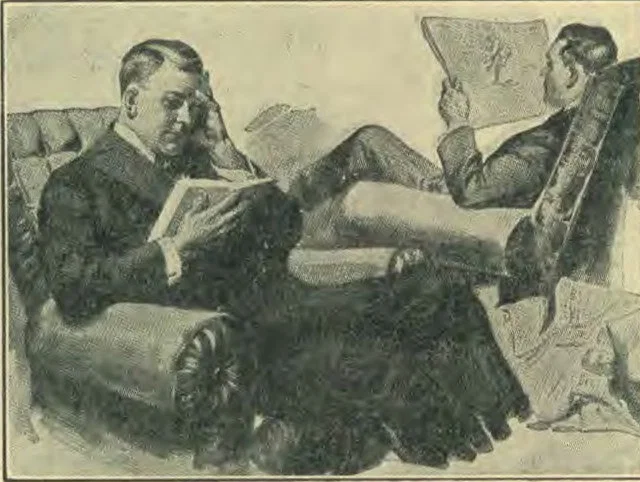
Which will succeed? One spends all his leisure moments with the daily paper; the other spends his leisure time with a few truly great books.
Are the books you read helping you to live a better life? If not, you have no time for them. God has a high ideal for you. If you wish to reach it, you must choose your reading with care, for the trend of many a life for good or ill, for success or failure, has been determined by a single book.
Early in the nineteenth century a boy of fifteen was left at home to spend the day alone. He sauntered into his father’s library in search of something to read, to while away the hours. Carelessly choosing a little tract, he retired to a quiet place intending to read the story at the beginning, and leave the moral at the close for any who might relish it. That one leaflet resulted then and there in his acceptance of Christ as his Saviour. J. Hudson Taylor left his room with new ideals, and these led him to a life of service in China.
The mere reading of a biography sent David Livingstone into the mission field. “Cook’s Voyages” and a constant study of the Bible led William Carey to give himself for India. John Wesley, Allen Gardiner, John G. Paton, and scores of others who lived lives worth while were influenced toward their work by the books they read.
The seed dropped into the mind today will surely yield its fruit somewhere in the afterward, and let us see to it that the harvest is not of inferior quality. Influence never dies. From presses running day and night a great flood of literature rushes into the world, and from this stream waves of influence permeate the most remote corners of the earth. The good and the evil are always with us. Let us choose the good.
Worthy books merit the friendship of every young man and woman. “They are always ready to comfort, to instruct, to refine.” They “elevate the character, purify the life, take the attractiveness out of low pleasures, and lift us upon a higher plane of living and thinking.” For their friends who seek knowledge they crowd into hours the wisdom of years. To those who are struggling for the higher life they bring the experiences of others who have gone before.
There are more worth-while books than any of us can master in a lifetime. History, description, travel, and wholesome narratives are always helpful. Among the best, however, are biographies of noble and true men and women who, in close communion with Christ, have represented him to others. Such reading tends to reproduce the excellence it records. Upon the same plane stand books treating of missions; for they reveal the needs of a sin-sick world, bring us in touch with real things, and impart a longing for some share in the work of the literal fulfilment of the great commission. But above all others towers the Book of books. In this our interest should center, for it is the antidote for all human ills. It is so simple that even a child can understand its precepts; yet so deep are its fountains of wisdom that no human philosopher can fathom them. Its divine Author has marked the course of history “from the beginning until this present time. It is the base of supplies for the Christian soldier, and to cut him off from it means sure defeat in the battles of life.”
Many of the Western mines so flourishing in 1849 are now only barren wastes. Their value was not lasting; but it is not so with good books. Their worth increases as the “pickax of the reader” goes deeper; and to possess a knowledge of the Word of God means eternal riches.
The value of a book depends largely upon the manner in which it is read. No book is so good as to prove profitable to the negligent reader. Gymnastic exercises do not develop the muscles of the mere observer. However, a careful, prayerful, systematic course of reading strengthens the mind and awakens it to greater activity.
The choice of good books is especially important for young people, because before them are great possibilities. Youth is the period of character building. Temptations must be met and overcome; far-reaching decisions must be made; and responsible positions filled. Just now is a time of crisis. “The need of the hour is for men and women who know what Israel ought to do.” “Who knoweth whether thou art come to the kingdom for such a time as this?” As the timber used in the construction of a building determines to a great extent its durability, so the material of which character is formed determines the usefulness of the life. The books we read either help us to grasp life’s opportunities by the forelock, and prepare for prompt, efficient service, or bring us to defeat in the presence of the enemy. In all the activities of life the heaviest responsibilities rest upon young shoulders. It is young blood that flows, and always has flowed, most freely through the arteries of missionary enterprise. Then can we as young people afford to lock the doors of opportunity against the future? the present? Can we afford to read anything that will do ourselves or others an injustice? Consider these questions prayerfully; answer them candidly. The privilege of earning a college degree may be denied you, but by a choice selection of reading for spare moments you may mold a character which will prove a veritable Gibraltar amid the storm and stress of life.
When David Livingstone returned to Scotland, after an absence of sixteen years in Africa, the Glasgow University desired to honor him by conferring the degree of Doctor of Laws. As he appeared upon the platform, the students received him with silent respect. He was gaunt and weary from exposure to African sun and twenty-seven attacks of African fever; one arm, having been injured by the bite of a lion, hung useless by his side. He told them of some of the battles he had fought for humanity, and declared that he was going back again to suppress the slave trade, open new fields for commerce, and prepare7the way for extensive gospel work. He closed his address by saying: “And shall I tell you what supported me through all the years of exile among a people whose language I could not understand, and whose attitude toward me was always uncertain and often hostile? It was the promise, ‘Lo, I am with you alway, even unto the end of the world.’” Just a sentence from the good old Book, but how much it must have meant to the missionary-explorer. Sometimes a single sentence stands out preeminently helpful in the few pages one can snatch time to read during the day. Cling to such key-thoughts. They will help you likewise, sometime when the battle goes hard.
The end of all things is coming, but it is not yet. The Master still “hath need of us,” and he is anxious that we should prepare for service here and a place in his kingdom hereafter. Shall we not pledge ourselves to read only the best, that we may stand before our Maker and King as workmen that need not be ashamed? And may I suggest that you do not pass by the Missionary Volunteer Reading Course books, which are especially selected to help you make this needed preparation?