W. H. ANDERSON
ABOUT the time of the death of Queen Victoria, the Barotse people in South Africa were becoming restive under English rule, so the government thought that it would be a good thing to invite the king of that tribe, Lewanika, to go to England and see the coronation of King Edward VII. I met King Lewanika in Bulawayo on his return from that visit, and had a talk with him. He had seen the English army drilling at Aldershot, and been taken to see a wonderful naval display at Portsmouth. These things were shown the heathen king to impress his mind with the futility of raising a revolt against English rule, but he told me that the thing about the English people which impressed him more than anything else was their intelligence and what the gospel had done for them. Sometimes we forget the blessings which we enjoy as a result of the gospel, material blessings as well as spiritual blessings. But this was the thing that impressed that heathen king, and he invited me to come into his territory and locate a mission station.
On the Way to Barotseland
It was early in July, 1903, when we started out to explore the country. There was no railroad in the Zambesi River territory in those days, and I walked a little over nine hundred miles in locating our Pemba Mission station, in Barotseland. In making up my food supply for the journey, I took a quantity of toasted bread, which lasts indefinitely in that dry climate. I also had some sugar, a little salt, some fruit, and my blankets, with a few other necessities. A native was engaged to carry my load. Most of these natives are honest, but I happened to get hold of one who was not. He stole my fruit, sugar, and salt, so all I had left was toasted bread. I had to eat so much of it that I have never cared greatly for it since.
This journey carried me away beyond the utmost bounds of civilization. During four months I had no word from home. One time during this journey I met a white man who was buying cattle from the natives . In answer to my inquiries, he told me I would find water about three miles ahead, so I carried none with me. Whether or not I took the wrong footpath, I never knew, but I did not find the water. Twelve o’clock came, and I had eaten no breakfast, and had nothing to drink. About three o’clock in the afternoon I found a miserable pool of water, with a green scum over the top, and I drank all I could in spite of the filth. Sometimes one can drink water of that kind without harmful results; but this drink, added to the physical exhaustion that preceded it, brought on a severe attack of dysentery, from which I nearly died. I called those native boys around me, and gave them a message to my wife and child at home. Then I said:
“Here’s another message I want you to take. Tell the people at home not to be discouraged because I have died on the way. I want you to bury me here by this big, brown tree, and my grave will show them the way to the mission station among these people.”
Well, that night those native Matabele boys came and stood around my bed, and sang, in the Matabele language, “Lonely? no, not lonely while Jesus standeth by.”
It is a wonderful experience to have the presence of Jesus under such circumstances. It seems as if he comes so close that one could put out one’s hand and touch him. I was sick three weeks. Then I grew stronger, and went about my work.
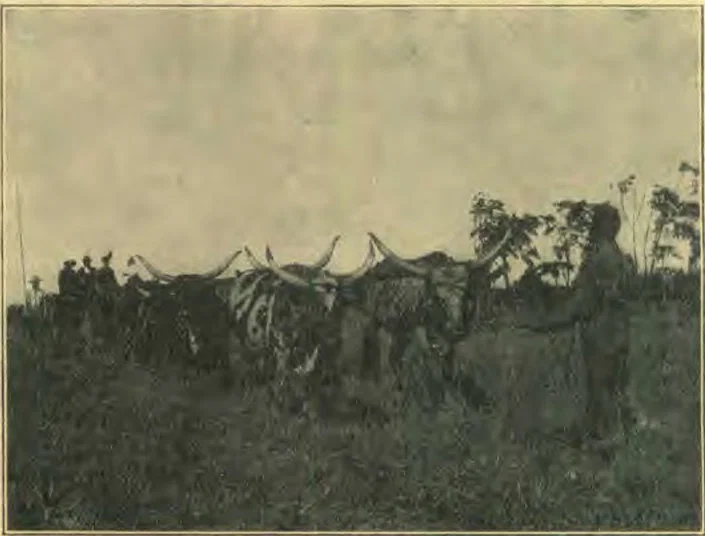
When the time came to open the mission station we traveled as far as we could on the railroad, and then prepared to make the rest of the distance—about twop. 4 hundred miles—by ox team. The oxen were unbroken, and it was an almost unbelievable task to get them into the yoke. Finally, after working for two or three days, we had twelve of them hitched to our wagon and were ready to start. The first day we went about five hundred yards. That was as far as we could go. The missionary learns many lessons in patience, all of which he greatly needs in dealing with the natives. The next day we started again, and after working all that week, we found that we were seven miles from our starting-point. Then we got stuck in the sand, and had to take the whole load, weighing three thousand pounds, out of the wagon and carry it on our backs for three miles. (If any of you are afraid of hard work, do not go to South Africa as missionaries.)
Finally we got the loads through the sand and into the wagon again and started on. On account of the extreme heat during the day we would harness the oxen about four o’clock in the morning, drive along until about eight, then rest until about four in the afternoon, and continue our journey until eight in the evening.
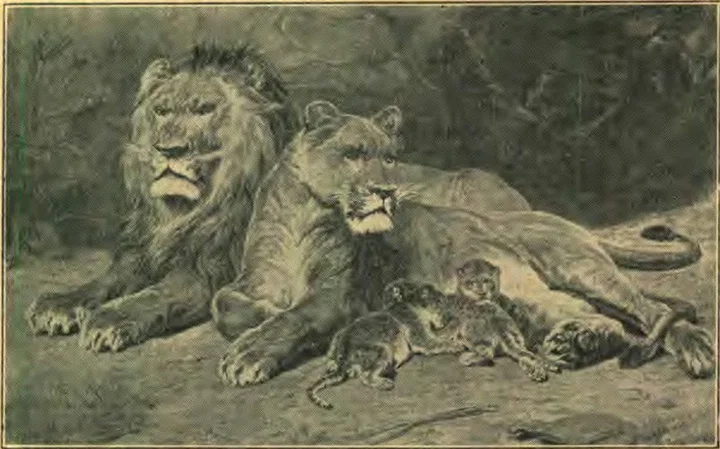
The country is infested with lions; so when we made our camp at night, we put the oxen around the wagon and built fires outside. You know the Bible says that our “adversary the devil, as a roaring lion, walketh about, seeking whom he may devour,” but God promises that he will be like “a wall of fire round about” his people. I never saw so much in these texts as I have since working in Africa.
We had many thrilling experiences with the lions on this journey, but finally the last mile was traveled, and we were ready to begin. All we had on the place was our wagon and its load.
Pupils Came Before There Was a Schoolhouse
I planned to spend during the first year four hours every day studying the language; but the next day after we started to put up a house, a young man about sixteen years of age came along and said, “Teacher, I have come to school.” I told him that we had no schoolhouse—all we had was that ox wagon on the open prairie.
“Oh, yes,” he said, “the word has gone out all over this country that you are a teacher and have come to teach us, and here I am. I have come to school.”
I talked with that young man and urged him to go home and stay awhile until I learned the language, but he insisted upon staying. “If you are a teacher,” he said, “you must teach me.” So I had to take him in. The next day five more came, and after I had taken in one, I had to take in the five. I did not know what to do. I could not talk to these boys in their language. I had no books. I did not know the language of my pupils, and they knew very little of mine. All I had was a small blackboard a box of chalk, three dozen slates, and one hundred pencils. It was a good thing these boys did not know what a school was, or they would have been disappointed.
I would start work during the day, trying to get bricks made for the house, and at night try to learn a little story in their language. The next morning I would call the school, and tell the boys that little story, about five minutes long. Then I would draw some pictures on the blackboard. I did teach them arithmetic. Arithmetic was a strong feature in that school, for I could teach them arithmetic in English. I kept those boys busy and held onto them. Six weeks after arriving we had forty boys coming to school.
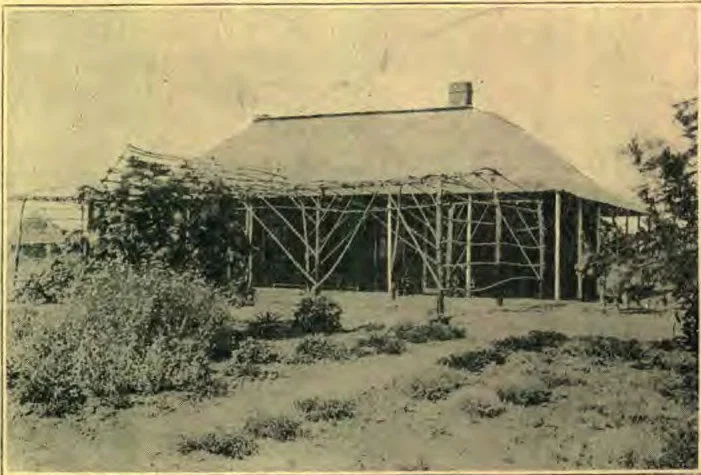
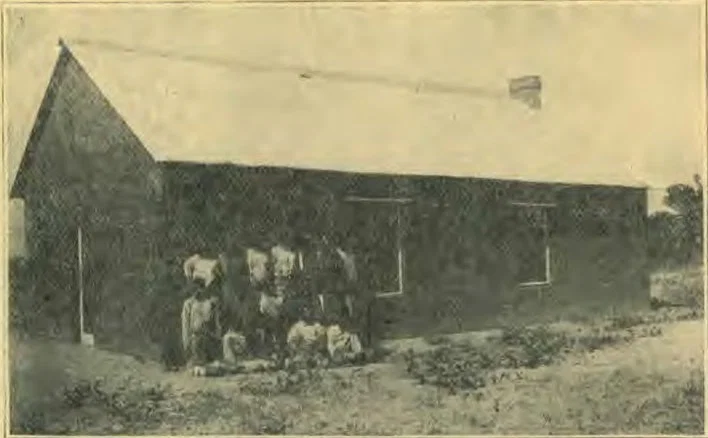
Finally we put up a little place built of poles and mud, sixteen feet wide by thirty feet long, and there we housed that school of over forty pupils. That one building was our schoolhouse, dining-room, kitchen, dormitory, and church. And we were thankful for that. I put up a table, and the boys even slept under it at night. The whole floor was about filled.
By and by we held our Sabbath meetings in the open air, under a big tree. I remember one Sabbath when we came home and found five new boys sitting outside of the house. I was afraid to ask them if they wanted to come to school. I passed them right by. I didn’t dare to ask them. I went into the house and had my dinner. Then I looked out, and they were still sitting there. About four o’clock in the afternoon I thought I might as well face it. I asked them what they wanted. They said they had come to school.
Sleeping on the Table
I didn’t know what to do with those boys. I called my native teacher, and said to him, “What in the world shall we do with these boys? The room is full. The rainy season is coming on.” The boy thought a minute, and then he said, “Well, teacher, there is nobody sleeping on the table.” So we took those boys in, and packed them away on the table, and they slept there for five long months before we got anything better for them.
Dear young people, how would you like to go to school where you had such accommodations? Now we have reached the place where we have no room even on the table. Five hundred miles to the east of us there is not a school or any denomination working for these people. Three hundred miles to Lealin—not a single mission station of any denomination. The people walk one hundred, two hundred, even three hundred miles, sometimes, to come to school, and to be taught the gospel. What should you do if when they came to you under these conditions, and asked you top. 5 teach them, you had to say, “Go home; we cannot help you. We cannot do anything for you”? That is what we are facing.
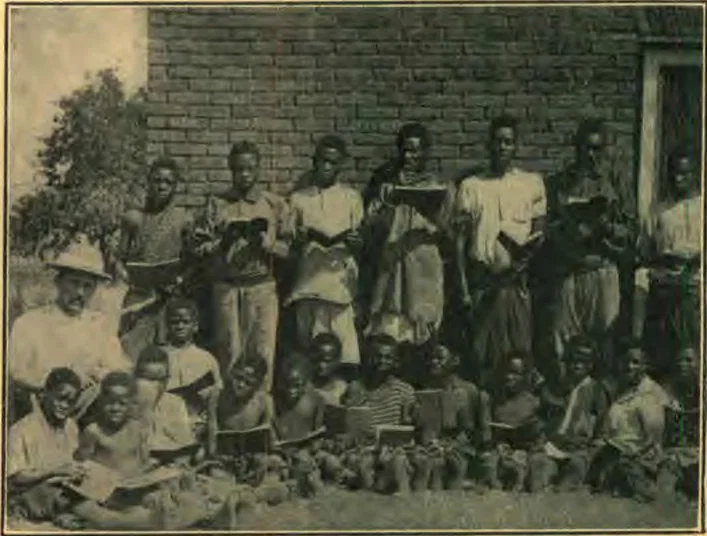
We need some one to help us, young people who are earnest and willing and qualified to teach these people. Will you not go into your closet, and ask God whether he has any work for you in this part of his great harvest field?