It is surely a distinction to have been the last surviving member of a nation or race. This was the distinction that came to Trucanini, daughter of a Tasmanian chief, who was the last of the Tasmanian aboriginals.
The Tasmanians were evidently the most energetic and spirited of the Australian aborigines when the Dutch, French, and British navigators began to touch these Australian shores. They resented the coming of the settlers into their old hunting grounds of Tasmania, and the story that always has repeated itself in every land followed — injustice on the part of some of the invaders, then savage reprisals and border warfare.
In the early decades of the nineteenth century one governor of Tasmania conceived the idea of forming a cordon of troops and armed settlers across one portion of Tasmania to inclose the tribes — men, women, and children — and catch them all or drive them into the sea. The net result was one old man caught, and one child.
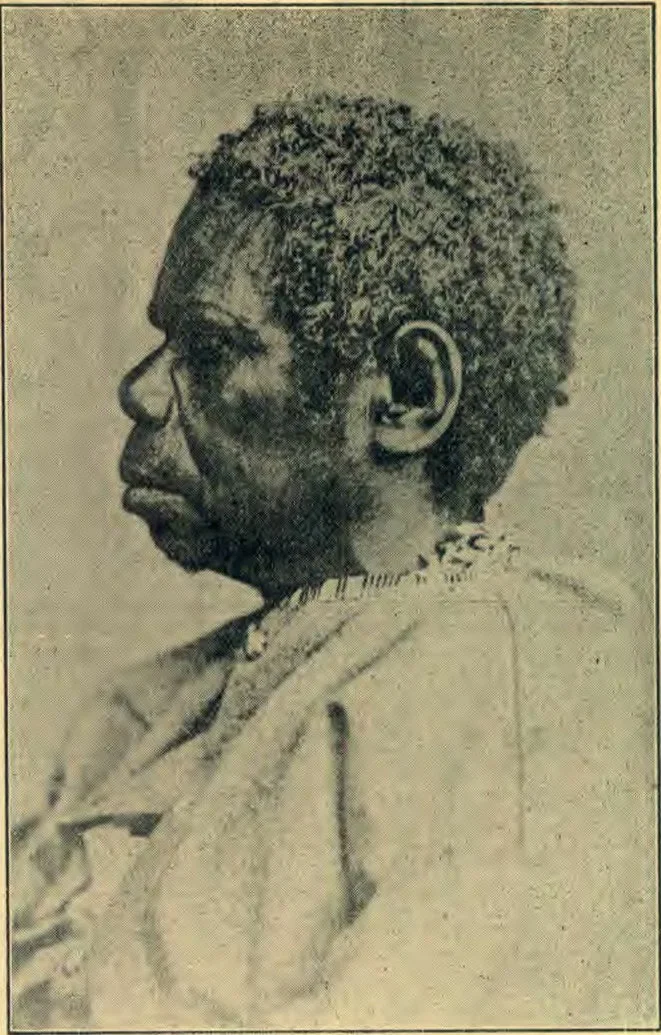
Then it was that a Christian bricklayer, a Wesleyan, came forward and volunteered to go out alone and bring these people in. He loved them for their deep need, and at last his pleas secured attention. So this artisan missionary, George Robinson, began his mission in 1830. He had already learned much of their language. He believed they could be helped. He said: “No language can do justice to the intense anxiety manifested by the adult aboriginals for learning; it must be seen to be properly comprehended.”
In his five and a half years’ work, Robinson walked four thousand miles, seeking out the tribesmen in the wilds, and pleading with them to give over their ways and come in and be assigned living quarters within the young colony.
He risked his life continually in reaching those in the remotest fastnesses of the mountain and bush.
Providence provided him a helper in Trucanini, the chieftain’s daughter. She was drawn to espouse Robinson’s cause, and with her husband gave herself top. 3 the mission without reserve.
- (Concluded on page twelve)
- (Concluded from page two)
She was the strong character, the husband doing little. She was gifted as a linguist, the record runs, and quickly mastered the different dialects. She was Robinson’s interpreter, and advance courier in approaching the wilder people. She risked her life for her master, and saved Robinson’s life on one occasion when he was escaping from hostile natives and was drowning in the Arthur River.
Robinson brought in remnant after remnant of the tribes, until they had all surrendered — a pitifully small remnant to have made so much trouble. They were put on Flinder’s Island, but many died of what the surgeon said was nostalgia — plain homesickness. The remnant were removed to the Tasmanian mainland, gradually to go down with degradation and disease.
At last only Trucanini survived. Then, in 1876, at about the age of sixty-five, she passed away. History says: “With her remains the grave closed over the last aboriginal inhabitant of Tasmania, and in her death a nation became extinct.”
Does it not bring a sense of loss and a feeling of sadness to the heart to think of a nation’s perishing in our own generation, beyond the sound of the message that God raised up in 1844 with its call to every tribe and tongue?
The aboriginals of the Australian mainland are a decreasing race, apparently, but thank God, the message is among them and the first fruits have appeared. There is no tribe so remote today that we may not see the advancing frontiers of the Advent Movement pushing on to reach it.
W. A. Spicer.