ACCORDING to an estimated census, the population of Bolivia is 2,500,000 persons. Fifty per cent, at least, of this population are Indians.
Around the large centers of Bolivia, such as La Paz, Oruro, and Cochabamba, the Indian is semicivilized, but in the interior he is wild and savage, living in the most rude and insanitary manner.
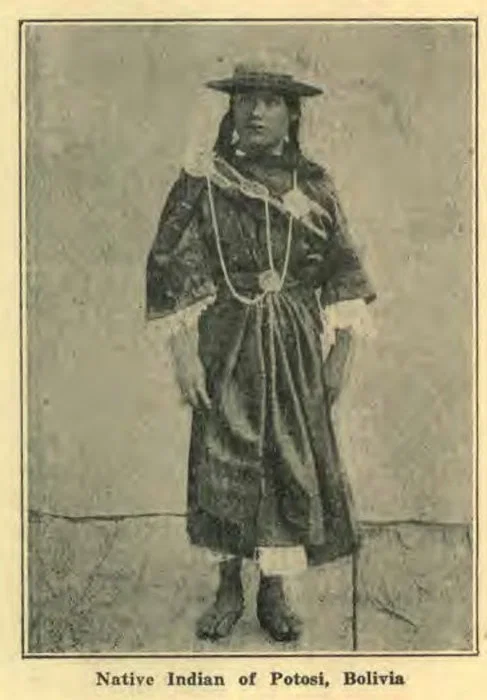
The Indian is generally of a peaceable disposition, very humble when with the white people or with his patrón. But history and experience tell us of times when his patience and his good nature have been exhausted; because to-day, as in times past, the Indian is an object of exploit and antipathy on the part of all or nearly every one who has any dealings with him. In many respects, he is in abject slavery. On the large farms he has to work fifteen days for the patrón, or owner, to one day for himself.
The Indian is illiterate and superstitious, not having had the privilege of attending school.
Little or no interest is taken by the people of the country in the uplifting of the Indians. Few seem to care any more for them than the value they represent in money to their patróns. It is as a Bolivian gentleman, statesman, and diplomat has said: “It is no exaggeration to say that the present condition of the Bolivian Indian is a national disgrace and a terrible indictment of the good name of the republic. It is, therefore, a sacred duty on the part of every good Bolivian to look for the means of doing away with this disgrace, and converting into active forces the thousands of Indians who today are a millstone around the neck of a civilized society.”
If we who enjoy all the blessings and bounties of life, neglect to do our part in the uplifting of the Indian, we may find that it will be not only an “indictment of the good name of the republic,” but a terrible indictment of the neglect of our sacred duty.
When treated kindly, the Indian reciprocates quickly; when taught, he learns readily; when treated for infirmities, he convalesces rapidly.
In Bolivia, there are several tribes of Indians, the principal ones being the Aymaras and the Quechuas. Among these we desire to establish schools.
A Quechua Indian, an owner of property, already has offered us a sum of money to help begin work among them; but we are waiting for some of our friends to add a little more to this sum before we can open the school.
Near La Paz we are planning to open a mission station for the Aymaras.
The accompanying photograph will give a good idea of the appearance of this people.
May the Giver of every good gift bestow a liberal heart to every one that reads of the distress of the Bolivian Indian. W. R. POHLE.
La Paz, Bolivia.