There is an impressive truth wrapped up in Longfellow’s words:—
“Lives of great men all remind us We can make our lives sublime, And, departing, leave behind us Footprints on the sands of time.”
Eternity alone will fully reveal how the lives of such men as Joseph, Daniel, and Paul, as well as some of the grand characters of modern times, have served to quicken the life-current in millions of other men’s lives.
There are few men who have left so marked an impression upon the destiny of a nation, as well as on individual minds, as Abraham Lincoln. It is profitable for us to learn in youth all we can concerning the foundation upon which such a giant life was built; for to just the extent that God shall use us to repeat such a useful life, to just that extent he will lead us through a similar pathway of preparation. Multitudes of young people aspire to be great, but rebel at the painful discipline which every man must cheerfully accept before God can intrust him with true greatness.
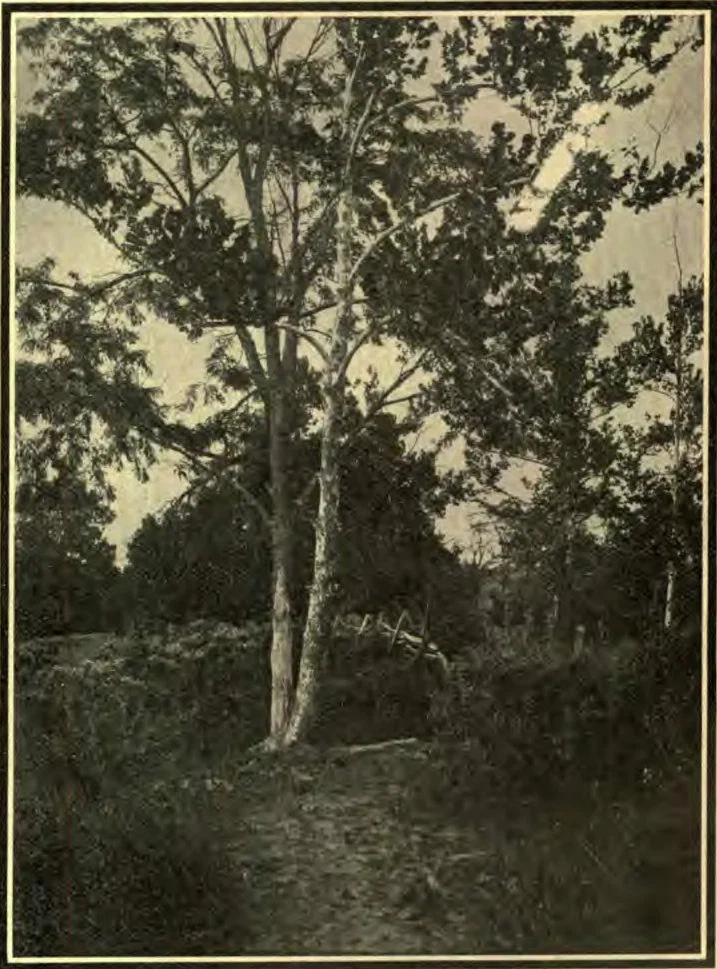
Not long ago I had the privilege of visiting the place where once stood the humble village grocery store in which Lincoln was a clerk. In the excavation that marks the ancient cellar are now growing several flourishing trees. Many years ago a patriotic wood-carver cut an excellent likeness of Lincoln’s face high up on the trunk of one of these, and the picture is yet reasonably well preserved.
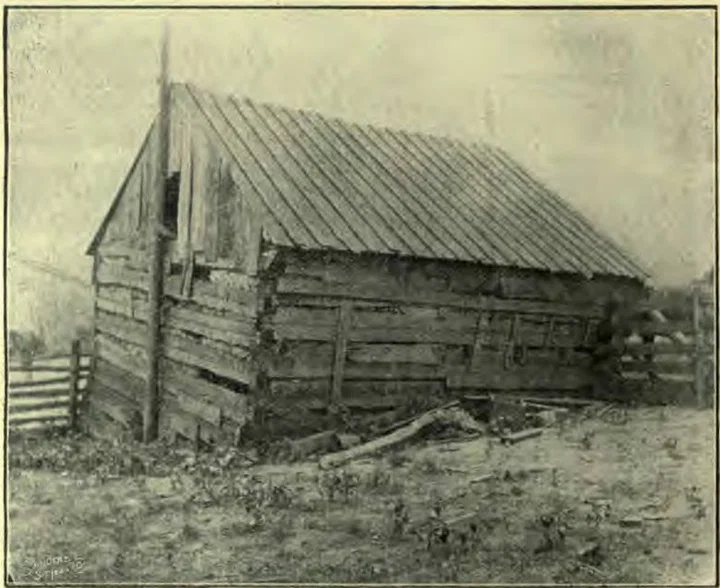
About half a mile away is a striking illustration of how little the American people treasure historic things; for here may be seen the old log cabin in which Abraham Lincoln lived when he studied law. It is situated in the center of a barn-yard, and is used for—a pig-sty! I took away with me as a relic a piece of the chinking, which was still clinging between the old, decaying logs. It was in this humble home, rather than within the walls of some stately university, that Lincoln absorbed those masterful truths by which he afterward shook an entire nation, and swept from American soil its darkest curse.
We commend to the earnest consideration of every boy these significant words from Lincoln’s stepmother: “Abe was a good boy, and I can say what scarcely one woman—a mother—can say in a thousand,—Abe never gave me a cross word or look, and never refused, in fact or appearance, to do anything I requested him. His mind and mine—what little I had—seemed to run together. He was here after he was elected president. He was a dutiful son to me always. I think he loved me truly. I had a son, John, who was raised with Abe. Both were good boys; but I must say, both now being dead, that Abe was the best boy I ever saw, or expect to see.” Remember that no boy can be laying the foundation for true greatness and at the same time treat his parents shabbily.
Are you sometimes almost disheartened at your apparently unfavorable surroundings, and the meager opportunities with which you are favored? Then read the following in reference to Lincoln, when he was twenty-one years old, and take fresh courage: “When he left his home, he went empty-handed. He was already some months over twenty-one years of age; but he had nothing in the world, not even a suit of respectable clothes. One of the first pieces of work he did was to split rails for enough homespun, dyed with white walnut bark, to make him a pair of trousers. He had no trade, no profession, no spot of land, no patron, no influence. Two things recommended him to his neighbors,—he was strong, and he was a good fellow.”
It was to Lincoln’s advantage, however, that he was not only a mental giant, but almost a physical Samson. It was said of him that he could lift as much as three ordinary men; and, “My! how he could chop!” says Dennis Hanks. “His ax would flash and bite into a sugar-tree or a sycamore, and down it would come. If you heard him fellin’ trees in a clearin’, you would say there were three men at work by the way the trees fell.”
“Standing six feet four, he could out-lift, out-work, and out-wrestle any man he met. Friends and employers were proud of his prowess, and boasted of it, never failing to pit him against any hero whose strength they heard vaunted.”
Those who have a strong tendency to scorn honest toil should make a careful note of this: “Such were the conditions of his life at this time that, in spite of his popularity, nothing was open to him but hard manual labor. To take the first job which he happened upon,—rail-splitting, plowing, lumbering, boating, store-keeping,—and make the most of it, thankful if thereby he earned his bed and board and yearly suit of jeans, was apparently all there was before Abraham Lincoln in 1830, when he started out for himself.” More than likely if he had been too indolent or too proud to soil his hands with what is often called “common labor,” Lincoln’s name and influence would have been neither known nor felt outside of the little village on the banks of the Sangamon River.
The following year he secured employment on a flat-boat, which was floated down the Mississippi to New Orleans. It was here, for the first time, that there was stamped upon this great soul the terrible significance of human slavery, and it “ran the iron” into him then and there. One morning as he passed a slave-auction, a girl was being sold. Her bidders made her trot up and down the room like a horse, to show how she moved, and in order, as the auctioneer said, that bidders might satisfy themselves whether the article offered was sound or not. This scene made such an impression upon Lincoln that he turned away with this remark to his companions, “Boys, let’s get away from this. If ever I get a chance to hit that thing [meaning slavery], I’llp. 322 hit it hard.” History records the fulfillment of that prophetic determination.
Lincoln was popularly known as “Honest Abe.” One or two incidents serve to show how completely honesty dominated his actions. “Having discovered on one occasion that he had taken six and a quarter cents too much from a customer, he walked three miles that evening, after his store was closed, to return the money. Again, he weighed out a half-pound of tea, as he supposed. It was night, and this was the last thing he did before closing up. On entering in the morning, he discovered a four-ounce weight on the scales. He saw his mistake, and, closing up shop, hurried off to deliver the remainder of the tea.”
During the summer, when the farmers were busy tending to their crops, the duties of the store where he was clerking did not occupy all his time; so he secured some old law books, and began to read them. But he did not content himself with a merely superficial reading. He himself says, of this time: “The more I read, the more intensely interested I became. Never in my whole life was my mind so thoroughly absorbed. I read until I devoured them.”
No ordinary obstacles could baffle this man of mighty determination. His office as postmaster yielded but a small salary, and his grocery sales were few; so he found it necessary to work part of the time in the mill below the hill, and at splitting rails; but even then he was barely earning a reasonable support. At this juncture he was tendered the office of surveyor. He knew absolutely nothing of the science of surveying, but he secured a treatise on the subject, and then studied while he worked. Day and night he studied, and in six weeks he had so thoroughly mastered the subject that he entered upon his duties as county surveyor.
The following quotations afford us a glimpse of that magnificent spirit of helpfulness which must pervade our lives if we are ever to accomplish anything for humanity that shall be of lasting value: “In the Rutledge tavern, where he afterward lived, the landlord told with appreciation how, when his house was full, Lincoln gave up his bed, went to the store, and slept on his counter, his pillow a web of calico. If a traveler ‘stuck in the mud,’ in New Salem’s one street, Lincoln was always the first to pull out the wheel. The widows praised him because he chopped their wood; the overworked, because he was always ready to give them a lift. It was the spontaneous, unobtrusive helpfulness of the man’s nature which endeared him to every one, and which inspired a general desire to do all possible in return. He possessed in an extraordinary degree the power of entering into the interests of others,—a power found only in a reflective unselfish nature, endowed with a humorous sense of human foibles, and with great tenderness of heart. Men and women amused Lincoln; but so long as they were sincere, he loved them and sympathized with them. He was human in the best sense of that fine word.”
Thousands of young people are frittering away golden moments, thereby allowing the possibilities of a lifetime to slip between their fingers. But Lincoln, though deprived of all ordinary opportunities for education, became, by diligent application, an extraordinary mental giant. “He never studied with anybody. He seems to have thrown himself into the work with an almost impatient ardor. As he tramped back and forth from Springfield, twenty miles away, to get his law books, he read sometimes forty pages or more on the way. Often he was seen wandering at random across the fields, repeating aloud the points in the last reading. The subject seemed never to be out of his mind. It was the great, absorbing interest of his life. The rule he gave twenty years later to a young man who wanted to know how to become a lawyer, was the one he practiced,—‘Get books, and read and study them carefully.’”
Multitudes of young people become so engrossed in studying books that they make the fatal error of failing to study human nature, and therefore they are utterly unable to adapt themselves to the various characters with which Providence brings them in contact. Lincoln was a master among men. Of him it was said: “His absorbing interest was the men he met. To get acquainted with them, measure them, compare himself with them, and discover wherein they were his superiors, and what he could do to make good his deficiency,—this was his chief occupation.”
One of the secrets of this great man’s success is told in the following words: “Lincoln had a mental trait which explains his rapid growth in mastering subjects,—seeing clearly was essential to him. He was unable to put a question aside until he understood it. It pursued him, irritated him, until solved. This characteristic became stronger with years. He was unwilling to pronounce judgment on any subject until he understood it, and he could not let it alone until he had reached a conclusion which satisfied.”
It was this determination fully to understand everything that he grappled with that gave him an almost prophetic view of the outcome of so many complicated issues, and helped him to stand for the right, even when he had to stand apparently alone.
Lincoln was one of the factors in God’s hands for the solving of some of the greatest problems in history. Do you expect to become a man or a woman of God’s opportunity? Are you daily learning some of these same lessons in God’s great preparatory school?
DAVID PAULSON, M. D.