The Outlook Brightening
The inroads which death had made in the ranks of our missionaries reduced the working force to such a small number that reinforcements were now imperative. For months Elder Tripp had called for help; and it seemed that, if help could have been provided, his life might have been prolonged. But He who doeth all things well, gave our brother rest. For some time he had longed to step aside and rest a while, and the loving Father permitted him to enter into that rest from which no one ever returns to take up life’s duties again. While he sleeps, his work continues. His mute appeal now urged that the work so hastily laid down should be gathered up and carried forward by a larger corps of helpers.
To find the missionaries needed for this destitute field was no small task. Eight months passed before the company was selected. These intervening months were trying ones for the little company left behind. Work crowded in on every hand, but they were powerless to do all that was demanded of them. Brother Anderson was the only one of our missionaries who had not been compelled by the fever to flee for his life. For three years and a half he had stood faithfully at his post, picking up the work dropped by those who succumbed to the disease, often bearing burdens far beyond his human strength. But the Lord sustained him during these days with power from on high.
In June, 1898, the missionaries who had recovered from the fever had all returned to the farm, and work was resumed. The company was now composed of Brother and Sister Anderson, Elder Armitage and his little daughter, and Sister Tripp. Outside of building an orphanage for the children early in October, very little aggressive work was undertaken. With looking after the mission station, doing the manual labor connected with it, and caring for the thirty orphans that had been gathered in, the hands of the workers were more than full. They had to turn a deaf ear to more than one call, sometimes seeing the posts they had hoped to occupy, but were unable to enter because of the dearth of laborers, occupied by others.
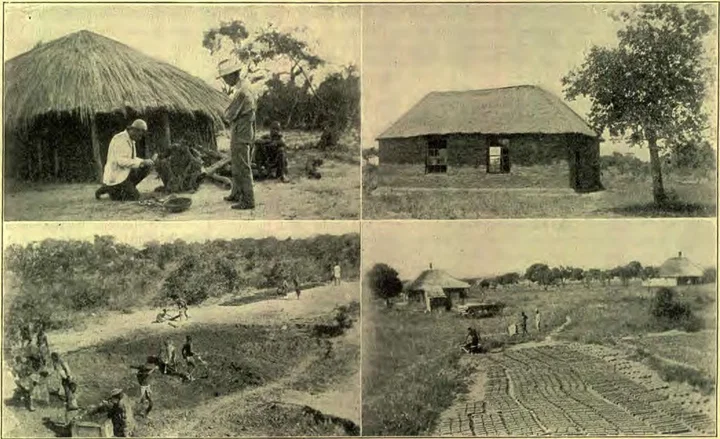
While these heart-rending experiences were the portion of our brethren over there, in the States the Mission Board was busy seeking those whom God had called to take up this work, to go to the relief of the overworked missionaries. On November 30, 1898, a party of eleven set sail from New York on the steamship “St. Paul,” bound for Matabeleland. The late Elder F. L. Mead, so well known throughout the States, with his family, made up a part of the company. Brother A. J. Chaney, now connected with the Natal-Transvaal Conference, was another member. Brother Chaney had been engaged for a number of years in mission work in Hausaland, and was ready to adapt the experience gained there to the needs of our little mission. Among the other members of the party were a doctor and his wife, a nurse, a teacher, and canvassers.
For various reasons the party were detained in South Africa several weeks, not reaching the mission farm until early in April. Of their arrival Brother Anderson wrote: —
“I can not describe the joy that filled our hearts when we reached the depot on the eve of April 4, 1899, and found so large a company to take up the work with us. I do not think I would have been more joyful if I had met my own father than I was to meet Elder Mead.”
All found plenty of work awaiting them. For a long time the brethren had been anxious to open some out-stations, and had promised the natives that they should soon have teachers. News of the arrival of so large a party soon spread, and the natives began to come in, inquiring when their teacher would be ready.
Very little time was lost in preparation. Just twenty days after they reached the mission farm, two out-stations were opened. The outfit for each station was not extensive, but the demand from these places could not longer be unheeded. Elder Armitage took one team with a small stock of goods for trading, and, accompanied by Brother Chaney and Brother and Sister Lloyd, went twenty-five miles north, to Kupavula, a point on the Burton farm. Here he pitched a tent, repaired two huts, and declared the station open. Elder Mead and Brother Anderson, with some trading goods, went six miles south, to Inwhabena, on the mission farm, and pitched a tent. The stationsp. 2 were open only a short time before the brethren had many evidences that the plan had been a wise one, suggested by the Lord.
At Kupavula especially the efforts of the missionaries were blessed in a marvelous manner. A number of young men came into the school that was opened, until the enrolment reached thirty. Brother Anderson thus describes some interesting experiences with them:—
“Several weeks ago I presented the tithing system from God’s word. Immediately after the meeting two of the young men who are in our school came and handed me a tithe of all the money in their possession. Since then more has come in. They do not get much money, as they are paid no wages; but I believe that none of the Lord’s tenth will be kept back by them. When God’s word on any subject is plainly presented, they live out the light received.
“Sabbath forenoon there was a rather cold wind blowing, and the young men and children were gathered on a sand pile in the sun, not far away. I thought I would go out and hear what they were talking about. I found the oldest of the group (he had read more in the Bible than the others) telling the others, from memory, the Bible account of the doings of Elijah and Elisha, the story of Daniel and his three companions, the feast of Belshazzar, etc. He brought in all the little details, and his recollection of the Bible account quite surprised me, as he had read these things but a few times. He is the young man who walked about one hundred miles to purchase a Zulu Bible. This book is his chief treasure and constant companion. We hope God will make of him a strong worker among his own people.
“Our Friday evening service is a testimony meeting, and every one of the children and young men take part, allowing no time to be unoccupied. If any have committed a wrong against another, this is a time of confessing and straightening things up.”
In September, 1899, a heavy loss was sustained at the mission by fire. The house occupied by Brother Anderson’s family and Dr. Green and his wife caught fire from the chimney flue, and in a very few minutes the whole structure was in flames, the thatched roof burning like tinder. Practically everything was lost—and this means far more in the heart of Africa, where one can not step into the stores and get whatever he wants, than it does even in the most pioneer region in America.
But the close of that year brought most encouraging reports from our mission. The seed so faithfully sown during all these trying years had taken root, and careful nourishment and training were now bringing it to successful fruitage. As a result of the work among the kraals and at the home station, seven young persons were converted, and these were not passive Christians, drinking in the precious truths of God’s word and holding them selfishly, but every one was a missionary, manifesting a zeal and earnestness worthy of imitation.
At Kupavula the Lord blessed with six converts, and these, too, began immediately with energy and faithfulness to prepare for service. The missionaries who had been there longest wrote that the year just closed was the best ever experienced. And this good work continued.
Estella Houser.