Extracts from a Letter to the Mt. Vernon Academy Missionary Society.
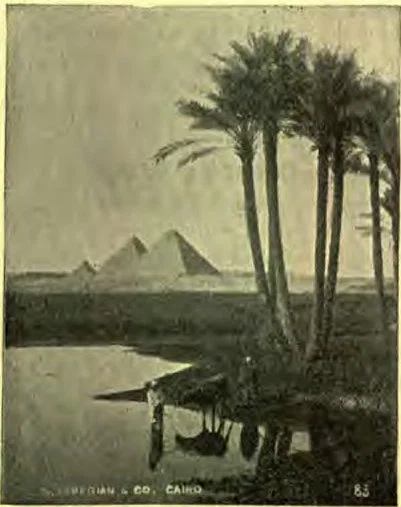
You will, no doubt, be pleased to get a communication direct from the land of the Pharaohs, the pyramids, and the sphinxes. So here, almost under the shadow of those mighty monuments of ancient greatness, I write a few lines, hoping that in your hearts may thereby be developed a stronger desire to give your lives for those who are now sitting in darkness.
After a profitable visit in Europe, and a pleasant voyage across the Mediterranean Sea, we arrived safely in Cairo, the capital and largest city of Egypt. All the workers in Egypt, six in number, were at the station to meet us, and gave us a most hearty welcome. We went immediately to the Vegetarian Health Home, which is in charge of Brother Louis Passebois and wife, and have been making this our home since. We find it very difficult to get rooms or a house to suit both our needs and our pocketbook. House rent is very high here, though not more so than in some cities in America.
The tourist season is just beginning, and the city is as fully alive and noisy as similar cities in other countries. Cairo is a city of over seven hundred thousand inhabitants, although in extent I do not think it is as large as Columbus, Ohio. You can imagine the conditions. In the native portions the people literally swarm in the daytime, and at night, to use an American expression, they are packed away “like sardines in a box.”
The combination of smells constantly arising from some of these quarters is indescribable; and one wonders why cholera and other filth diseases do not rage here continually. And, by the way, the terrible mortality of the cholera during the past season may be appreciated by the following item from the Egyptian Gazette, the only English daily in this country: “The total number of cases since the commencement of the outbreak on July 15 is 39,673; of deaths, 33,809; and of recoveries, 5,856.” That means that over eighty-five per cent of all who took the disease died. Here is surely a needy field for the medical missionary. Any one planning for missionary work in the Orient should take a course in hygiene.
The climate here at this season is delightful, neither too hot nor too cool. The air is dry, and the sky cloudless. Last week at Luxor (five hundred miles up the Nile from Cairo), I picked oranges and lemons from the trees, and most beautiful roses are in full bloom, and in profusion. A few days ago Brother Passebois bought four bouquets, mostly roses, for five cents. They would have sold for two dollars in Columbus. Nice oranges can be bought on the street for five cents a dozen, and lemons, small ones, for ten cents a hundred. But common potatoes sell for $1.25 a bushel, and dairy butter is very scarce.
I got my first experience with real native country life in the vicinity of Thebes, where, with the men of the family, I sat at the dinner table, and dipped my piece of bread into one central dish filled with a vegetable stew, seasoned with olive oil, and plenty of black pepper. I ate with more or less relish, for I had been jolted on the back of a native donkey for four hours, over sandy wastes and rocky steeps, and was very hungry.
Our host is a man of means, owns thousands of dollars’ worth of property, and is one of the chief supporters of the American Mission (Presbyterian) at Luxor. He lives in a house made of sun-dried brick and stone, a part of which has no roof,—none is needed, for it seldom rains,—and within the same inclosure live his chickens, turkeys, camels, donkeys, etc. This is true Oriental style. This man has a number of grown-up sons, two of whom have said that they would keep the Sabbath. We spent Sunday and a part of Monday with them, and they seemed to enjoy having us with them. They listened with profound reverence to our presentation of the Scriptures, and asked a number of questions, urging us to remain longer with them, and to return at a later date.
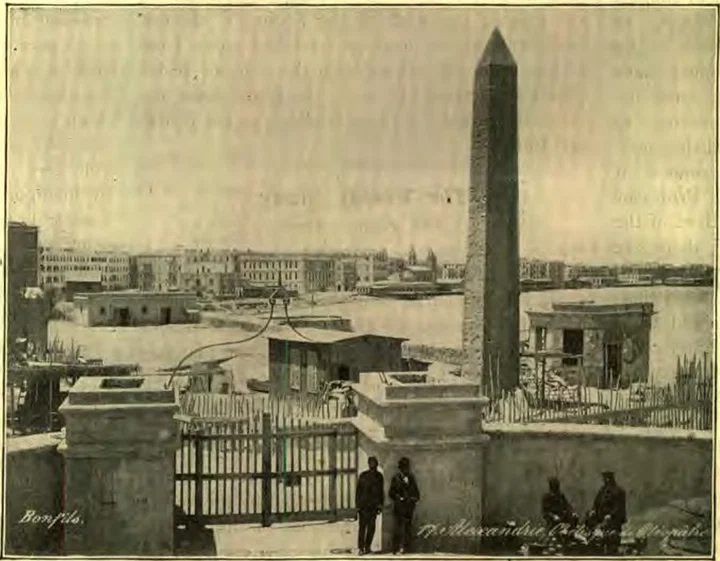
I have just returned from Alexandria, where I held Sabbath meetings and celebrated the ordinances with the little company in that city. This is where our brother, Dr. Ribton, was killed by a mob of natives who were bent on driving all foreigners out of Egypt in 1882. The third angel’s message is here represented by five Sabbath-keepers, who seem very earnest and devoted. They are all Armenians from Turkey.
We are now planning to get out literature in the Arabic language, which is the language of nine tenths of the people in Egypt. We hope to have a printing-press after a time, but for the present we must hire our printing done here. Our greatest immediate need is a tent in which to hold our meetings in the native towns and villages. This is a much better country for tent work than any place I have seen in America or Europe, and we hope that in some way this need will be speedily supplied.
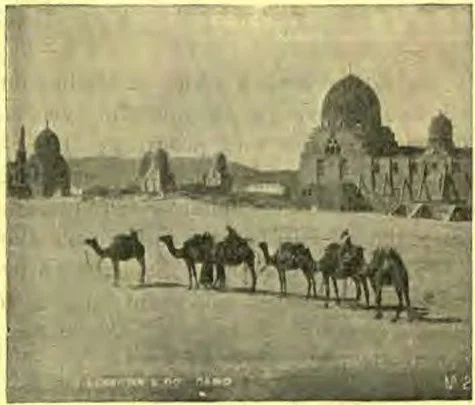
A more pressing need, however, and one much more difficult to meet is consecrated young women of experience in real Christian endeavor, who will devote their lives to the “shut-in” women of the Mohammedans and Copts. No man can reach these women, many of whom are starving for the Bread of life. Every day I see their sad, mournful eyes looking out over veils that must always cover their faces, emblems of the veils of spiritual darkness that shut out the blessed Light of life.
There are millions of them. Who will go behind the curtains and carry to them the message of peace and comfort? May God inspire the hearts of young women in America to consecrate themselves to this blessed work.
Yours in the Master’s service,
W. H. WAKEHAM.