1. The study of plant life dates back to remote antiquity. This is naturally so from the fact that the intelligent study of plants lies at the foundation of the scientific study of agriculture, and agriculture is the oldest of all known sciences. It was studied by Adam and Eve in the garden of Eden. From that time to the present, agriculture has been the principal means of sustaining the life of the millions of human beings who have lived in every age and clime, with the exception of the few who live in the regions of perpetual snow and ice, and subsist largely upon a flesh diet. The study of plants has thus received some attention from at least a part of the people of all times, yet by many it has been placed in the background, and as a consequence great losses have been sustained. Owing to a lack of knowledge of the nature of plants and the conditions best suited to their growth, the cultivation of the soil has not always been followed with the best results, so that often the earth has failed to bring forth the full measure of her increase.
2. Plants, as well as man and the lower animals, have suffered from the curse, having greatly degenerated in size, beauty, and productiveness. It is only by careful, intelligent labor that vegetation can now be made to do its best, and be brought back to some degree from its degenerated condition.
3. The study of plant life is useful in enabling us more successfully to cope with the conditions of our existence, but there are other benefits which should also be taken into consideration.
4. When our Saviour said, “Consider the lilies of the field, how they grow,” he intended that we should see in the plants about us a manifestation of the divine wisdom and beneficence of the Creator of all things. The numerous species, the varied forms, the elegant structure, the exquisite skill with which they are fashioned and adorned, should teach us something of the infinite resources of him whom we are permitted to call “Father.”
5. Of one person, the poet Wordsworth said,—
“A primrose by a river’s brim, A yellow primrose was to him; And it was nothing more;”
but we should not allow ourselves to be thus blind to God’s teaching. When we look upon the wonders of nature, the beautiful flowers, the green fields, the waving grain, the majestic trees, we should see in all these things a manifestation of the divine idea, the perfect workmanship of the master Artist, though sadly marred by the blight of the curse.
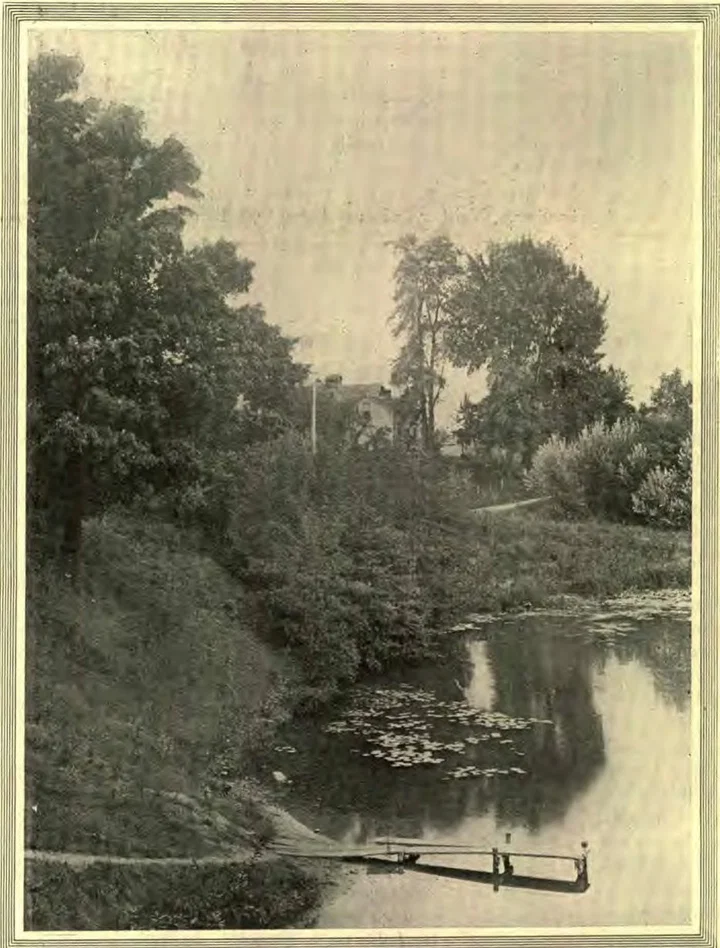
6. A knowledge of the common plants about us increases many fold the pleasure obtained from a ramble in wood or field, or by the roadside. The monotony of a railway journey, or of a drive through an otherwise uninteresting country, gives place to the pleasure and excitement of a tour of discovery when one has learned the pleasure of observation. The boggy meadow, the rocky woodland, a bit of sunny lake shore, the plain, and the mountain, are alike invested with almost irresistible charms. When we meet with familiar plants, we recognize them as the faces of friends; and if we know something of their habits, their life history, and their struggles for existence, we think of them as living individuals, meeting with fortunes and misfortunes, the same as do other living beings.
7. You have probably all noticed, whether you have ever studied botany or not, that there are two great series of plants,—those that bear flowers, and those that never bloom. It is likely, however, that you have considered many plants as belonging to the flowerless series that properly belong with the flowering plants, such as a large number of the trees, from the fact that their flowers are so inconspicuous that they have escaped your notice.
8. It is quite natural that we should be especially attracted by those plants that produce large, showy flowers; but in passing by all others as unworthy of notice, we often fail to recognize those that are really of greatest value. In our association with those about us there is danger that we may fall into the same error. We naturally feel that persons who are making the greatest show in the world are most worthy of praise; but there are many in the lowly walks of life, who, in their own quiet way, and unnoticed by the world, are doing more to bless their fellow men than many who are highly honored.
9. From an economic point of view, the flowering plants are by far the more important, and for this reason, it is quite fitting that they should be given first place in our study of plant life. As we shall find in our future studies, it is this series of plants that furnishes us with the greater part of our food, clothing, and shelter.
10. Winter is the best of all times to begin the study of plants. Then when the spring days arrive, and the warm rays of the sun waken the earth from her long sleep, you will be prepared to greet the bursting buds and springing flowers with an intelligent enthusiasm. B. E. CRAWFORD.