A Square Yard of Lawn

10%

Review and Herald Publishing Company · Battle Creek, Mich. · September 4, 1902

FromThe Youth’s Instructor, Vol. L, No. 35

Read the full edition

A Square Yard of Lawn

The portion of ground allotted to it for a lawn is, like our house itself, very tiny. About four feet of wooden walk, reaching from piazza to street, with perhaps a square yard of turf on each side, constitutes the greater portion of our front dooryard. Against the house, for most of the summer, are banked crimson petunias, which cling to the weather-boarding, while bordering the alley a mass of portulaca smiles at the sun and pouts at the clouds. I mean no sarcasm when I say that we enjoy our lawn as well as other people in the neighborhood enjoy theirs, especially at the cool of the day; it is large enough to put our feet upon, and the feeling of the fresh sod is pleasant as we sit on the steps, enjoying the cool air, which, at least, is as abundant upon grass-plots a yard square as upon those of greater size.
UNDER THE BENT-OVER
TIMOTHY HEADS
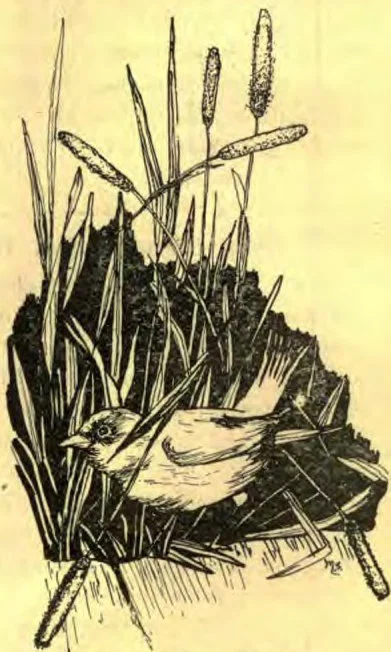
UNDER THE BENT-OVER TIMOTHY HEADS
But we who live in the cottage are not the only ones who appreciate our square yard of lawn. This summer the grass was allowed to remain uncut until its seed had fallen, and along in June it became a luxuriant tangle, a rendezvous for many sorts of visitors. Near the ground assembled the creatures fond of coolness, darkness, and dampness. Ants came at first, but when the grass began to grow thick and tall, they left for more warm and sunny spots; yet there remained spiders and crickets, besides many bugs and worms, all lively and interesting, and dozens of those funny little mouse-colored insects that we children used to call “sow-bugs.” All these kept closely hidden unless the uprooting of weed-stalks among the grass-roots brought them to light for an instant, only immediately to glide away again, and disappear within the nearest shady shelter.
But the things of light and air seemed most appreciative of our square yard of turf. Insects galore went their busy way among the blades, and butterflies innumerable flew about over the clover. Once I saw two white cabbage-moths hovering around some full-blown timothy heads covered with their yellow fuzz, and I marveled that the butterflies did not spot their white wings, while wondering if they could find honey in the timothy heads as well as the clover clumps.
Grasshoppers often whirred by to perch on a grass stem, which sank abruptly beneath the sudden weight, then sprang up again, like a miniature ducking-stool dipping the rippling grass waves instead of mill-pond or river-pool; but in this case, all the ducking failed to affect the culprit until the impulse of flight took possession once more, when away he would go to some other supple stem, and repeat the performance.
Then there were the birds. Sparrows ransacked our lawn in search of material for nests, and, later, to find wherewith to feed their progeny. Indeed, the feathered visitors made life hard for those more humble ones I have already mentioned: death by beak and talon lurked there on all sides for unwary bugs or beetles that made themselves at all conspicuous, until it seemed as if they would be obliged to seek more retired haunts, or despair of living at all.
Occasionally a daring jay dropped to the walk, becoming “monarch of all he surveyed” at the first flip of his tail, since all the less pretentious creatures dared not face him. Swallowing a morsel here and there, thrusting his inquisitive beak into the cracks of the walk or among the grasses, twisting his head sidewise, backward, and upside down, to peer curiously into every possible cranny within reach, the saucy fellow would remain until all had been investigated to his satisfaction; then he would dart abruptly to the veranda roof, where, for a moment, I could just see the fork of his blue tail before he vanished into the maples behind the house.
Once or twice, when there was nothing about to alarm him, I caught a glimpse of a wren, stealing a visit to our dooryard,—along the piazza, down the edge of the walk, in and out under the bent-over timothy heads, he shyly darted, as tiny and quiet as a feathered mouse; but he was all alertness, and woe to the unlucky insects that chanced to fall within range of his beads of eyes. I remembered having seen the midget before, up over the well, singing to his mate. It took some time to locate their nest, but finally I decided it was hidden in the gable of an adjoining house, where ill-matched boards had left an opening. Only wren’s eyes would have noticed the aperture, and only wren wisdom would have utilized it; but for all his cunning, that inconsistent wren often betrayed the whereabouts of his nicely concealed home by making it a shrine before which he perched to pour out his songs of admiration,—songs which always remind me of the strings of bubbles that follow blowing with a pipe into a bowl of soap-suds. But though I always had to smile when I heard him sing, our square yard of lawn had no more beloved visitor than this same wise, self-reliant, little wren.
Minnie Rosilla Stevens.