Abroad with Nature

8%

Review and Herald Publishing Company · Battle Creek, Mich. · MAY 1, 1902

FromThe Youth’s Instructor, Vol. L, No. 18

Read the full edition

Abroad with Nature

To the lover of nature, May is a glorious month. The earth has been renewed, and everything is in its brightest dress. The air is soft and balmy, the whole earth is fresh in its tender green, and there is pleasant perfume everywhere. It is a time that entices one to ramble abroad, and along every stream and water-side are to be seen the persevering anglers with rod and line. One who was a follower of the practice has written:—
“Then weary is the street parade, And weary books, and weary trade; I'm only wishing to go a fishing— For that the month of May was made.”
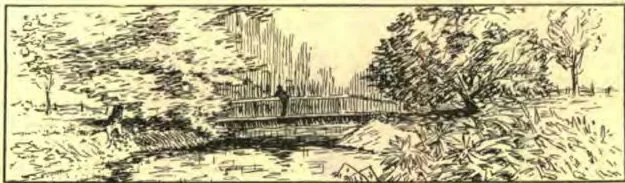
For myself, there are many other things I would rather do at this season than fish. I feel that I could spend every moment of May and June in the open fields, and spend it profitably, were it not for the sterner demands of life. I would live there, and eat there, and even sleep there. And I would be fishing, too,—not for fish, but to catch some of the wonderful secrets of nature that lie hidden on all sides.
I would spend many hours looking for the spring plants and flowers, studying their habits and traits, making careful notes, drawings, etc., and, best of all, learning many precious lessons that life will be all too short to forget.
The grasses and weeds have already made good headway; and if the weeds are taken as a type of sin, we have thus early in the season a reminder of the fact that Satan comes also. No matter how early we begin anything, we find that he has been ahead of us, and his work is already well begun. Was it not so when we first awoke to the fact that we had a character to develop for eternity? No matter if we were but children when the first serious moment broke upon us,—that moment when we dimly understood, that we must be “about our Father's business,”—when it came, there came also the consciousness that there was a work already begun, a work for evil, which must be eradicated. Already we had formed habits and dropped into ways that were anything but wholesome. Yes, truly the weeds are early.
But the industrious, intelligent farmer begins his spring work, for the same reason, as early as he can cultivate the ground. He gets at the weeds the moment they appear; and if any part of his possessions has gained the start of him, he goes at it the more earnestly to undo the evil already wrought. Let us be wise, and learn this lesson in the development of our lives.
By the end of May the trees are in full leaf; wood and roadside, garden and orchard, are full of songsters; the swallows gleam and circle in the air; and aloft in the tree-tops countless gayly dressed warblers flit and sparkle, filling the air with the music of their song. More birds are seen during May than during any other month in the year.
The chestnuts stand out boldly against the dark background of the hillside woods, laden with a wealth of yellow blossoms. Dandelions begin to creep out on our lawns, the violet is in blossom, and buttercups and marsh-marigolds in the swamps and meadows add their glory to make the landscape radiant with the color of the sun.
Along the roadsides and in open spots the winter butterflies are sporting in the warm sunshine; and in the cabbage patches the white cabbage-worm butterflies are busy at mischief-making. There will be a host of cabbage-worms a little later if we do not make way with these troublesome butterflies.
Hornets, wasps, bumblebees, and ants are already at work, teaching mankind a lesson of industry.
May we, too, breathe in inspiration from the spring, and take up the battle of life with new courage. L. A. REED.