Henry Clay

4%

Review and Herald Publishing Assn. · Washington, D. C. · November 15, 1904

FromThe Youth’s Instructor, Vol. LII, No. 46

Read the full edition

Henry Clay

THERE was born April 12, 1777, in a low, swampy district in Hanover County, Virginia, a baby boy, the fifth child of a poor Baptist preacher.
In 1900, one hundred twenty-three years after his birth, there assembled in New York a committee of one hundred representative men to choose fifty men worthy of a place in America’s Hall of Fame. Only twenty-nine of the famous sons of America received the required number of votes to secure the place.
Henry Clay, the son of the poor Baptist preacher, was one of the chosen twenty-nine, receiving seventy-four votes for his name to be inscribed on one of the monumental tablets.
CLAY’S EARLY ATTEMPTS AT ORATORY
When he was four years old his father died, leaving his mother a widow with seven children, and scarcely any means for their support. The children were taught early to be self-supporting, and Henry was kept busy doing the chores around the farm. One of his duties was to carry the grain to the mill. The low, marshy country in which his home was situated was called the “slashes.” Mr. Colton, one of his biographers, says: “Henry Clay, after he was old enough, was seen whenever the meal barrel was low, going to and fro on the road between his mother’s house and Mrs. Darricott’s mill on the Pamunkey River, mounted on a bag thrown across a pony that was guided by a rope bridle. Thus he became familiarly known by the people living on the line of his travel as the ‘mill boy of the slashes.’” Years after, when Henry Clay was a candidate for the presidency, this title, earned when a boy, was the sentimental watchword used in three political campaigns.
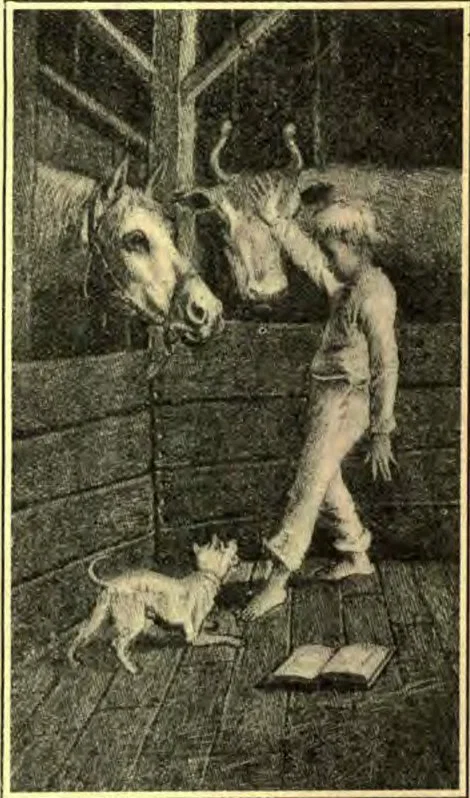
In his boyhood, Henry Clay made up his mind that he would become an orator. In this he was discouraged by his parents and those who worked with him on the old plantation, but his ideal was so strongly impressed upon him that nothing could shake it. Some one gave him a reader, and his first effort was to memorize a number of selections. He asked his friends to hear him recite them, but they laughed at the idea of a barefooted boy’s being an orator.
HENRY CLAY
HENRY CLAY
Young Clay, undaunted, went into the barn almost every day, and, with the horses and cows for an audience, recited and practised oratory. These were his first audiences; and, as a great statesman, he remarked, in later years, that they were his most patient, earnest listeners. The experience, which now seems ridiculous, was, in fact, a very helpful one for the brilliant young Virginian, who later became one of America’s greatest orators.
He began his education in a rude log cabin schoolhouse, where only the simplest studies were taught. When he was fourteen, his mother married a worthy gentleman, Mr. Watkins, and moved with her husband to Kentucky, first obtaining a situation for Henry in a retail store in Richmond.
The next year, through the influence of his stepfather, who appears to have appreciated the lad’s native talent, he was engaged in the office of Mr. Peter Tinsley, clerk of the high court of chancery.
Henry’s industrious and studious habits, when working for Mr. Tinsley, attracted the attention of the venerable Chancellor Wythe, and so pleased him that he asked him to become his private secretary.
When this awkward country lad first entered the law office, the other boys in the office made fun of him. They soon found out that he was able to take his own part, and that it was better to have him for a friend than an enemy.
His association with Chancellor Wythe was an advantage to him in many ways. It placed him under the influence of one of the most refined and cultivated minds in Virginia. The chancellor was a good linguist, and eminently skilled in composition. He was fond of Henry, and taught him a great deal. Although the work was only copying, Henry managed to gather much knowledge of law from it. In a little while, he began to read law. From this office he went to reside with Mr. Robert Brooke, at that time attorney-general of the State. Under him he advanced sufficiently in law to secure a license from the court of appeals to practise. With nothing but this license, he went to Kentucky, and located in Lexington, then a small village. He lost no opportunity to associate with good men and women from whom he could gain both wisdom and knowledge. One of his rules was to do well whatever he undertook, and in a few years he was widely known, and had plenty of business.
On April 11, 1799, he married in Lexington, Miss Lucretia Hart. She was born in Hagerstown town, Md., and was not quite eighteen years of age. She was a woman of strength of character, and made an excellent wife. “A marvel of good and thrifty housewifery, who, while her distinguished husband was battling in the council of the nation, remained at home ‘selling her butter and eggs, milk and vegetables’ from the famed Ashland farm, where she reared eleven children, and died, respected and mourned, April 8, 1864.”
His political career began in 1799, in the canvass for members of a convention to revise the State constitution. He advised the gradual emancipation of the slaves. In 1803 he was elected to the Legislature, and so popular was he that before he reached the required age he was elected to the United States Senate, where he took a leading part in all debates on important questions. In 1807 he was again elected to the Kentucky Legislature and made speaker of the House.
In 1809 he was sent to the United States Senate to fill the unexpired term of another member. Three years later he was sent to the House of Representatives. So high a reputation had he won in the Senate that, on taking his seat, he was at once chosen speaker, and became the leader of his party. He was re-elected speaker in 1813, but resigned that he might go to Europe with John Quincy Adams and other peace commissioners. After the treaty of peace was signed he returned home, and declined the mission to Russia.
For thirteen years he was successively elected to Congress, and each time filled the speaker’s chair, and during all that time not one of his decisions was reversed. One of the most brilliant speeches ever made in Congress was the one he delivered in favor of recognizing the Republic of South America. He was chief supporter of the famous Missouri Compromise, and was Secretary of State under John Quincy Adams.
From the time he ran against Jackson his party was always wanting to make him president, and nominated him in convention at Baltimore. He was defeated by Polk. So near did he come to the presidency that his friends rallied about him in 1848, but General Taylor received the nomination over him, and was elected to the presidency.
The last great effort of his life is known in history as the Compromise Act of 1850, which postponed the conflict between freedom and slavery for another ten years.
Clay was now an old man, but his courteous manner, affable disposition, personal magnetism, and sterling integrity still won new friends as they kept the old ones. His matchless voice, sweeping gestures, and majestic presence still held foremost place among the splendid talents of the younger men of the House and Senate.
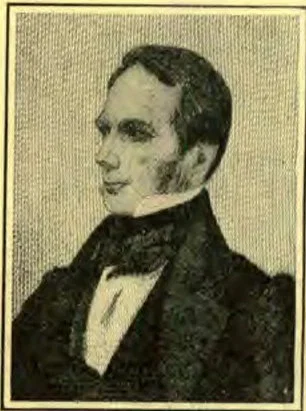
He was as striking, physically, as Daniel Webster, though in a different way. He wore the same size hat, was six feet one and one-half inches tall, of broad frame, but spare, with long arms and small hands.
This amiable, high-minded old man longed for rest, but again the Senate claimed him. He had grown too feeble to longer rule Senates, and the touching eloquence of his voice must cease. June 29, 1852, he died at the age of seventy-five, in the National Hotel at Washington.—Elisabeth Meriwether.