The mother of William Cullen Bryant was in the habit of keeping a diary, from which it appears that the future poet was an unusually precocious child. On his first birthday he could toddle alone; he knew all the letters of the alphabet when but a few days more than sixteen months old; before the close of his third year he began to read the Bible, and he had read the Scriptures through from beginning to end before the completion of his fourth year. This may indicate why he was a puny child of a painfully delicate, nervous temperament, giving little promise of surviving to boyhood. But before he had completed his fourth year, he was sent to the district school, and perhaps the association with other boys in play and mischief improved his physique. That he participated in mischief was shown by a mark which he carried on his forehead to the end of his days; it was made by the hoof of a horse that he persisted in teasing from behind until it flung out its heels and laid him flat.
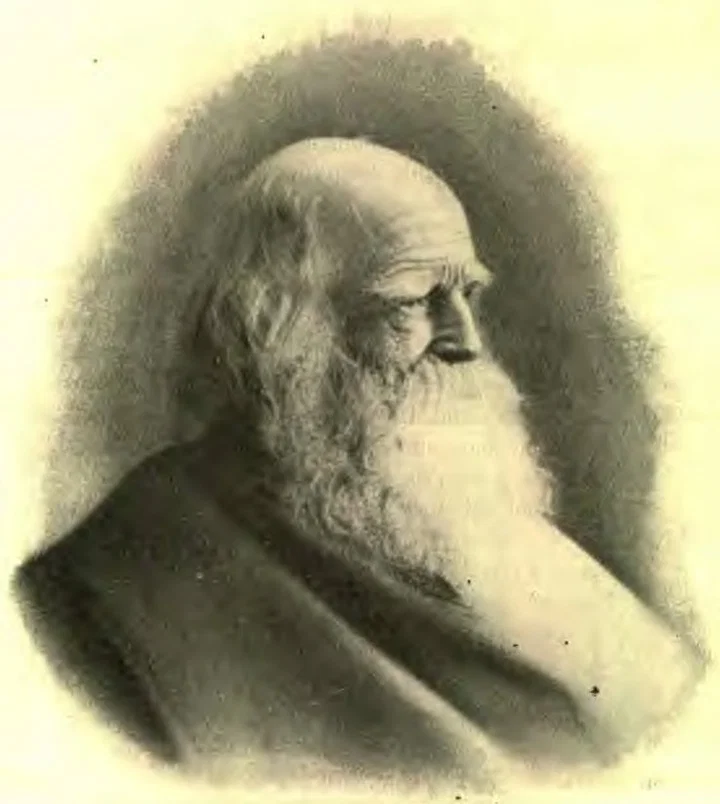
The boy began to make verses in his ninth year, and in his tenth year wrote some that were thought worthy of publication in the county newspaper. Two years later, in 1806, he celebrated the great eclipse in rhyme. He was the author of some political verses against Jefferson and his administration, which were published in Boston at his father's instance, in a little pamphlet entitled “The Embargo, or, Sketches of the Times: a Satire by a Youth of Thirteen,” which ran into a second edition, and was praised in the Monthly Anthology, then the chief critical authority of New England.
The two years from 1808 to 1810 were spent in preparing himself for college, and in October, 1810, he entered the sophomore class at Williams College, which he left the May following in the hope of joining a friend who had gone to Yale. But his father, a country doctor, was far from rich, and when the expenses of graduating at Yale were estimated, they obviously exceeded what the family could give to the young poet. He was thus obliged to stay at home, and share with his brothers the labor of managing the farm, giving his evenings to the choicer books of his father's tolerably well-stocked library. He used to read sprawled on the floor by the fire, to avoid the cost of a more expensive light.
It was after this stay with his parents that his father accidentally discovered, in the drawer of a desk at which William Cullen had been accustomed to write, some verses that seemed to him of unusual merit. He took these with him to Boston, and submitted them to the editor of the North American Review, then in its infancy, mentioning that they were written by his son seventeen years of age.
From Schoolboy to Editor
The editorial council pronounced the lines to be of high merit, but Mr. Richard H. Dana, a poet himself and one of the editorial council, thought it impossible that such verses should have come from the pen of so young a man. When investigation removed all doubts upon that subject, the poem appeared in the succeeding number of the Review. It was the famous “Thanatopsis”—a Greek word for a view of death. Its publication at once placed young Bryant in the foremost rank of the poets of America.
It was by this time apparent that he should endeavor to earn his bread by one of the literary professions, especially as his two brothers were quite sufficient for the work of the farm, which would hardly suffice for the three.
After much family debate, it was decided that William Cullen should study law in Bridgewater, where his grandfather lived. In that place there was a highly cultivated jurist, Mr. Baylies, who consented to receive the youth in his office.
There the young man of genius worked so earnestly, and acquired so entirely the confidence of his teacher, then a member of Congress, that he was entrusted with the control of nearly all the business during his prolonged absences. Yet William Cullen did not neglect the muses, and many of the pieces which he later thought worthy of preservation were written during his law course at Bridgewater.
Leaving Bridgewater in 1815, he began the practise of law on his own account in Plainfield, his office being in full view of the Bryant homestead; but after a residence of about eight months there, he went into partnership with a young lawyer named Ives, at Great Barrington. There he suffered by what he described as “a complaint of the lungs,” by which he may be said to have profited greatly; for it led him to take unusual care of his health, to avoid the use of drugs, to abstain rigorously from tea, coffee, spices, tobacco, and all stimulants, and to eat sparingly of meat. Probably the adoption of this regimen at so early an age contributed largely toward securing to him length of days, riches, and honor.
Many young persons believe themselves full of genius because they are disinclined to ordinary work, and these may do well to reflect on Bryant's apparent liking and aptitude for the commonplace tasks of life. During his five years at Great Barrington he was very industrious. Besides attending carefully to his law practise, he wrote many of the verses which contributed most to his popularity as a poet, as well as criticism for the North American Review, Fourth of July orations, and occasional addresses in large numbers and volume.
Removal to New York
Friends in Boston and New York finally succeeded in persuading him that he ought to move to New York, where he arrived without any assured resources, and expecting to live by his wits. He wrote criticisms and stories and poetry for many different magazines, and was grateful to a Boston editor for allowing him two dollars apiece for certain verses. His pecuniary value, however, was not long hidden; for he had been in New York but two years when he was invited to assist Mr. Coleman in the editorship of thep. 2 New York Evening Post, then, as now, one of the leading daily papers. After some two years' apprenticeship at the editorial desk, Mr. Coleman, the editor, died, and Mr. Bryant became part proprietor and editor-in-chief—a position which he occupied for the rest of his life.
His editorials were conspicuous for the purity, grace, and dignity of their style. I asked him once how he had managed to keep the standard of his literary work in the Evening Post so high, compelled, as editors usually are, to write with little time for deliberation, or for care as to manner. His reply was, in substance, “If my style has not suffered by the exigencies of our profession, I suppose it is for the same reason that Johnson gave to Boswell for always talking so well, ‘because he always talked his best.’”
“But,” I said, “editors are frequently called upon to write without any time to review what they have written, or even time to deliberate upon what they shall say.”
“Well,” he replied, “I would sooner let the paper go to press without an editorial than send anything to the printer with which I was not satisfied.”
His Marvelous Memory
Mr. Bryant's exceptionally abstemious habits no doubt accounted largely for the fact that he was always ready for his work. He was not a man of moods; he never said to himself or to any one else, “I do not feel like work to-day.” He was always ready, and ready to do his best, which could never be said of any man who made habitual use of stimulants or drugs.
He had a marvelous memory. I am not sure that it was excelled by Gladstone's; possibly it was by Macaulay's. On one occasion I saw it announced in the morning paper that a new poem of Mr. Bryant's had just appeared in Graham's Magazine. As the magazine had not yet reached the office, I proposed to send to the editor for a copy. He said, “I will give you a copy,” and turned to his desk to write it down. I complimented him upon his memory, and he said, “I have no doubt that, with a little time for reflection, I could write out a copy of every poem I have ever printed.” He had then published four fifths of all the poetry he ever published.
His favorite recreation from the editorial desk was travel in foreign countries, but he never felt quite well at sea, and he told me that his chief recreation on shipboard was repeating poetry. He added that he always had remembered enough to last him through his longest voyages.
Although a man of genial manners with those whom he knew well and respected, he was a man of great personal dignity, with whom no one would ever feel disposed to take a liberty. He was naturally rather shy, and generally esteemed inaccessible to strangers.
Mr. Bryant believed that political parties are necessary, but he was never the slave of any party. He regarded the most important function of an editor to be that of a critic, in contradistinction from the theory of journalism which makes the collection of news the paramount business of a journal, and he never allowed his partiality for any party to influence unduly his judgment of its actions. In this independence, both as a man and as a journalist, he persisted with truthfulness, and with refusal of any sort of compromise with transgression or the transgressor, but he was very careful to temper his judgments with justice and charity.
A Scrupulous Gentleman
Although compelled, while he was still very young, to support himself, he managed to make himself familiar with the French, German, Spanish, and Italian languages.
Of the Latin and Greek he had a better knowledge before leaving his father's house than was possessed by most of the professors in the colleges of that day. He also later learned to read modern Greek fluently.
Mr. Bryant was essentially a gentleman in his correspondence from abroad with his newspaper. Although he met in England all the most prominent men of letters of the period, he never once alluded in his published letters to any of the acquaintances and friendships thus formed abroad. He scrupulously respected the sanctity of private hospitality, and revolted at the thought of making merchandise of its privileges.
In keeping with this feeling was his aversion to publicity. Although he had overcome this to some extent after he had passed his threescore years and ten, his face prior to that period of his life was probably less familiar to the people of New York than that of any other New Yorker of even half his prominence or importance.
On his return from his first visit to Europe, in the winter of 1836, he was invited by Washington Irving, Fitz-Green Halleck, A. B. Durand, G. C. Verplanck, and many others of their class, to allow them to give him a public dinner. In his letter declining the compliment, and after testifying his sense of the flattering honor intended for him, he added:—
“I can not but feel, however, that although it might be worthily conferred upon one whose literary labors had contributed to raise the reputation of his country, yet that I, who have passed the period of my absence only in observation and study, have done nothing to merit such a distinction. This alone would be a sufficient motive with me, even were there no others which I might mention, to decline your flattering invitation.”
Although Mr. Bryant lived to the age of eighty-four years, his death, humanly speaking, was premature. His health, mentally and physically, up to May 29, 1878, seemed to be unimpaired.
On that day a memorial statue was erected in Central Park to Mazzini, the Italian patriot, and Mr. Bryant delivered the address on this occasion. When he had finished, he was obliged to stand for some time with his head uncovered and exposed to the full glare of the blazing sun.
As he descended from the stage, he was joined by an acquaintance, who invited him to walk with him across the park to his house. Although weak and exhausted by the labors of the morning, he consented. He ascended the steps of the house to which he was invited, and while his companion went forward to open the door, Mr. Bryant seems to have been attacked with a faintness or vertigo, and fell back, striking his head against the stone steps. He was taken to his home in Sixteenth Street, and after lingering in a state of comparative insensibility for fourteen days, he died.—Hon. John Bigelow.