The Early History of Saul of Tarsus
LESSON SCRIPTURES: Acts 7: 58; 21: 39; 9: 10; Phil. 3: 4, 5; 2 Cor. 11: 22; Acts 23: 16; Rom. 16: 7, 11, 21; Acts 22: 27, 28; 18: 3; 1 Tim. 1: 13; Acts 8: 3; 9: 1, 2.
REFERENCE STUDY: “Sketches from the Life of Paul,” by Mrs. E. G. White, Chapter One; “Conybeare and Howson;” and any good work on the life of Paul.
- Name.
- Birthplace.
- Lineage.
- Family and kinsfolk.
- Citizenship.
- Trade.
- Religious training.
- A persecutor.
- Zealousness.
- His part in the stoning of Stephen.
Notes
Have as many as possible take part in the exercise.
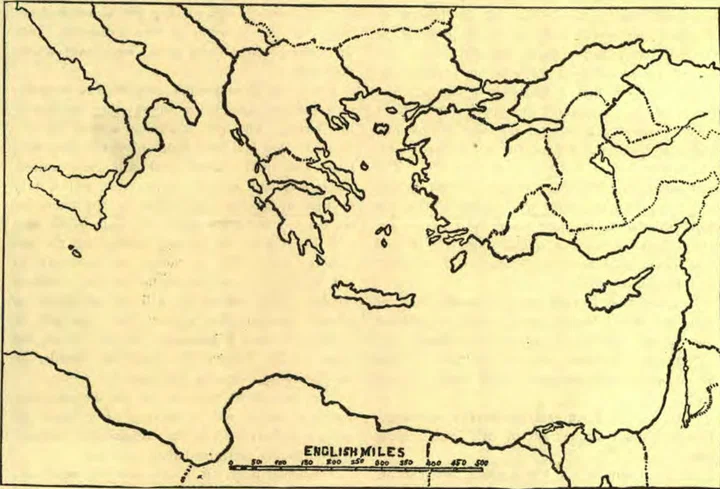
Locate Tarsus on the map, and have some one give a brief history of the city and province of Cilicia.
Devote a few minutes to a sketch of Paul’s lineage and the origin of the tribe of Benjamin.
So far as possible we hope all will give that most excellent book, “Sketches from the Life of Paul,” by Mrs. E. G. White, a careful study. If all do not have a copy of the book, secure a copy from some source, and read selections from it at each meeting. Conybeare and Howson, Schaffs-Herzog Encyclopedia, and other standard works of reference should be consulted. Study the lesson scriptures till you can give the Bible history of this great missionary.
“Saul of Tarsus was a Jew, not only by descent, but by the strongest ties of lifelong training, patriotic devotion, and religious faith. Though a Roman citizen, born in a Gentile city, he was educated in Jerusalem, by the most eminent of the rabbis, and diligently instructed in all the laws and traditions of the Fathers. Thus he shared, to the fullest extent, the hopes and aspirations, the lofty pride and unyielding prejudice of his nation.”—“Sketches from the Life of Paul.”
“We should be glad to know something of the mother of St. Paul. But though he alludes to his father, he does not mention her. He speaks of himself as set apart by God ‘from his mother’s womb,’ that the Son of God should in due time be revealed in him, and by him preached to the heathen. But this is not all. We find notices of his sister and his sister’s son, and of some more distant relatives: but we know nothing of her who was nearer to him than all of them. He tells of his instructor Gamaliel; but of her, who, if she lived, was his earliest teacher, he tells us nothing.”—Conybeare and Howson.
“It was a custom among the Jews that all boys should learn a trade.”—Id.
“The accounts of Paul’s youth are meager. The date of his birth is unknown. . . . But his character was formed under the strict Jewish discipline of his home and his training at Jerusalem. The time of his going to Jerusalem is not stated; but the statement that he was brought up there (Acts 22: 3), and that he was a ‘young man’ (Acts 7: 58) at the death of Stephen, lead us to suppose that he left Tarsus at an early age.”—Schaff.
“Paul inherited the dignity of Roman citizenship. How his ancestors or father had secured the title is unknown.”—Id.
“From among the most bitter and relentless persecutors of the church of Christ, arose the ablest defender and most successful herald of the gospel.”—“Sketches from the Life of Paul.”
“‘He made havoc,’ This word is commonly applied to wild beasts, to lions, wolves, etc., and denotes the devastations which they commit. Saul raged against the church like a wild beast—a strong expression, denoting the zeal and fury with which he engaged in persecution.”—Barnes.
“The priests and rulers who witnessed the wonderful manifestation of the power that attended the ministration of Stephen, were filled with bitter hatred. Instead of yielding to the weight of evidence he presented, they determined to silence his voice by putting him to death.”—“Sketches from the Life of Paul.”
“As Stephen stood face to face with his judges, to answer to the crime of blasphemy, a holy radiance shone upon his countenance. . . . Many who beheld the lighted countenance of Stephen trembled and veiled their faces; but stubborn unbelief and prejudice never faltered.”—Id.
“The martyrdom of Stephen made a deep impression upon all who witnessed it. It was a sore trial to the church, but resulted in the conversion of Saul. . . . Saul seemed to be imbued with a frenzied zeal at the scene of Stephen’s trial and death. He seemed to be angered at his own secret convictions that Stephen was honored of God at the very period when he was dishonored of men.”—Id.
“After the death of Stephen, he was elected a member of the Sanhedrim council, in consideration of the part he had acted on that occasion. This learned and zealous rabbi was a mighty instrument in the hand of Satan to carry on his rebellion against the Son of God; but he was soon to be employed to build up the church he was now tearing down. A mightier than Satan had selected Saul to take the place of the martyred Stephen, to preach and suffer for his name, and to spread far and wide the glad tidings of salvation through his blood.”—Id.
It seemed like a great loss to the early church in its apparent weakness to lose so valuable a laborer as Stephen. But while the Lord’s workmen may be buried, he carries on his work just the same. Out of this dark experience came perhaps a more able laborer than Stephen. Stephen willingly laid down his life, though little realizing the mighty influence of his death.
G. B. T.