I was riding in an omnibus from a hotel to a station in a country town in central New York.
The only other traveler was a lady dressed in deep black. As her cloak swept back, I saw the little silver cross against her somber gown. I had seen her in the corridors of the house we had just left, but that was of no importance, as the little cross was all the introduction needed. “This is the cross worn by my little boy,” she said, with a strange tremble of the lip, that was enough to let me know her little boy was gone. “Before he died, he said to me, ‘I want you to wear my silver cross, mama,’ and so I took his, and we placed another on his breast on that day when he was hidden away forever from our sight.” It is very hard to answer when mothers speak like this, dear children. There are no words, but the answer is almost always one of quick-springing tears, for you children do not know how dreadful it is for the mothers to have the little lives go out of the homes.
I do not speak of this sad mother to sadden my little brothers and sisters, but because I want to tell them of a beautiful work for temperance that this little boy, not yet eleven years old, did only a short time before he died.
His father was a prominent business man, and on one occasion, when he was in the city of New York, he was invited to be one of the guests at a very large dinner of prominent business men. This dinner was held, if I remember rightly, at the great house of Delmonico, the famous restaurant of which you must all have heard.
It was a very beautiful banquet room, and the table was shining with glass and silver, and the lights were burning brightly, and there was everything to make it a very brilliant grown-up occasion. Into this room the merchant came, leading his little son by the hand, for he did not like to leave him at the hotel alone, and so he brought him with him, and the other gentlemen gave him a pleasant word or a smile, and made a place for him at the table. At first he was just a little embarrassed to find himself in the presence of so many grown-up people, but he ate his dinner quietly, and listened while they talked, and watched the ways of older people, just as boys will, and began to feel after a while quite at home.
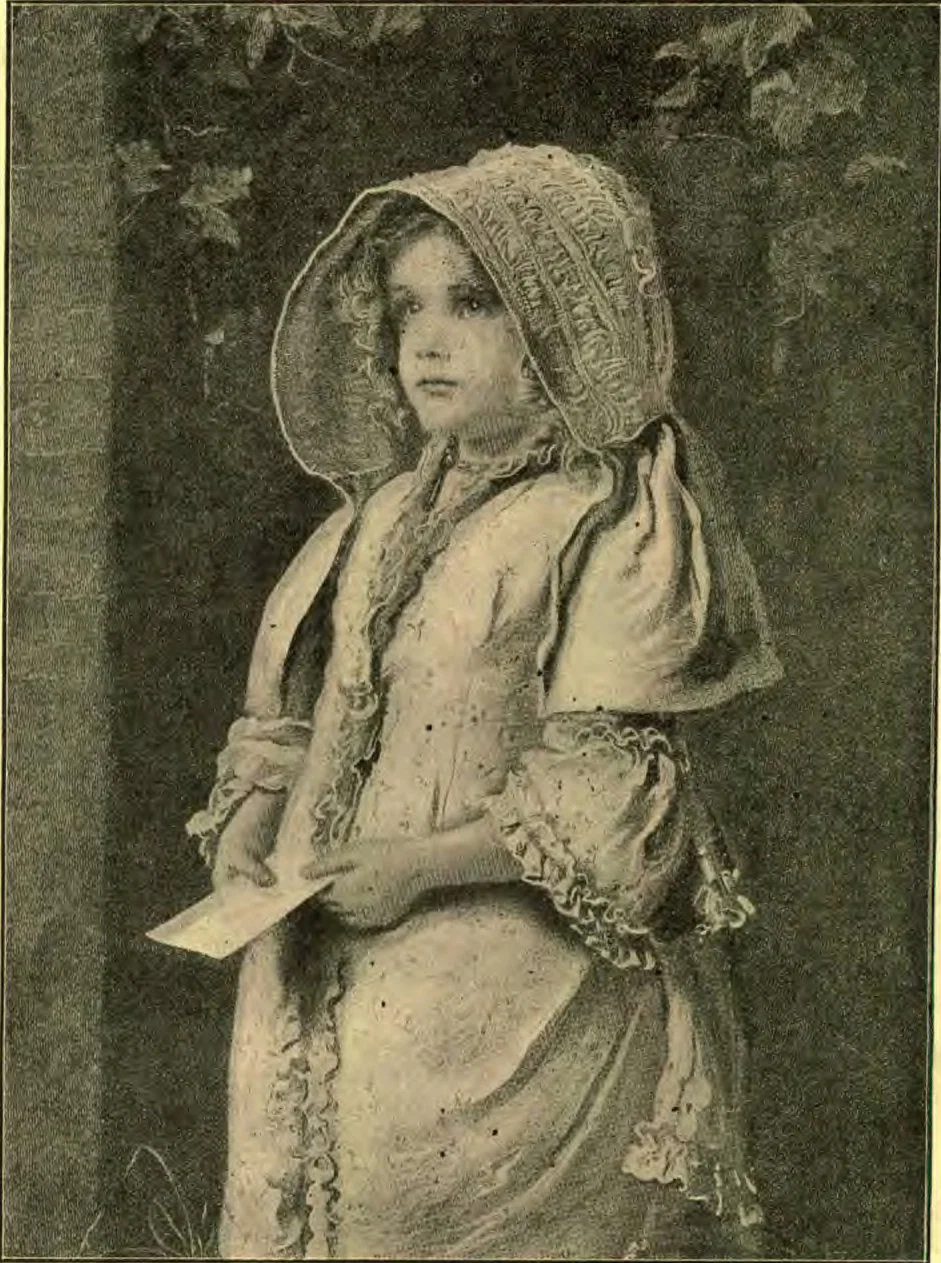
A SWEET OLD-FASHIONED GIRL
There were, as I told you, beautiful silver, glass, and china, and beautiful flowers, and beside each plate were five glasses of different shapes and sizes. One of them was for water, one for sherry, one for claret, one for champagne, and a little glass for brandy, or a cordial to be taken after the dinner was over. The waiters, who looked as grave and serious in their white neckties as if they were clergymen, bustled about the table, and the first our laddie knew, one of them was holding a decanter of wine over the glass that stood by his plate. The waiter was an old man, and he smiled kindly down upon the little fellow, as much as to say, “It is very good, shall I give you some?” Startled and frightened, the little man looked toward his father, but his father was engaged in conversation, and his face was turned away. For a moment the boy’s face flushed with distress, and then, quick as a flash, he turned his glass upside down, and glancing up into the waiter’s face, said, in a tone that could be heard by all the gentlemen near, “Is it wine? I never touch wine.” And then with an anxious glance, lest the same temptation might be offered to his father, he added, “And my papa doesn’t take any wine, either.” And then for a moment the little fellow, who had begun to feel at ease and happy, and to think it was a beautiful thing to be there, seemed suddenly to have a terror of the place, and glanced anxiously from one gentleman to another.
And now let me tell you what happened: I suspect they all had little boys at home, and that every man of them, even though he sometimes took wine himself, wished that his own children felt as this boy did, for instead of frowning at him they smiled, and when the waiter bent over them with his decanter, they quietly turned their glasses down, or made a motion for him to pass on. And so it happened that in a place where such a thing was hardly ever known to occur before, the dinner went on, and scarcely a man tasted a drop of wine.
As the mother told me this, I thought of the young Crusaders among my little brothers, and I said, “That boy was indeed a little soldier, and if he had done no other lovely thing in all his life, that was a hero’s act.”
The dear mother had many other lovely things to tell me of her boy. He went away from her in a very short time after this, but all his life, from the time he put on the silver cross, seemed to be a long story of acts of kindness and love for everybody who came within his reach.—Mary Lowe Dickinson.