FROM good, clean, notable blood on both ancestral sides came this great writer of the Mississippi Valley, Eugene Field. He was born in St. Louis, Missouri, Sept. 3, 1850. Because he loved children, wrote for them, and lived in close sympathy with his own, he, as no other writer, was enabled to portray the joys and sorrows of childhood.
When he was only six years of age, his mother died; but he never forgot her. He said, “I have carried the remembrance of her soothing voice and gentle touch all through my life. In later years he wrote a poem entitled ‘To My Mother,’ which expresses his heart longing for her. The first stanza gives an idea of the poem:—
“How fair you are, my mother! Ah, though ’tis many a year Since you were here, Still do I see your beauteous face, And with the glow Of your dark eyes cometh a grace Of long ago.”
Fortunately, after the loss of their mother, Eugene and his little brother, Roswell, were not left without the sympathy of a kind, motherly heart. They were left to the care of a cousin, Mary Field French, of Amherst, Massachusetts, who cared for them faithfully and lovingly, and did much to brighten their lives. She secured the best instructors to be found in New England, and the little fellows improved their opportunities.
Among his playfellows Eugene was a natural leader and prime favorite. He excelled in conversational powers. He seems to have formed his literary tastes gradually as his mind and character developed. He went to a number of colleges, but finally was graduated from Columbia College, Missouri. He then visited, with a friend, St. Joseph, Missouri. Here he met Julia Sutherland Comstock, who was destined to be thereafter the chief inspiration of his life. He was married Oct. 16, 1873.
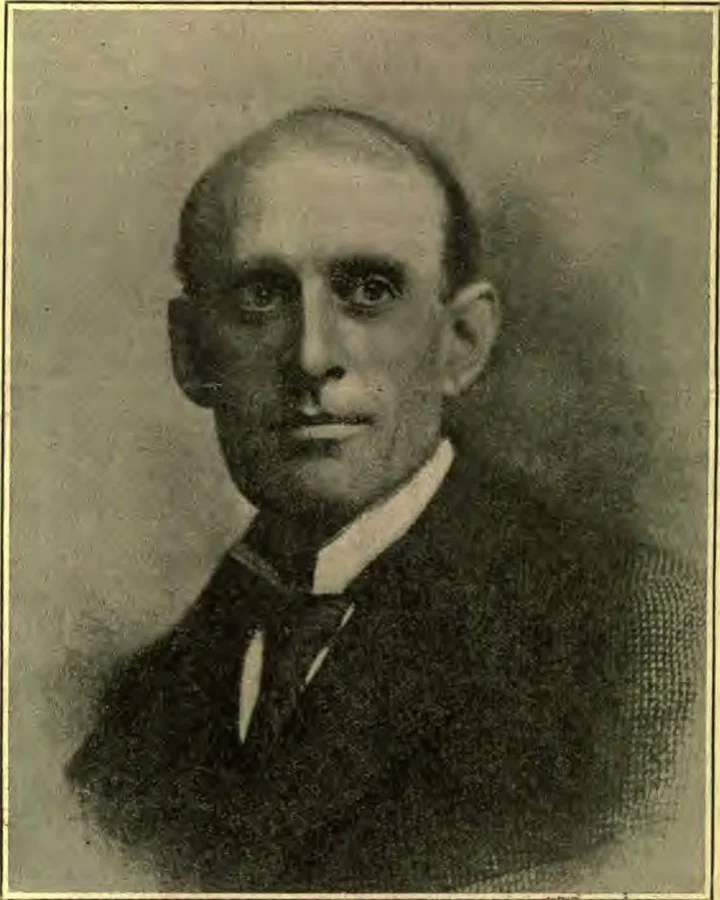
After spending six months in Europe, at the age of twenty-two, he associated himself with the St. Louis Evening Journal. Later he served as editor of the Denver Tribune, and also of the Kansas City Times. Mr. Field then accepted a position as paragrapher of the Chicago Daily News. His originality of thought and expression soon brought him into great popularity. His stories and poems were collected and published in 1896 under the titles of “A Little Book of Western Verse” and “A Little Book of Profitable Tales.” It has been said of him that he produced more first-class newspaper work than any other man in the country. While in London a few years later, he wrote a second book of verse, which embraces a broader range than any of his other books.
The death of his oldest son, Melvin, is said to have suggested the well-known poem, “Little Boy Blue,” telling how the little fellow kissed his tin soldiers and put them away, and told them to be good and wait till he should come again. “And faithful to Little Boy Blue they stand, Each in the same old place, Awaiting the touch of a little hand, The smile of a little face.”
The children who pleased him were the quaint, old-fashioned ones or the happy-go-lucky kind.
One little friend complained that the moaning of the wind frightened her at night so that she could not sleep. And he wrote for her “The Night Wind,” which is one of his prettiest children's poems.
He wrote many pretty lullabys, which have charmed the children, and the mothers too. To please a restless, wakeful child he wrote the “Poppy Lady.”
“The Rock-a-bye Lady from Hush-a-bye Street, Comes stealing, comes creeping, And the poppies, they hang from her head to her feet, And each has a dream that is tiny and fleet.”
Another poem which many little ones love is the Dutch lullaby, “Winken, Blinken, and Nod.” These three little fishermen,—
“Winken, Blinken, and Nod, one night Sailed off in a wooden shoe, Onto a river of misty light, Into a sea of dew. ‘Where are you going? and what do you wish?’ The old moon asked the three: ‘We’ve come to fish for herring fish That live in this beautiful sea; Nets of silver and gold have we,’ Said Winken, Blinken, and Nod.”
And then he tells how they fished all night until suddenly—
“Down from the sky came the wooden shoe, Bringing the fishermen home.”
Now we wonder who these quaint little fishermen are, but we find that,—
“Winken and Blinken are two little eyes, And Nod is a little head, And the shoe that rocked them all night long Is a wee one's trundle-bed.”
Not many years ago Mr. Field died, but children have not ceased to sing his lullabys, nor will they soon.
ANNIE SMITH.