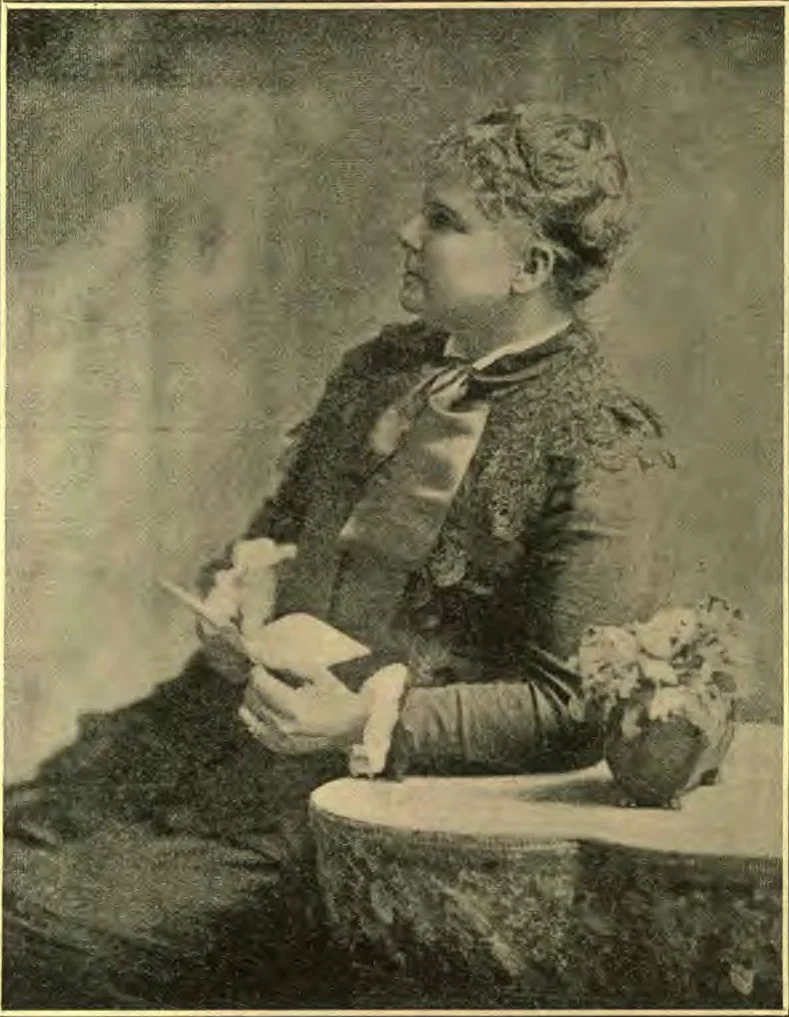
Celia Thaxter

7%

Review and Herald Publishing Assn. · Washington, D.C. · January 10, 1905

FromThe Youth's Instructor, Vol. LIII, No. 2

Read the full edition

Celia Thaxter

ONE of the ocean's best gifts to us is Celia Thaxter. She was indeed the ocean sprite so beautifully described in one of her many charming stories for little folk.
From babyhood to womanhood on a lonely lighthouse rock in the great blue Atlantic lived Celia Leighton, afterward Mrs. Thaxter. “Every wave that whitened the face of the vast sea was dear to her, every bird that floated over, every sail that glided across,—all brought her a thrill of joy. And what a keen delight came to her with the thunder, lightning, and the rain!”
Hers it was to watch for the beautiful in earth, sea, and sky. Her eye was a burning glass that concentrated all gathered glory upon her own soul. There it was pictured in splendor and in living colors, again to flash forth in conversation, story, poem, painting, or song, for the pleasure and instruction of others.
She beguiled from flower, tree, and bird, their soul secrets,—yes, and from the great sea and all it gave to her, until, as she says herself, “Sleeping or waking, year after year, she kept in her ears the sad, mysterious murmur of the sea, just like a hollow shell.”
Her tender sympathetic love for the things of nature seemed unlike that of the scientist, however enthusiastic and ardent his may be. As there were no flowers like those born and nurtured under the breath of the sea, so there was no love like hers,—deep, constant, spontaneous. Each added bit of knowledge, beauty of color or sound was quickly acknowledged by a happier smile and a fuller life.
The old town of Portsmouth, New Hampshire, proudly accepts the honor of being the birthplace of the nature lover and poet, Celia Leighton. However, at a very early age, her father, owing to some political disappointment, it is said, left Portsmouth for the desolate Isles of Shoals, having decided to spend the remainder of his days apart from his fellow men. To him, after his removal, even the horizon line that marked the mainland nine miles away was regarded with disfavor.
The Isles of Shoals are described as “stern, bleak, and forbidding, yet having a charm about them, an indescribable influence in their atmosphere, that causes one to forget the hurry and worry and fret of life.” They are supposed to have received their name from the “shoaling,” or schooling, of fish about them, which at some seasons is remarkable. Their hard, jagged, jutting ledges have gored the side of many an unwary vessel; for, although Mr. Leighton kept the bright rays from the lighthouse constantly streaming out into the treacherous darkness, many were his gruesome finds along the shore after severe storms.
The islands are said to be inhospitable, and after reading the glimpse Mrs. Thaxter has given of one evening's experience in time of storm, it is not difficult to believe them so. “The snow and sleet are beating against the windows, and we can have no fire; for the wind blows it all straight out of stove or fireplace, gas, flame, ashes, even brands and coal. We are sitting with the window open, choked with gas and half frozen, wrapped in all our winter garments, and the snow blowing over our heads.”
This girl of the sea was fondly attached to her island home, yet a young man, Levi P. Thaxter, of Watertown, Massachusetts, who had sought the quiet of her father's home for summer study and reflection, early persuaded her to make a home with him on the mainland. But the love of the sea did not forsake her on her departure; for her first printed poem was but an outburst of her soul on experiencing, one day, an unusual longing for the sea. She scribbled the verses on the back of an envelope, and sent them to a friend. They fell into the hands of James Russell Lowell, who christened them “Land-locked,” and printed them in his magazine, The Atlantic, which fact alone tells their worth.
This marked the beginning of Mrs. Thaxter's work as an author. Her domestic duties as wife and mother forbade her giving to the world all that was in her heart; but she produced enough to make her name known and loved throughout the country.
Her letters were so bright and entertaining that they proved to be golden cords that bound many men and women of rare intelligence to her in a strong friendship. Her appreciation of nature and art drew around her a host of authors, musicians, artists, and nature lovers. She had so much company at times that once in writing to a friend she referred to her “Gulf Stream of company.” Whittier, Paine, William Mason, Appleton Brown, Sarah Orne Jewett, Bradford Torrey, Thoreau, and many more as noted persons, were glad to be numbered among her especial friends.
Mrs. Thaxter, who was born in 1835, lived until 1894. She writes in a letter to a friend of an added happiness that came to her in her last days,—a grandson. “Oh, I never meant in my old age to become the subject of the thrall of a love like this; it is almost dreadful,—so absorbing, so stirring down to the deeps. For the tiny creature is so old and wise and sweet, and so fascinating in his sturdy common sense and clear intelligence; and his affection for me is wonderful, exquisite thing! the sweetest flower that has bloomed for me in all my life through.”
Her oft-expressed desire to be permitted to lay down the armor without prolonged suffering, was granted . After a pleasant evening with friends, reading, and listening to music, she retired, but did not again waken with the morning hours. The perpetual murmur of the sea about her grave bespeaks the heart murmur of her friends.