PROBABLY no section of our world now more fully and forcibly and eloquently tells of God’s love in providing for the wants of his children than does California, with its varied and extensive natural resources.
We wish to write of but one tree out of the vast timber resources of this State. It alone will suffice to illustrate how lavishly He who feeds the sparrows has provided for some of our principal needs.
Within the forests of California can be found not less than sixty-four distinct varieties of wood. Many are very valuable and beautiful. Some are susceptible of a high polish, and are much used for veneer work. Pieces of redwood burl have sold for as much as one dollar a square foot. These are used in the manufacture of fancy furniture. The tree I am to tell you about is of the redwood variety. There are great forests of this wood on the Coast Range mountains. It is the felling, cutting up, and marketing of this timber that forms the greater part of the extensive lumber industry of this State.
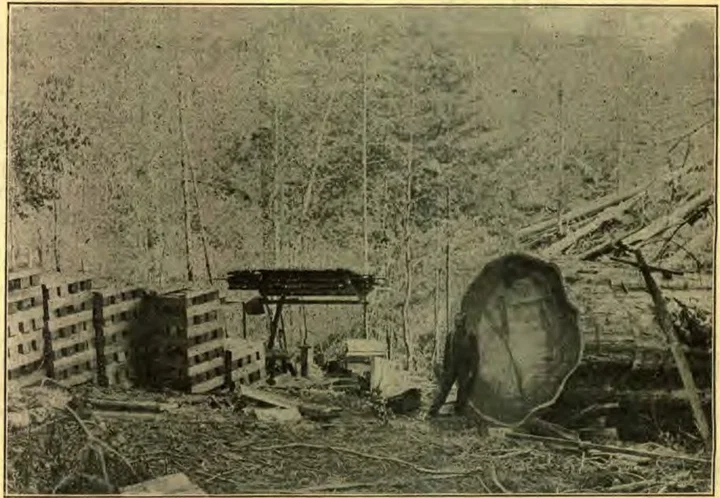
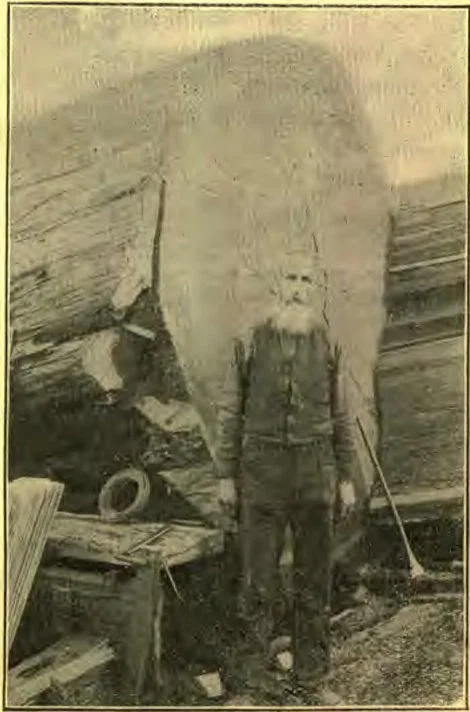
Seven miles west of Willits, California, two years ago stood this fine specimen of the redwoods of which I write. It was the property of Irvin Muir & Co. It stood on ground that needed no preparation to prevent breaking in its fall. Great care in felling these large redwoods has to be exercised at times to prevent breaking. A break would mean the loss of many dollars in ruined lumber or other material. This tree was over forty feet in circumference at the stump, and towered skyward two hundred forty feet. The bark on the tree was one foot thick. This left a body eleven feet in diameter of good timber to be worked up. Three days were required to saw it down. It is no easy matter to fell one of these giants of the forest. The stumps are often higher than a man’s head, and in order for the workmen to get up where they can work, spring-boards or scaffolding have to be used. A spring-board consists of a slab or plank, wide enough for a man to stand on, driven into a niche so cut in the tree as to hold the board firm without other support. On these the men stand and do their work. One who is skilled in the felling of these great trees commands high wages.
From illustrations on the first page an idea of the size of the tree may be gained, the gentleman standing by the tree in the picture being above the average height. In the smaller picture he is standing by a cut twelve feet from the stump, but in the larger one over one hundred feet up the body of the tree. In the left of this picture are a few piles of the 71,675 shakes that he made from the tree. Besides these the tree made 35,000 feet of lumber and 30 cords of wood. Twenty-six four-horse teams were necessary to haul the output of the one tree to market. Thep. 2 gross receipts for the material were $1,401; it cost $555 to work it up and take it to market, leaving $846 as the net worth of the tree.
This tree is larger than the average, but trees from six to eight and even ten feet in diameter are common. Occasionally larger ones are seen than that shown in the pictures. There is another species of tree here which produces trees of greater size than the redwood. It is the Sequoia family. This timber is not very abundant, but has given California her world-wide renown for large trees. I have measured specimens of this variety that ranged from seventy-five feet to one hundred ten feet in circumference. The only commercial use to which this timber has been put, so far as I know, is the manufacture of the bark into various articles which are sold as curios. This bark can often be secured two and one half or even three feet thick.
HENRY H. SCOTT.