2—In Ancient Scotland
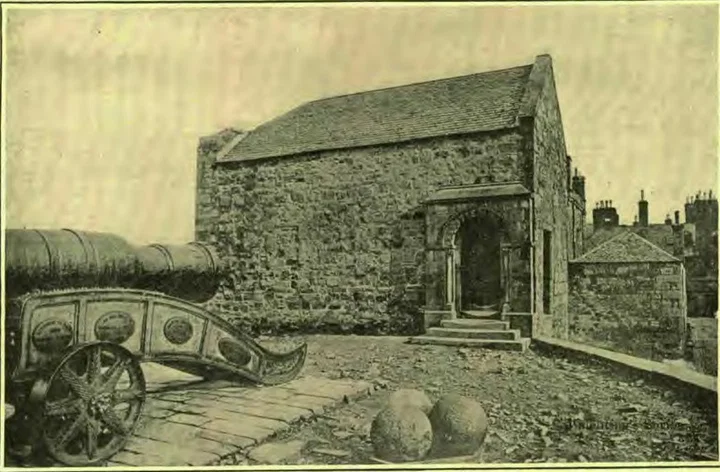
Within the walls of picturesque old Edinburgh Castle is a tiny building of rough-hewn stone, called St. Margaret’s chapel. It is a relic of times of no little interest to us, for Queen Margaret it was who helped to turn the Scottish people away from the true Sabbath.
The story begins in Ireland. Southern Scotland gave Patrick to Ireland to be first a herd-boy in slavery, and then the missionary apostle to the Irish people. A generation or two later Ireland gave one of its princely sons to be an apostle to the fierce Picts and Scots of northern Scotland.
Columba was born in 521, about thirty years after Patrick’s death. He was of a ruling clan in Ireland, an O’Neill. Getting into the schools that Patrick had founded, his heart was fired with the missionary zeal which he found in them. He started out to plant other schools in the wilderness. These schools to begin with were evidently but Bible training-schools. They were industrial schools also, for when Columba founded his first one in wild Derry, by the northwestern sea, he had to cut down the oaks and build his new school from the ground up.
These schools later grew into severely monastic institutions of the Romish sort. No doubt in the time of Patrick and Columba there was a tendency setting in strongly toward monasticism; but there is evidence that it was by no means as strong as the Romanist writers have made out. We must remember that the chronicles of those times were written long after by men who had every reason to make these early pioneers appear as Catholic as possible.
Columba’s heart always clung to his first school settlement, which has grown into the modern city of Londonderry. “My Derry, my fair oak grove,” he sings in one of his poems. He planted other school centers in Ireland,—
“But sweeter and fairer to me The salt sea where the sea-gulls cry When I come to Derry from far.”
The missionary fire was in his soul, however, and across the salt sea to the northward he knew that the wild Picts and Scots of north Britain and the western isles were living in darkness and ignorance. So he exiled himself from his native land, and founded an independent missionary center on the island of Iona, just off the Scottish coast. For thirty-four years he and his missionary band wrought among the pagan clansmen, planting churches and schools in all the land to the utmost bounds of Scotland. Scottish missionaries were sent out into western Europe, joining those from Ireland in preaching among the Gothic tribes, from the North Sea to the Alps and the Danube.
As Rome gathered power, this early work was largely spoiled. There was constant effort to break down the ancient churches in Britain, and with too great success. Furthest of all from Rome’s influence in Britain were the churches that had descended from those founded by Columba in northern Scotland. When Queen Margaret came to the Scottish throne in 1069 as wife of King Malcolm, she found the peasant churches quite out of harmony with the Roman practise.
She was a Saxon princess from England, and an ardent Catholic. She was shocked by the simplicity and plainness of the Scottish services. She urged the placing of crucifixes in the churches. Doubtless this little chapel of hers was fitted out to be a model of Catholic ritual. But strangest of all to her was the practise among the northern churches of working on Sunday and keeping the Sabbath.
Says Skene, the Scottish historian: “They held that Saturday was, properly, the Sabbath on which they abstained from work.” He traces this respect for God’s Sabbath to the teaching of Columba and the practise of the early Irish church.
Queen Margaret argued long about this with the Scottish church leaders. Her royal husband, Malcolm, called them in and translated for her. They spoke only the ancient Gaelic. She declared that the “blessed Pope Gregory” commanded rest on Sunday. And so he had, for Sabbath-keepers had been troubling him in Constantinople and the East. By her royal authority and by studied efforts to Romanize the churches of Scotland, Queen Margaret turned the people away from the Sabbath.
Papal darkness fell upon Scotland for centuries, and only by the hard struggles of the Reformation was the light let in again. John Knox and other Reformers did not go to the end of the matter and take their stand upon the Word of God with no admixture of Romish tradition. They saw not all the truth. Now in these last days, once again the primitive faith is being preached in Scotland, and our own workers are carrying the Sabbath truth through lowland and highland where once Columba’s missionaries taught the people to keep God’s holy day.
W. A. SPICER.