THE name of Scotland has long been a synonym for a well-known sterling type of character. At the opening of the sixteenth century the country deserved a far different reputation. Nowhere in Europe had the corruption of Romanism reached a higher pitch. The change that has given to the world Scotch literature, thought, belief, and action; that has added to history such names as James Watt, Walter Scott, Robert Burns, Guthrie, and Chalmers, is declared by another Scotchman, Thomas Carlyle, to have been for the nation nothing less than a real resurrection from the dead. That result is attributed to the work of one man, John Knox.
There is good reason, then, why the anniversary of such a man’s birth should be kept with enthusiasm.
The day of Knox’s birth, indeed, is unknown; even that the year is 1505 is not beyond dispute. That uncertainty is but part of the obscurity that veils much of his early life. Of the middle class of society, a student at the University of Glasgow, a priest of the church that he later opposed, a tutor in a noble family, he was obliged to seek refuge because of his association with Scotland’s martyr Reformer, George Wishart. He shrank from invitations to preach even before the little group of refugees until one Sunday their preacher, following a prearranged plan, spoke on the election of ministers, and openly appealed to Knox not to refuse the call, while his hearers heartily gave their assent to this plea. After a struggle for some days the reluctant prophet came before them with a message that gave promise of his future power.
But his time of great service to his country was not to begin at once. The stronghold that shielded him and his comrades was taken with aid from France, and for a year and a half they knew the rigor of life in the French galleys. Release and a brief period of preaching in English churches and as a chaplain of Edward VI, with suggestions of a bishopric, were followed by the accession of Bloody Mary. Knox betook himself to the Continent, where a ministry in Geneva gave him welcome fellowship with Calvin.
On the death of Mary, changed conditions brought him back to his native land, which from that time was ruled by him even more truly than by the one that held the scepter. Summoned before his sovereign, Mary Queen of Scots, to account for some words of his, he was met with her contemptuous question, “What are you within this realm?” The various interviews to which she called him answered her question by their proof that he was a power with whom she had to reckon. Seeking his condemnation on a charge of treason, she could not keep her privy council from following his defense with a unanimous acquittal. It was Mary’s head at last, and not his, that went to the block. He stood like an earlier John before another monarch, and it was no yielding on his part that saved him from a like fate.
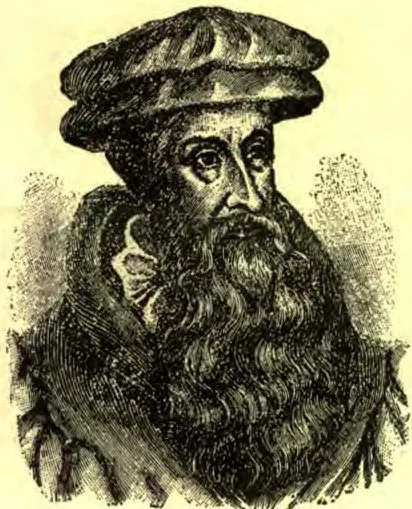
Knox was statesman and theologian alike, caring for both the civil and the religious welfare of the nation, shaping the confession of faith and the plan of church government as well as guiding wisely in public affairs. A scholar himself, he pleaded strongly for generous provision for education. But for the nobles’ greed much more in this direction would have been accomplished in his own time, and even Scotland’s notable achievements have not yet reached the ideals of the far-sighted patriot. A leader in the Scotch Reformation, he was also its historian. His account of this movement, while his chief work, is far from being his only one. His writings show that he was a master of language. From them one can understand something of the power of his vigorous speech, which otherwise might remain largely a tradition, as but one of his sermons was published. His voice, the English ambassador bore witness, could put more life into men than five hundred trumpets. His tremendous energy in preaching has been described in the often-quoted words of one who heard him on an occasion when, in his feebleness, two servants lifted him into the pulpit, on which he leaned at first; but before he had finished, “he was like to ding the pulpit in blads and fly out of it.”
Like other Reformers, he had a deep love for the Bible, reading the Psalms through once a month; like them, too, he had a profound conviction of sin and of God’s grace. His work for the world was rooted in a personal experience. He was the champion of truths that he had tested in his own life.
Many are his titles to fame, which has rightly linked his name with those of Luther and Calvin; but thought of him is perhaps most often associated with his fierce denunciations of wrong. He did not lack humor and other qualities that were more attractive, but the times in which he lived called for something else than soft words. Men did not leave one of his sermons in doubt as to what public event or what person in the congregation itself the preacher had had in mind. He answered his critics by saying that from the prophets he had learned “plainly and boldly to call wickedness by its own name, a fig a fig, and a spade a spade.” His scorn of tolerance and defense of persecution are to be regretted, but even in these days there is need of more of the spirit of the man whose fittest epitaph has been felt to be the words at his grave, “Here lieth a man who in his life never feared the face of man; who hath been often threatened with dagge and dagger, but yet hath ended his days in peace and honor.”—Christian Endeavor World.