Jeffy stopped whistling to scowl; the two things somehow didn’t fit each other. You either had to stop whistling or go without scowling, and you couldn’t do that very well when you were in a dreadful hurry, and couldn’t find your cap and jacket. So Jeffy stopped whistling a minute.
“Where could I have put my jacket this time?” he scolded. “I never saw such slippery old things as jackets an’ hats, anyway!”
That made the second pair of them Jeffy had lost since morning. The first time it wasn’t so bad, for there had been his best coat and cap to fall back upon. Of course he had gone upstairs after those when he hadn’t been able to find the every-day ones. But this time—what was he going to do this time? The best ones were lost, too!
“I’ve got to find ’em!” he said. “I can’t stay home from Terry Lowe’s circus. Mother! Aunt Louie! Mildred!” he raised his voice to a shout for help. “Can’t somebody tell me where my jacket is? I can’t find ’em anywhere.”
But no help came. Nobody answered. Jeffy’s losing his things was such a very old story, indeed.
“Oh, dear!” Then suddenly the scowl vanished, and the merry whistle came back, for Jeffy remembered the old last-year’s jacket, up in the store closet. It would be tight, and the sleeves would be too short, but it would do. One isn’t critical at a back-yard circus.
After dinner Jeffy heard his special “call” on the telephone. Uncle Geof was calling him. He came back from the front hall in a whirl of excitement. Goody! oh, goody! Uncle Geof had invited him to go riding in his automobile with him; he was to call in about fifteen minutes.
“Goody!” shouted Jeffy. “How about that, mother? Isn’t Uncle Geof a dear? But I can’t wear my last year’s coat, of course,—why, that’s gone, too! They’re all gone, every single one of ’em! O mother, don’t you know where some of my jackets and caps are? I’ve got to find one before Uncle Geof comes!”
“Why, yes, I know where they all are,” smiled mother, pleasantly. “They’re in the pound.”
“In the—what?” cried Jeffy. His eyes widened with astonishment.
“The pound. Haven’t you ever heard of a pound, dear? It’s a place where caps and jackets that little boys leave lying round in the wrong places are all put away; that’s what my pound is, anyway. In olden times pounds were public enclosures where all stray animals were driven and kept until their owners claimed them, and, Jeffy, the owners had to pay something to get them out, you know. That was the way they were taught to keep their property where it belonged. I have an idea that the man who had to pay very many times to get his stray sheep or cows or oxen out of the pound concluded after a while that it would be better to go home, and mend his fences, and keep the animals at home. And perhaps,”—mother looked out of the window thoughtfully,—“perhaps the little boy who has to redeem his caps and jackets very many times from his mother’s pound will conclude by and by”—
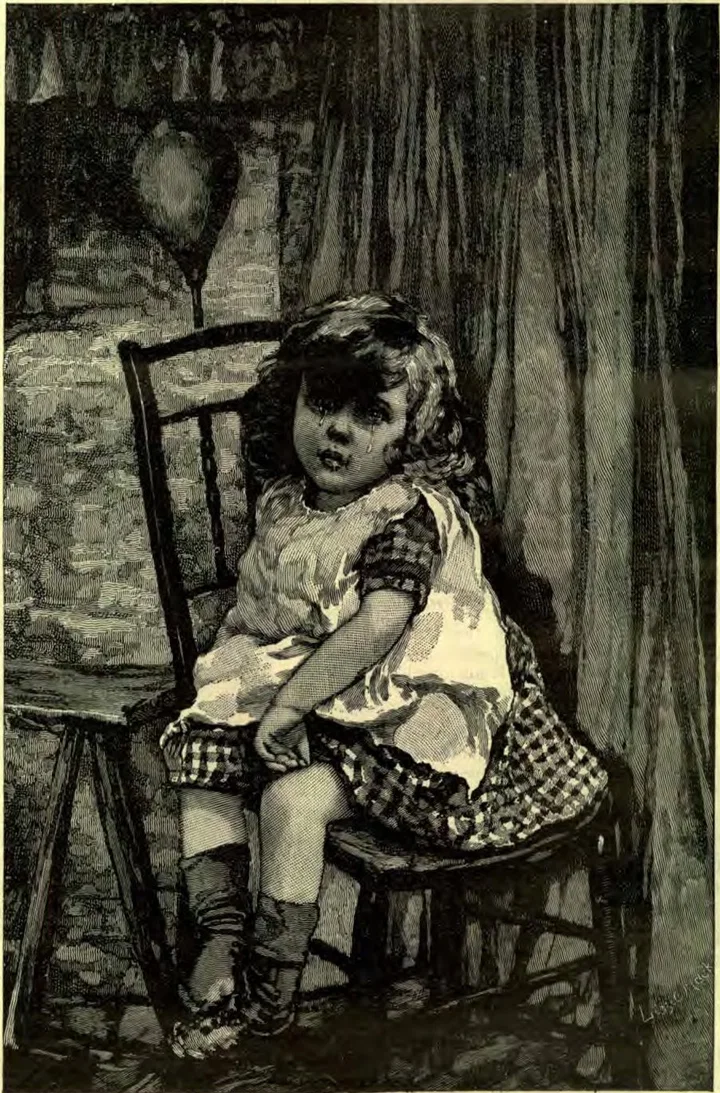
“Yes’s—yes’m,” stammered red-faced Jeffy, “p’rhaps he’ll hang ’em up in the hall closet. But, mother”—
“But, Jeffy!”
“I hope it—doesn’t cost so very much to get things out o’ pounds, because—because”—
“Because, Jeffy?”
“I haven’t got much of any spending-money left. I—I’m ’fraid I haven’t got any. I spent the last of it yesterday.”
There was an embarrassing little silence. Jeffy watched mother’s face with anxious eyes, and listened for Uncle Geof with both his anxious ears. He knew he could never go riding bareheaded and without a jacket—not in a beautiful new automobile! And his spending-money was all eaten up.
“Oh, I wish folks had never thought to pound things!” he groaned, inside, “or else I wish I’d thought to hang ’em up.”
There was certainly a sound out of the window: no, that was old Tim Hoovey’s push-cart. But Uncle Geof might come any minute.
“If—you’d lend me some money, mother, ’vance it, you know”—hesitatingly.
Mother crossed the room, and took him right into her two arms.
“Dear, I can’t. It’s a rule, you know. And I’m afraid it’s a pound rule not to let anything go until it is lawfully redeemed. I’m sorry, Jeffy”—
“Yes’m, so’m I.” But Jeffy straightened up and looked as if he were trying to smile. It wasn’t quite a success, but mother was satisfied. She smiled, too, though as sure as you live she had to try as hard as Jeffy! What he wanted to do was to cry. It was terribly hard, oh, terribly, keeping a pound.
“You tell him—you tell Uncle Geof I can’t go to-day ’cause I’ve got to earn some money,” Jeffy said, steadily. “I’m going out in the back yard, and pile that wood up.” And he strode away, whistling a shaky little tune. Mother looked after him mournfully.
“I feel as if I’d pounded him!” she told Aunt Louie a minute later, as she stood by the window looking out.
Aunt Louie rocked slowly back and forth in a chair.
“Well, you have, the poor little man!” she smiled; “but he’s good for it. Wait and see if it doesn’t teach him to hang his things up, dear. Just wait and see.”
And mother waited and saw.—Annie Hamilton Donell.