The Presidency

6%

Review and Herald Publishing Assn. · Washington, D. C. · January 31, 1905

FromThe Youth’s Instructor, Vol. LIII, No. 5

Read the full edition

The Presidency

THE president of the United States occupies a position of peculiar importance. In the whole world there is no other ruler under free institutions whose power compares with his. Of course a despotic king has even more, but no constitutional monarch has as much. In France and Switzerland the president is not a very important officer compared with the president of the United States. In England the sovereign has much less control in shaping the policy of the nation, the prime minister occupying a position more nearly analogous to that of our president. The prime minister, however, can at any time be thrown out of office by an adverse vote, while the president can only be removed before his term is out for some extraordinary crime or misdemeanor against the nation.
It is customary to speak of the framers of our Constitution as having separated the judicial, the legislative, and the executive functions of the government. The separation is not sharply defined. The president has most important legislative functions, and the upper branch of the national legislature shares with the president one of the most important of his executive functions; that is, the president can either sign or veto the bills passed by Congress, while, on the other hand, the Senate confirms or rejects his nominations. The president can not initiate legislation, although he can recommend it. But unless two thirds of Congress in both branches are hostile to him, he can stop any measure from becoming a law.
The immense federal service, including all the postal employees, all the customs employees, all the Indian agents, marshals, district attorneys, navy-yard employees, etc., is under the president. But he does not appoint these by himself. His is only the nominating power. It rests with the Senate to confirm or reject the nominations.
The secretaries who form the cabinet are in the strictest sense the president’s own ministerial appointees,—the men, chosen out of all the nation, to whom he thinks he can best depute the most important and laborious of his executive duties. They all advise him on matters of general policy when he so desires it, and in practise each cabinet officer has a very free hand in managing his own department, and must have it if he is to do good work. But all this advice and consultation is at the will of the president.
The president and Congress are mutually necessary to each other in matters of legislation, and the president and the Senate are mutually necessary in matters of appointment. The Senate has no right to dictate to the president who shall be appointed, but it has an entire right to say who shall not be appointed; for under the Constitution this is its duty. Although many men must share with the president the responsibility for different individual actions, and although Congress must also very largely condition his usefulness, yet the fact remains that in his hands is infinitely more power than in the hands of any other man in our country during the time that he holds the office; that there is upon him always a heavy burden of responsibility; and that in certain crises this burden may become so great as to bear down any but the strongest and bravest man.
We have had presidents who have acted very weakly or unwisely in particular crises. We have had presidents the sum of whose work has not been to the advantage of the republic. But we have never had one concerning whose personal integrity there was so much as a shadow of a suspicion, or who has not been animated by an earnest desire to do the best possible work that he could for the people at large. Of course infirmity of purpose or wrong-headedness may mar this integrity and sincerity of intention; but the integrity and the good intentions have always existed. We have never had in the presidential chair any man who did not sincerely desire to benefit the people, and whose own personal ambitions were not entirely honorable.
Corruption, in the gross sense in which the word is used in ordinary conversation, has been absolutely unknown among our presidents, and it has been exceedingly rare in our presidents’ cabinets. Inefficiency, whether due to lack of will-power, deficiency in wisdom, or yielding either to the pressure of politicians or to other pressure which is often found even in a free democracy, has been far less uncommon; of deliberate moral obliquity there has been but very little indeed.
In the easiest, quietest, most peaceful times the president is sure to have great tasks before him. The simple question of revenue and expenditure is as important to the nation as it is to the average household, and the president is the man to whom the nation looks, and whom it holds accountable in the matter both of expenditure and of revenue.
The representatives in the long run are sure to try to do what the people effectively want. The trouble is that although each group has, and all the groups taken together still more strongly have, an interest in keeping the expenditures down, each group has also a direct interest in keeping some particular expenditure up. This expenditure is usually entirely proper and desirable, save only that the aggregate of all such expenditures may be so great as to make it impossible for the nation to go into them. But the president has to balance the demands on the treasury with the capacities of the treasury.
Inasmuch as particular questions have to be met every year in connection with every session of Congress and with the work of every department, it may readily be seen that even the president’s every-day responsibilities are of no light order. So it is with his appointments. Entirely apart from the fact that there is a great pressure for place, it is also the fact that in all the higher and more important appointments there are usually conflicting interests which must somehow be reconciled to the best of the president’s capacity.
An immense addition to the president’s burden is caused by the entirely well-meaning people who ask him to do what he can not possibly do. For the first few weeks after the inauguration a new president may receive, on an average, fifteen hundred letters a day. His mail is so enormous that often he can not read one letter in a hundred, and rarely one letter in ten. Often there are letters which the president would really be glad to see, but which are swamped in the great mass of demands for office, demands for pensions, notes of warning or advice, demands for charity, and requests of every conceivable character.
One rather sad feature of the life of a president is the difficulty of making friends, because almost inevitably after a while the friend thinks there is some office he would like, applies for it, and when the president is obliged to refuse, feels that he has been injured. It is hardly necessary to allude to the well-known fact that no president can gratify a hundredth part of the requests and demands made upon him for office, often by men who have rendered him real services, and who are fit to fill the position they seek.
Perhaps the two most striking things in the presidency are the immense power of the president, and the fact that as soon as he has ceased being president, he goes right back into the body of the people, and becomes just like any other American citizen. While he is in office, he is one of the half-dozen persons throughout the whole world who have most power to affect the destinies of the world. He can do more than any save one or two absolute sovereigns to affect the domestic welfare and happiness of scores of millions of people; then when he goes out of office, he takes up his regular duties like any other citizen.
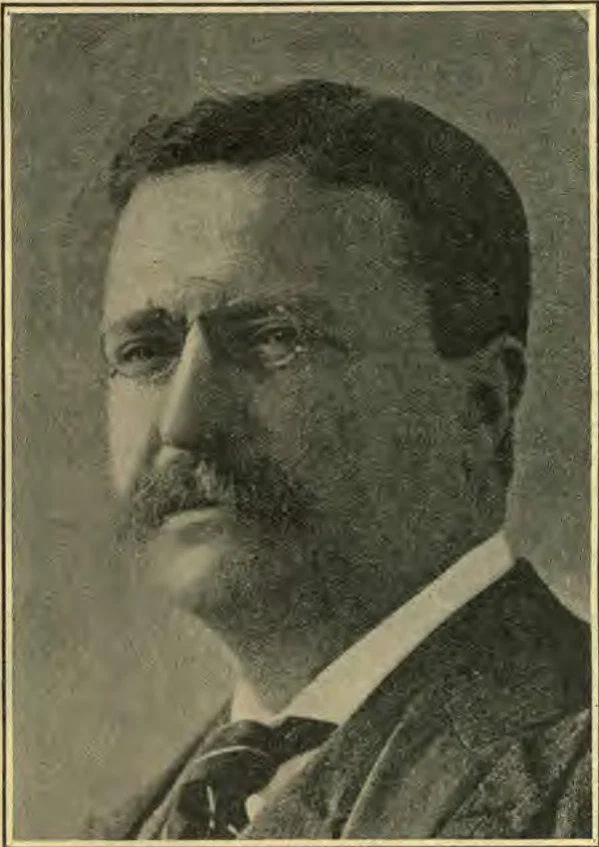
All together, there are few harder tasks than that of filling well and ably the office of president of the United States. The labor is immense, the ceaseless worry and harassing anxiety are beyond description. But if the man at the close of his term is able to feel that he has done his duty well, that he has solved after the best fashion of which they were capable the great problems with which he was confronted, and has kept clean and in good running order the governmental machinery of the mighty republic, he has the satisfaction of feeling that he has performed one of the great world tasks, and that the mere performance is in itself the greatest of all possible rewards.—Theodore Roosevelt, in Youth’s Companion.