First-Fruits in Tahiti
The religious practises of the Tahitians upon the arrival of the missionaries were almost too horrible to permit description. The favorite god, Oro, was simply a log of wood the size of a man, kept in a shed among trees surrounded by a stone wall. In this place, which was called a marae, were altars, on which lay pigs that had been dead for months. Men were sacrificed there with as little regard as animals.
When a sacrifice was demanded for Oro, it might be the guest, sitting at a meal with the chief, who would prove the victim. If one of a family was offered, the whole household subsequently became victims. When the sacred drum gave the signal for a human sacrifice, the natives fled for refuge to the mountains and caves. They had more than one hundred different gods.
The people were thieves. One god was a protector of thieves, and on starting out upon a robbing expedition, they always presented themselves to him for protection, promising a part of the booty as an offering, if he would not expose them. They were murderers. The life of a child was of little worth; and often it was taken as soon as the child was born. It was impossible to estimate the number of little ones thus destroyed, but the first missionaries were of the opinion that not fewer than two thirds of the children were murdered by their own parents. This was partially due to the regulations of a most wicked society which existed among the islanders, whose gods required that no child live. Then, too, the people were shiftless, and children were looked upon as a burden; and there is reason to believe that simply to avoid caring for their offspring during the helpless period of infancy and childhood, many parents consigned their little ones to untimely graves.
It was among such people that the missionaries began their almost hopeless labors. Three weeks did not pass before they were robbed; and because they did not punish the culprits, they were regarded as cowards; but they sought to win by kindness. They erected a hospital near their quarters, but the natives, although suffering from terrible diseases, refused help. In the very face of the missionaries, they carried on their evil practises.
In 1807 a three-years’ war broke out in Tahiti, and conditions were such that the missionaries were compelled to take refuge elsewhere. All but two, Mr. Nott and Mr. Hayward, went to New South Wales. These brethren went to the island of Huahine, near by, so that they might be at hand to nurture any of the good seed that might appear to be taking root.
When the ship “Duff” first reached Tahiti, the ruler, Otu, was influenced quite largely by his father, Pomare, who was a wise man, having been ruler among the chiefs. On the second Sunday after their arrival, one of the missionaries preached through an interpreter, from John 3:16, and Pomare pronounced what he had heard as very good. Although he never denounced his idols, still he acknowledged that his was “a bad and foolish land, that knew not the true God,” and his presence had a restraining influence upon others, as he proved himself the friend of the missionaries. Still just at the time when he was making them his fairest promises, secretly he was engaging in the most vicious practises, so steeped was he in wickedness, and so unaffected by the real truth of righteousness.
In 1803 Pomare suddenly died, and his wicked son, Otu, who now styled himself Pomare II, had more power than ever. But with all his wickedness he was destined to become the first convert to Christianity in Tahiti. During all these years, when the natives were entreated to believe on the Lord Jesus, they would ask, “Have Pomare or any of the chiefs believed?” and the Lord was preparing to answer this question, and leave no excuse for their refusal to obey the gospel summons.
During this three-years’ war Pomare had gone to the island of Eimeo. He invited the missionaries to join him there. They accepted his invitation, and built a small chapel, and opened a school at Papetoai. The king himself had already learned to read and write. After a time they observed that the king seemed to be losing his regard for his old gods; and when he insisted that a sacred turtle be dressed and served upon his table, instead of sending it to the idol’s temple, an astounding blow to idolatry and sacred customs had been struck. When no evil befell him, he became more bold. His brother even ventured to burn a sacred log, and eat breadfruit which had been baked in its ashes. Next Pomare declared that he would have but one wife; and upon the birth of their little daughter, the customs of the ages were disregarded: she was permitted to live, and no sacred rites were performed in her behalf.
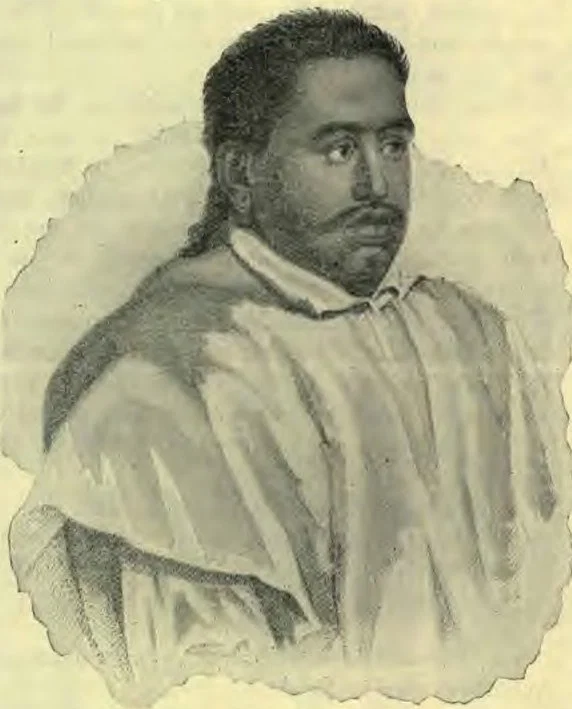
When, in July, 1812, Pomare asked for baptism, the joy of the missionaries was unbounded. Fifteen long years had they waited for fruit, and now one was given them who was destined quickly to lead his people to accept the gospel with him. Pomare declared it his fixed purpose to cleave to Jehovah and his people. He begged the missionaries to pray for him, and proposed immediately to build a large chapel. He declared that he had tried to persuade the kings of other islands to do as he had done; and when they determined to cleave to Oro, he told them that they were cleaving to Satan.
The missionaries anxiously waited to see if Pomare were really in earnest. His subsequent grief for sin, his observance of the rest-day, and his efforts to persuade his friends to turn to God, convinced them that the Lord had wrought a marvelous change in this man. The light of day was dawning in Tahiti. Pomare was persevering and untiring in his efforts to enlighten his people. His prayers, and his letters written at this time, as translated by the missionaries, were remarkably impressive and pathetic. “Jehovah, thou God of our salvation, hear our prayers, pardon thou our sins, and save our souls. Our sins are great and more in number than the fishes in the sea, and our obstinacy has been very great, without parallel. Turn thou us to thyself, and enable us to cast off every evil way. Lead us to Jesus Christ, and let our sins be cleansed in his blood. Suffer us not to come to thine house with carelessness, and return to our houses and commit sin. . . . Bless all the inhabitants of these islands, all the families thereof; let every one stretch out his hand to God, and say, Lord, save me, Lord save me. Bless Britain, and every country in the world. Let thy word grow with speed in the world, so as to exceed the progress of evil. Be merciful to us and bless us, for Jesus Christ’s sake, Amen.”
In 1812 Pomare sent his family idols to the missionaries, that “they might either commit them to the flames, or send them to England.” He said in a letter accompanying them, “If you think proper, you may burn them all in the fire; or, if you like, send them to your country, for the inspection of the people of Europe, that they may satisfy their curiosity, and know Tahiti’s foolish gods.”
This was but the beginning of a marvelous fruitage for which the missionaries had waited and prayed these many years.
ESTELLA HOUSER.