The interior of South America is chiefly inhabited by Indians and half Spanish tribes; they speak a mixture of Spanish and Indian. They have dark, copper-colored skin; their hair is straight and black, and their features clear cut. In the town of Esquina, Correntes (about eight hundred miles from Buenos Ayres), where we lived for a time, the natives are very ignorant, hardly knowing anything outside of their own town. To them a stranger is a great curiosity, especially at the half savage school which we attended. They were very kind, however, and brought us presents and flowers many times. Esquina is very sandy, and it is not an uncommon occurrence to be caught in a sand-storm.
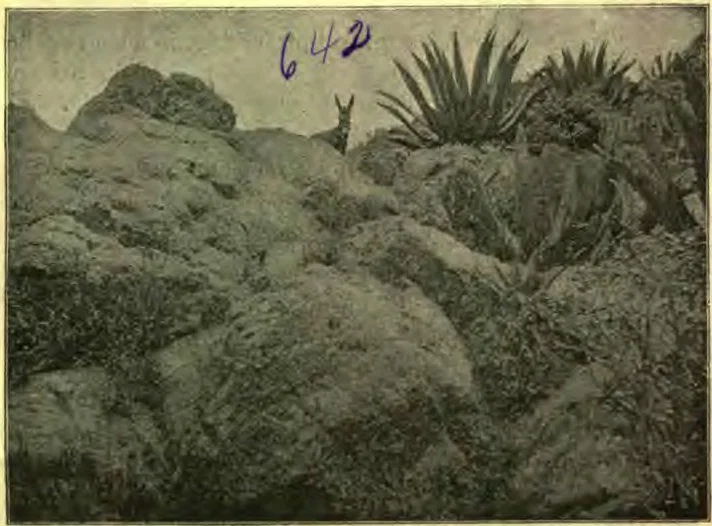
These storms rise without a moment’s notice, and often prove very dangerous, if encountered unawares, for they fill the eyes and ears with sand. The only safe way is to lie with the face down, until the tempest is passed.
One of the oldest customs is the drinking of mate, which is similar to herb tea. A large spoonful of this mate is put into a gourd with a small hole in the top, boiling water is poured on it, and sugar added if needed. A long silver tube, with small holes in the bottom, is used to draw the liquid to the mouth, the way a straw is used in drinking soda-water. All this combined is called a bombesa.
The South Americans are great wine drinkers; in fact, wine largely takes the place of water, which is very poor. A dinner without wine (vino) of some kind would seem very strange. Coffee, strong and black, is always taken after dinner, tiny after-dinner cups, almost half filled with sugar, being used. The men are great smokers, beginning when quite little boys. This accounts for their small stature; for it stunts their growth.
About three miles from Esquina, may be found cannibal tribes, who come to Esquina occasionally to trade; they are copper colored and very fierce looking, almost like wild animals. Some missionaries, who have gone among them hoping to convert them, have fallen prey to them, being devoured. These cannibals worship nature and its forces, and think missionaries are provided for their benefit no doubt.
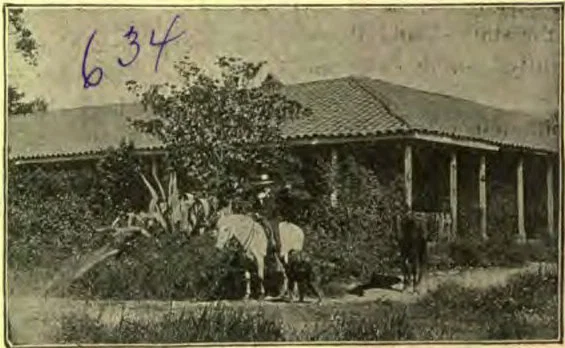
The native homes outside of the town are made of mud, and sometimes old tin cans are used, which have been flattened out. Filete lace making is a great art among the women; it is made by knotting thread on a small board, and is very fine and delicate when finished. They are fond of music, and generally have a band playing every evening in the praca (park); when all the senoritas and senoras promenade, keeping time to the music.
Wild animals are found in abundance along the Rio Correntes (Running River). The large wildcats often peeped out from the banks and snarled at us as we passed in our boat. Beautiful birds gazed shyly at us, but did not seem to fear. The heron, from which the dainty aigrets are taken and used in the millinery stores of other countries, is found here. Some of these herons are bright pink, with long, slender bill and legs; others are snow white, with yellow bill and legs. Here the grebe is also found. It is similar to the duck in size and shape, and has a heavy covering of feathers, shaded from silver to brown. The birds are prized highly on account of their valuable skin, which is sold to fur makers for different purposes.
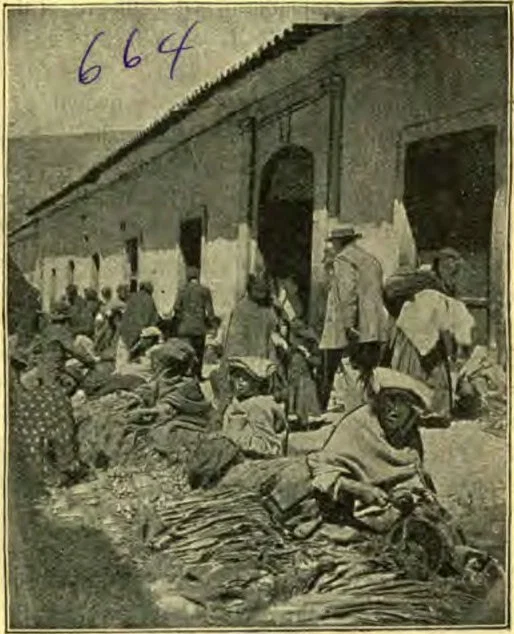
In the tropics the twilights are very long, and this is the time the people awake to the knowledge that life is worth living. They do not go out in the streets very much during the afternoon, but take a siesta (sleep). A common expression with them is mananha (to-morrow), that is their way of putting things off.
If a little girl is dead, about a dozen of her playmates follow the coffin, which is carried by four or five, the only covering being the drapery. Sometimes the coffins are draped in red, but white is generally used for a young person.
I hope this people may hear the truth we love.
VIOLET G. HAWKESWORTH.