Strength in Weakness

5%

Review and Herald Publishing Assn. · Washington, D. C. · May 17, 1904

FromThe Youth's Instructor, Vol. LII, No. 20

Read the full edition

Strength in Weakness

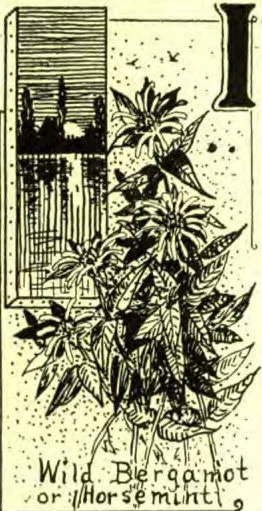
Wild Bergamot
or Horse mint
Wild Bergamot or Horse mint
In this work of the leaves there is for us a lesson. God can do whatever he wills in whatever he will. In yon burning building the mighty force of fire is at work; but in the watery cells of the delicate leaf the Creator has placed a power, silent, effective, that, being stronger and more powerful, can outdo and undo the work of the fire.
Here, at least, the Creator’s power is made perfect in weakness. And this is but a type of the work to be wrought in human lives. As we behold the great things God seeks to work in us, we cry out because of our weakness. But we are not more weak than the watery cells of the delicate leaf.
Their might is the might of the fire, but made manifest and “made perfect in weakness.” In leaves and tender blades of grass, God does a work that is equal to the might revealed in the convulsions of nature.
And so in your weakness God can do, yes, seeks to do, a work more mighty than that of all the combined powers of the kingdom of hell. In weak instruments of earth, God can do the almighty work of heaven. He pours the treasure into earthen vessels that the sufficiency may be of him.
“Weak as water,” is a very common expression. “Unstable as water,” is a Scriptural expression.
The two sayings have very similar meanings. The instability of water is the cause of its weakness. And yet weak and unstable as it is, if it can but unite in the right way with something that will make up for this instability, it is one of the strongest, yes, one of the most unyielding, things we know.
Water yields so readily to the hand that we might think it could be easily squeezed into a smaller space. But this is not the case. About two hundred seventy years ago, Lord Bacon proved that water under certain conditions is most decidedly unyielding. He filled a hollow globe of lead with water, and, soldering up the aperture, tried to flatten the globe by the blows of a heavy hammer. He continued to hammer until the water, under the heavy pressure, oozed through the lead like fine dew.
The shell of metal made up for the instability of the water, and in this condition it offered an immense resistance to compression. Man may be “unstable as water;” but surrounded by Christ his instability is made up, and he can withstand the mighty pressure of evil which otherwise would sweep him before it.
There have been men as weak as their fellows, who through faith, “out of weakness were made strong, waxed valiant in fight, turned to flight the armies of the aliens.” Heb. 11:34.
God’s strength was made perfect in weakness in Gideon and his handful of followers, and they smote the countless hosts of the Ismaelites as one man, driving them in utter rout across the Jordan.
There are no Ishmaelitish hordes for us to fight; but we have an enemy before whose attacks we must flee discomfited, unless we have God’s might within to hold us “steadfast, unmovable.”
“All flesh is as grass, and all the goodliness thereof is as the flower of the field;” but even so God’s almighty power may there be perfected, even as in nature it is forever glorified by the insufficiency of the instrument.
Our weakness, bless God, is no hindrance. It is the all-enduring assurance that God will work. It is in instruments of weakness that he especially chooses to work; for there, and there only, his “strength is made perfect in weakness.” The leaf and the blade of grass are weak, but God’s power is made perfect in their weakness. We, too, are weak, but we are not weaker than the leaf or the blade of grass. Since his strength for them is made perfect in their weakness, we are sure that his strength may be—God help us to say, is—made perfect in our weakness.
In fact, in the example of the plant, it is the weakness of the instrument that teaches us that it must be God who works. We see that the instrument is adapted to the work, but we know that weak as it is, out of its weakness can not come this almost almighty power; the sufficiency must be of God.
And so our weakness is to teach us that it is not we who do the work of righteousness. Weak as we are, and full of sin, out of our weakness and sinfulness can not come this almighty might that makes and keeps men righteous. The might, the righteousness, the sufficiency, is of God.
Our weakness is thus the witness which proclaims God at work. Shall we therefore lament this which reveals him? Let us rather say with Paul, “Most gladly therefore will I rather glory in my infirmities, that the power of Christ may rest upon me. Therefore I take pleasure in infirmities, in reproaches, in necessities, in persecutions, in distresses for Christ’s sake; for when I am weak, then am I strong.”
When once we fully realize our weakness, we shall cease attempting all self-work, for this is but for us to reveal our utter weakness and accomplish nothing; we shall rather rest forever in the all-sufficient might of God. It is he that must work in us “both to will and to do of his good pleasure.” I. A. Reed.