The Country
KOREA is a peninsula projecting from the eastern coast of Asia, just west of Japan. Seoul, the capital, somewhat south of the center, is in latitude thirty-seven degrees and thirty-six minutes north, about the same as that of Richmond, Va.; and the longitude is one hundred and twenty-seven degrees east from Greenwich. Korea extends through rather more than eight and a half degrees of latitude, or about six hundred miles. The area is about eighty-two thousand square miles, nearly equal to that of Great Britain, and a little more than twice that of Ohio.
The climate is more continental than that of Japan, being dryer, and showing greater extremes of heat and cold. Even in the central part the winters are quite severe. But the September days of our brief stay in the country were most delightful, as calm and bright as an American Indian summer.
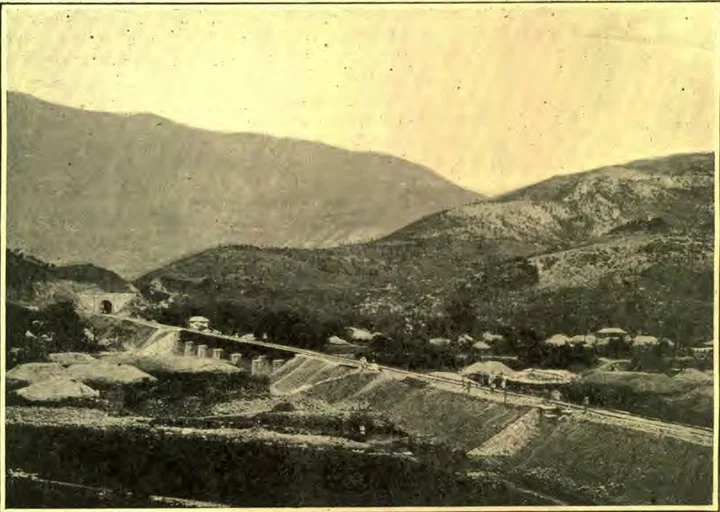
The surface of the country is mountainous. The higher ranges are nearer the eastern coast, and range from five to six thousand feet in height. Toward the west the slope to the sea is less abrupt, giving room for considerable stretches of lowlands. The coasts, especially on the south and west, are strewn with innumerable islands. Many of these are of considerable size, and are inhabited by small communities of fisher folk. From the passing ship small patches of cultivated ground are occasionally seen; but generally these islands are broken and barren, the steep, rocky hills and mountains supporting a sparse growth of stunted pines. We saw very little timber in the parts we visited; but away to the north, along the Yalu River, there are extensive forests of pine and other conifers.
Korea is distinctively an agricultural country. The principal crops observed were rice, beans, millet, buckwheat, and cotton. Fruits of all kinds seem to be scarce, and to form a very small part of the people's diet. The rice fields and more level uplands are very fertile; but the more hilly land is of red clay or a slaty formation, and quite sterile. Back from the Tadong River, near Chinampho, are thousands of acres of waste land, unavailable for cultivation because daily covered by the tides. These lands could be reclaimed with profit; but the people lack enterprise, and the government is loath to grant concessions to foreigners. So the lands lie waste.
The country is also believed to be rich in minerals. Gold, iron, copper, and coal are known to exist. Mining concessions have been granted by the government to companies from various countries; but some of these ventures have not proved successful, the ore not existing in sufficient quantities to be worked to advantage by Western methods. The most successful is a gold-mine worked by an American company. The total value of the gold exported during 1902 was more than two and one half million dollars.
The government of Korea is a hereditary monarchy, and the present dynasty has occupied the throne since A. D. 1392. Until 1895 the king of Korea was a vassal of China; but by the treaty signed at the close of the recent war between China and Japan, Korea was acknowledged to be an independent power.
The government is still weak and corrupt; yet the country has opened its doors to foreign influences, and under the counsel of foreign advisers, many reforms have been introduced. However, the opinion seems to prevail among neighboring powers, that the government is incompetent to guide the destinies of the nation. The future control of Korea is one of the important questions to be settled by the present war between Russia and Japan.
The attitude of the Korean government and people toward foreigners is very friendly. Foreigners may reside in the country without annoying restrictions, and there are no laws to interfere with the preaching of the gospel. This is cause for gratitude, and is an indication that the Lord is opening the way for all nations to hear the everlasting gospel. F. W. FIELD.