“And now, children,” said Mrs. Randolph, after she had explained all about the Feast of Tabernacles to her Sabbath-school class, “it is proposed that our little school shall set apart some day next autumn, and bring an offering to God of the fruit of our toil—something we have grown in the field or garden, or something our hands have made; or if we can sell the product of our efforts, to bring the price, and give that.” Then she gave some suggestions as to what the children could best grow and make for sale.
The idea that she could bring a gift that would be acceptable to the great God who had made all things “by the word of his power,” brought a new and sacred joy to Nettie Hamilton.
What would it be? It was early springtime, and her teacher had spoken of their raising flowers and vegetables. This seemed promising to Nettie, and more as the people did in olden times than some other ways mentioned.
Nettie was thirteen years old, and lived in the mountainous region of Tennessee. Since her mother's death a few months before, she and her father had lived together in a log cabin on a few acres which he had cleared of the heavy forest, and was farming in a very primitive way. Mrs. Hamilton had been ailing all the year before her death; and Nettie, who was strong and willing, had cared for her, and learned to keep the little home clean, and to prepare their simple meals; and although she now was often sad and lonely, she found little time to nurse her grief. She must make their home a cheerful place for her father, who was a quiet and at times a surly man. The latter mood Nettie found to be connected with a large black bottle which always stood in a corner of the cupboard, and which she had been forbidden to touch.
A tent had been pitched in their neighborhood the year before, and Mr. Hamilton had accompanied his wife and little daughter to the meetings held there every night. The ministers had since gone, leaving a few earnest converts, who met each week to study the word; and although her father appreciated Nettie's faithfulness, and was seldom unkind to her, he did not go with her to Sabbath-school; and when she told him of the ingathering offering, and her wish to raise a missionary garden, he said, “We're too poor, child. It's all I can do to get a living out of this bit of land with my hoe. I haven't a foot of ground to spare for stuff to give away.”
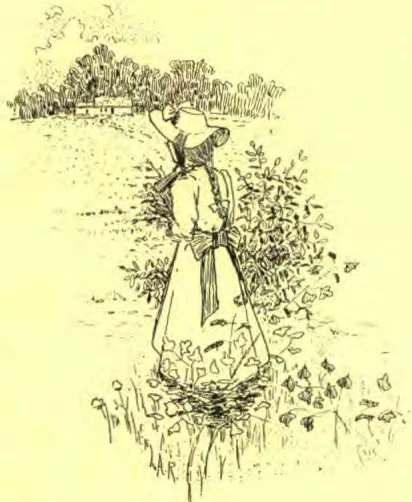
This was discouraging indeed, and Nettie quietly walked across the road, and through a narrow strip of timber to the edge of a little clearing, where she often went to open her heart to God.
Jessie Gray intended to crochet some lace for sale, but Nettie could not do needlework. Sarah Carson was to set a hen; but Nettie had none to set, and could not ask her father now. She was too far from town to sell papers. What could she do? She knew that the only thing was to ask the guidance of her Heavenly Father; so she knelt beside a log, and cast her burden on the Lord.
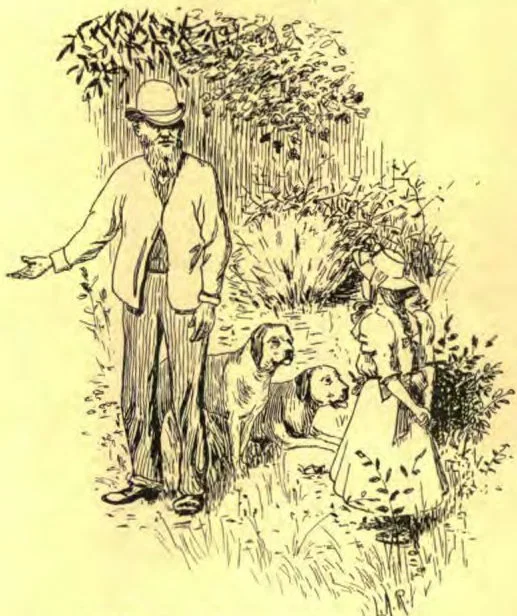
Crack! crack! went the underbrush, and Mr. Brown, the owner of the woodland, preceded by a pair of hounds, came out into the open spot beside the sorry, startled little girl.
“Well, well! Is that you, Nettie? What's the matter now?” And almost before she knew it, she had poured out her story to the kind, old man.
“So you want to raise a garden for the Lord, and haven't any ground? If that's all, you may farm right here among these stumps, and welcome. So cheer up.”
Nettie thanked him heartily; and before they parted, he said he believed he would put in an acre of cotton down on his river farm for the same purpose; “for I don't mind telling you, Nettie,” he said, “that I believe the Adventists preached the truth in that tent, and some day I'm a-going—O, well, good morning, little girl!”
“YOU MAY FARM RIGHT HERE”
A light hoe was the only garden tool which Nettie possessed; but it was soon on the ground, and while the birds sang, she did quite effective work in clearing away the loose leaves, and breaking up the mellow soil, rich with leaf-mold. Suddenly she stopped, and again a look of perplexity clouded her sweet face. She hadn't a seed to plant, except a few old-fashioned flowers, that every one thereabouts raised every year. “O, dear! And it's time to get supper, too.” But before she left the place, she knelt a second time beside the mossy log, and told her Friend and Helper of her perplexity.
After supper Nettie was sent to a colored auntie's near by on an errand. As she approached, the old woman stood in the door holding a willow basket filled with what looked like small white onions, and Nettie's eyes grew large as she heard her say, “Here, you, Sol'mon Isaac, tek out these here ‘shillots,’ and give 'em to dat pig. I'se planted all I wants, an' mo' too, an' I'se got mo' left than we'll eat till they grows.” “O Aunt Debby! please could I have them?” asked Nettie, “I'll give you—something—my beads if you want them,” as she unfastened a necklace of braided strands of small steel beads. “Will you, Aunt Debby?” “Why, honey, you mos' 'stonishes me. 'Cos yo' kin have them ‘shillots.’ An' yo' keep yo' beads; I ain't needin' beads very bad jes' now, chile,” and her ponderous body shook with the ripple occasioned by her little joke.
Nettie's errand done, Sol'mon Isaac helped “tote” the treasure to the planting-ground, and Nettie could scarcely sleep that night, so anxious was she to set the little bulbs, and have them growing. This pleasant task was accomplished the following day, and the bright green spikes came up quickly, and stood in stiff little bunches along the rows, and marshaled around the stumps, in fine order.
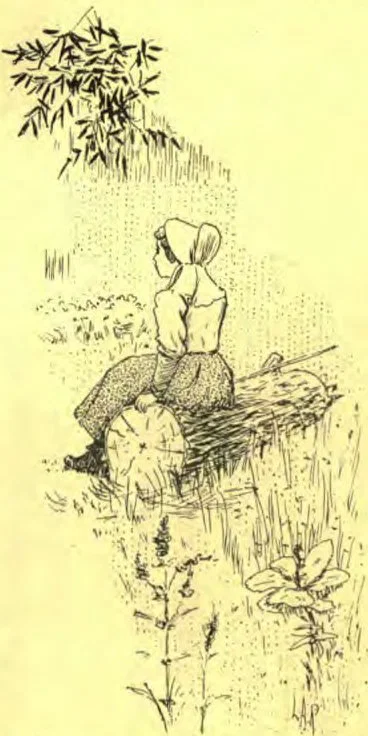
She told her teacher of what she had planted, and Mrs. Randolph said that other forms of the word “shallot” were “eschallot” and “scallion,” and that they were originally brought from Ascalon into Europe by the Crusaders. Mr. Hamilton said he didn't think any one would want to buy them, but Nettie said, “I'll do my best and see.” The little plot was well cared for; and often when warm and tired, Nettie would sit on the log and look up into the sky or the cool, green woods about her, and the Lord, “who looketh upon all the inhabitants of the earth,” impressed her heart with lessons from his great book of nature.
Autumn was almost here, and the little garden was brown long ago; and as Nettie gathered her crop, she found that each little bulb had produced four, five, or six, and when they were measured, she had two and one-half bushels. Early one fine morning she started off on foot to Belmont, four miles distant, with a quart of shallots as a sample. She had not forgotten to ask the blessing and guidance of God, and she tripped along with a light heart.
The day grew warmer, and the dusty road was long; and as Nettie went from door to door, and met one refusal after another, she became less cheerful. But not until every house in the village had been visited, did she give way to discouragement. She slowly walked out of Belmont, and sank down beside a little spring that welled up near the roadside. Refreshed by the cool water and the lunch that she had brought with her, her morning prayer was repeated, and hope revived in her heart.294
“WHEN WARM AND TIRED”
There was a large hotel on the mountainside near the village, at which many tourists from the North spent the cold winter months; and as Nettie sat admiring the great white house, with its wide “galleries,” fancy windows, and beautiful grounds, she suddenly resolved to try to make a sale there. Although she was somewhat overawed by the rare grandeur of the place, she climbed the rocky road, and stepped quickly along on the gravel walk and around to a side-door, where she was met by the cook, who, in his white cap, coat, and apron, bowed with French politeness to “ma'am'selle,” and looked into the now soiled paper bag of shallots.
“O, ah, yez, I zee, escolotte, for zee soup.” “Buy, monsieur, buy?” as he turned to the steward, who was passing. “Get what you'll need,” was his reply. “How many you have? How much I pay?” “Two and a half bushels at five cents a quart,” replied Nettie. “Fi' cent zee quart, very good. I buy two bushels. You bring to me soon. Au revoir, ma'am'selle.”
Nettie was so delighted that when she reached the gate, she scarcely noticed a passing carriage until Mr. Brown called to her to climb in and ride, as he was going her way. She told him of her efforts and success in disposing of her crop. The old farmer was much pleased, and offered to have his man deliver them for her the next day.
On the Sabbath of ingathering, Nettie's morning work was done earlier than usual, and she looked very neat in her blue calico, which Aunt Debby had made extra stiff for the occasion. She was almost ready to start to Sabbath-school when her father said, “If you'll wait a bit, daughter, I'll get ready, and go along.” He had bought the half bushel of shallots, that she might have an abundance of seed for the next year; and four shining silver dollars, carefully wrapped in her handkerchief, were carried by the little girl—a free-will offering indeed.
The little church was adorned with autumn treasures from forest and field, and happy children, young people and older ones as well, each brought a willing gift, and told in simple confidence of the blessings received in labor for the Master.
Aunt Debby, who had never been there before, occupied a back seat, and gave a half dollar she had earned doing laundry work: “'Cos Miss Nettie was dat stirred up a workin' for de Lord, it done stir me up, too,” she explained.