THERE are two facts that conspire to make the history of religious toleration in Maryland of surpassing interest to the student of American history. One is that the lord proprietary was a Roman Catholic; the other is that Maryland, it is claimed, was the first of the original thirteen colonies to establish religious toleration by statute.1
Confronted by the history of centuries of intolerance in other countries, Roman Catholics turn with satisfaction to the history of Maryland, and point to it with pride, as an evidence of the tolerant character of “the church.”
After exhausting the very meager materials found in the Old World with which to support the papal claim that “the church” is tolerant, Cardinal Gibbons says:—
Turning to our own country, it is with no small degree of satisfaction that I point to the State of Maryland as the cradle of civil and religious liberty, and the “land of the sanctuary.” Of the thirteen original American colonies, Maryland was the only one that was settled by Catholics. She was also the only one that spread aloft over her fair lands the banner of liberty of conscience, and that invited the oppressed of other colonies to seek an asylum beneath its shadow.2
There are, at least, two fatal errors in this paragraph: first, Maryland was not settled exclusively, nor even principally, by Roman Catholics; and second, religious liberty was never established in that colony, either by Catholics or by Protestants. The act of April 21, 1649, was an act of toleration merely, providing that “no person within this province, professing to believe in Jesus Christ, shall be in any ways troubled, molested, or discountenanced, for his or her religion, or in the free exercise thereof.”3
The same act provided that “whatsoever person shall . . . deny the Holy Trinity, or any of the persons thereof, shall be punished with death.” And that “whatsoever person or persons shall from henceforth use or utter any reproachful words or speeches concerning the blessed Virgin Mary, the mother of our Saviour, or the holy apostles or evangelists, or any of them, shall in such case for the first offense forfeit to the lord proprietary the sum of five pounds sterling or the value thereof. . . . And every such offender or offenders, for every second offense shall forfeit ten pounds sterling or the value thereof. . . . And every person or persons before mentioned offending herein the third time, shall for such third offense forfeit all his lands and goods, and be forever banished and expelled out of this province.”4
It will be readily conceded that this was very far short of religious liberty; it was simply toleration for believers in the Christian religion. It is true it was far in advance of any other colony at that time except Rhode Island,5 but it was not religious liberty. In practice it did not secure even toleration to all believers in Jesus Christ. “The Quakers were persecuted in Maryland as badly as in Virginia and Massachusetts.” For example: “In 1658, Joseph Coale and Thomas Thurston, preachers belonging to that body, were treated with great severity by the authorities and compelled to flee the country.”6
But let us consider briefly the question as to whom the credit belongs for a measure of religious toleration in Maryland.
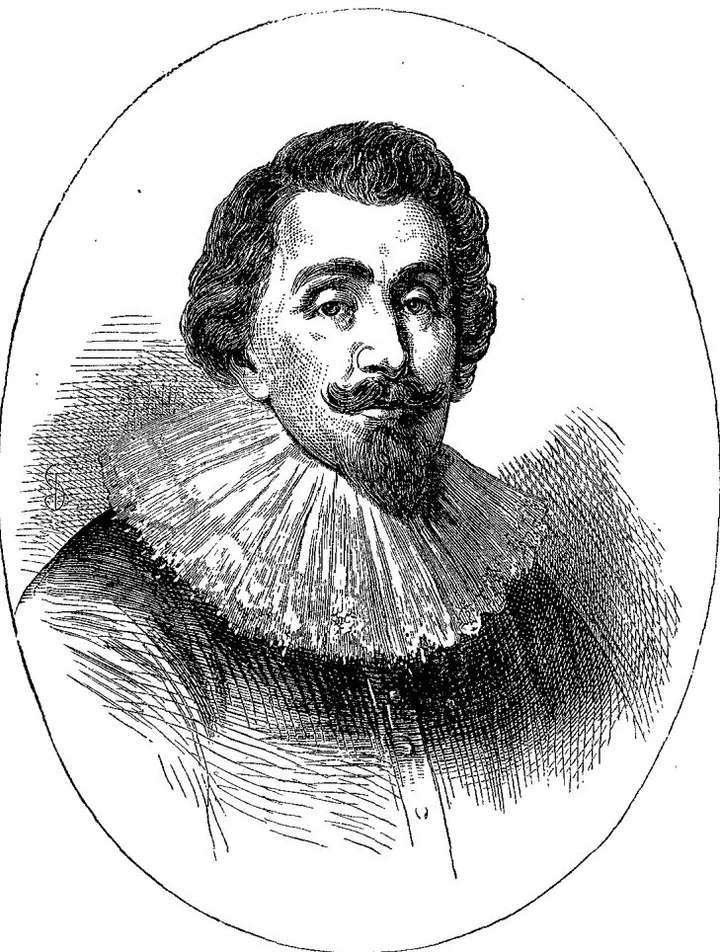
As before stated, Maryland was not settled by Roman Catholics but very largely by Protestants. The charter was issued on the twentieth day of June, 1632, to Cecil Calvert, the second Lord Baltimore. The following November, Leonard Calvert, brother of the proprietary, sailed from the Isle of Wight with two hundred colonists to effect a settlement in Maryland.
The vessels, the Ark and the Dove, sailed by way of Fortune Island, Barbados, and St. Christopher’s, and did not reach Maryland until March, 1634. After cruising about inp. 298 the Chesapeake Bay and the Potomac River, they dropped anchor in St. Mary’s River.
Leonard Calvert gained the good-will of the natives who were preparing to abandon that particular locality, and purchased from them for some cloth and a few axes, their right to the soil. Bancroft says:—
Upon the 27th [of March, 1634], the emigrants, of whom at least three parts of four were Protestants, took quiet possession of the land which the governor had bought.7
It is probable that the relative proportion of Catholics and Protestants in Maryland remained about the same, and though the government was in the hands of the lord proprietary, who was a Catholic, it would have been quite impossible for him, even had he desired to do so, to have denied toleration to so large a majority of his subjects. Bancroft says:—
In the mixed population of Maryland, where the administration was in the hands of Catholics, and the great majority of the people were Protestants, there was no unanimity of sentiment out of which a domestic constitution could have harmoniously risen.8
This was about the time of the conflict in England between the Parliament and Charles I., and Lord Baltimore had to look well to his rights in order to retain any authority at all. Leonard Calvert, the proprietary’s deputy, went to England in 1643 to consult with his brother, Lord Baltimore, about affairs of the colony. Claybourne was still claiming Kent Island, and the Presbyterians, Episcopalians and Puritans, who formed a large proportion of Lord Baltimore’s subjects, were restless under the authority of a Catholic, and were desirous of establishing Protestantism, so-called, as the religion of the colony.
In 1645, a petition was presented to the House of Lords, asking that the government of Maryland might be settled in the hands of Protestants. For some reason this petition was not acted upon, and “the politic Lord Baltimore,” says Bancroft, “had ample time to prepare his own remedies. To appease the Parliament, he removed Greene [the Roman Catholic Governor], and in August, 1648, appointed in his place Wm. Stone, a Protestant of the Church of England.”9 A very significant fact in this connection is that Lord Baltimore required Governor Stone to take and subscribe the following oath:—
I do further swear I will not by myself, nor any other person, directly trouble, molest, or discountenance any person whatsoever in the said province, professing to believe in Jesus Christ; and, in particular, no Roman Catholic, for or in respect of his or her religion, nor his or her free exercise thereof within said province, so as they be not unfaithful to his said lordship, or molest or conspire against the civil government established under him.10
This shows very clearly that instead of being in a position to dictate to others in matters of faith, had he been so disposed, Lord Baltimore was apprehensive lest religious toleration might be denied to his co-religionists; as, indeed, there was a manifest disposition in the colony to do, and as the charter would have warranted, for at that time popery was outlawed in England.
It was in April of the following year that the act, already referred to, establishing religious toleration, was passed. Bancroft says: “To quiet and unite the colony, all the offenses of the late rebellion were effaced by a general amnesty; and, at the instance of the Catholic proprietary, the Protestant governor, Stone, and his council of six, composed equally of Catholics and Protestants, and the representatives of the people of Maryland, of whom [only] five were Catholics, at a general session of the assembly held in April, 1649, placed upon their statute books”11 this act of toleration.
It is not our purpose to deny that Lord Baltimore himself was a liberal-minded man; and it is very probable that he entertained charitable feelings toward Protestants. But even had this not been the case, his environment and the circumstances under which he received and held his charter were such that he could not well have taken any other course than that which he did take in securing for his subjects religious toleration. England was at that time Protestant, so-called, and the charter granted Lord Baltimore by Charles I., established in effect the Anglican Church as the church of Maryland. It gave the lord proprietary authority to found “churches and chapels, and places of worship in convenient and suitable places within the premises; and of causing the same to be dedicated and consecrated, according to the ecclesiastical laws of our kingdom of England.”12
Speaking of this phase of the charter, Bancroft says: “Christianity, as professed by the Church of England, was established [by the charter]; but the patronage and advowsons of churches were vested in the proprietary; and, as there was not an English statute on religion in which America was specially named, silence left room for the settlement of religious affairs by the colony.”13 But it would have been in flagrant violation of the charter to have established Roman Catholicism, for an express provision of that instrument was that all acts concerning religious establishments were to be “according to the ecclesiastical laws of our kingdom of England.”
It will be seen at once that it was quite out of the question for Lord Baltimore to establish the Catholic religion in Maryland;14 he did the only thing that was possible for him to do under the circumstances to secure even toleration for those of his own faith: he established religious toleration for all who professed faith in Christ; and the fact that representative Catholics appeal to the history of Maryland, in proof of the tolerant spirit of Catholicism, demonstrates the paucity of such evidence.
But even if all that is claimed for Maryland were true, it would by no means establish the claim that is made in behalf of Rome. Cardinal Gibbons himself states the principle which dominates Rome everywhere. He says:—
Many Protestants seem to be very much disturbed by some such argument as this: Catholics are very ready now to proclaim freedom of conscience, because they are in the minority. When they once succeed in getting the upper hand in numbers and power, they will destroy this freedom, because their faith teaches them to tolerate no doctrine other than the Catholic. It is, then, a matter of absolute necessity for us that they should never be allowed to get this advantage.
Now, in all this, there is a great mistake, which comes from not knowing the Catholic doctrine in its fullness. I shall not lay it down myself, lest it seem to have been gotten up for the occasion. I shall quote the great theologian Becanns, who taught the doctrine of the schools of Catholic theology at the time when the struggle was hottest between Catholicity and Protestantism. He says that religious liberty may be tolerated by a ruler when it would do more harm to the State or to the community to repress it.
This is true Catholic teaching on this point, according to Becanns and all Catholic theologians.15
This is indeed, as the cardinal states, “the true Catholic teaching upon this point,” and it ought to be universally recognized as such by Protestants. When Rome grants toleration she does not do it as a matter of principle, but as a matter of policy; and as a matter of policy, partial religious toleration was established in Maryland.