THE object of the Christian Citizenship movement is to “prepare the way of the Lord.” This preparation is “to have every mayor and every councilman a Christian.” When this is accomplished, it is declared, “Christ will rule.”
But are the promoters of this movement sure that they are able to discern between Christians and those who only profess Christianity? If it is known that only those professing Christianity can be elected to offices of trust and profit under the Government, will not many profess Christianity merely for the sake of the office? In other words, will not this movement to “prepare the way of the Lord”—by electing only Christians to office, really prepare the way of the devil by putting a premium on hypocrisy? It will be answered that the promoters of this movement are able to judge who are and who are not Christians. But facts show they are not, and the following bit of history will forcibly prove it.
One of the objects of the Christian Citizenship leaders is to secure the enactment and enforcement of rigid Sunday laws. This is a part of their preparation for the coming of the Lord. In order to commit Congress to their movement they have united on securing a Sunday law for the District of Columbia. This done they propose to extend such legislation to all the territories and departments subject to Federal jurisdiction.
Their effort to commit Congress to such legislation by securing a District Sunday law was begun in 1890. It was decided at that time by those engaged in what is now called Christian Citizenship work that it would be wise to select a Southern congressman to introduce the bill in the House and a Northern senator to introduce itp. 57 in the Senate. Inasmuch as this bill was a “Christian” measure for the purpose of preparing the way of the Lord, it was but consistent that “Christians” be chosen to introduce the bill. After consultation and conference, the church leaders selected Congressman W. C. P. Breckinridge, a member of an honored and influential religious body of the South, to introduce the bill in the House. Subsequent developments revealed the fact that Mr. Breckinridge was at that time sadly lacking in true Christian virtue. These same people who selected this man to champion their Christian Citizenship scheme now speak of him, even after he professes repentance, as “that infamous old libertine named Breckinridge.”
Now, did these people, when they selected this member of a Christian church to champion their “Christian” bill,—did they know that he was what they now term him, an “infamous old libertine.” If they did they are no better than he was. If they did not, then it is clearly demonstrated that these Christian Citizenship leaders cannot discern between a Christian and an “infamous old libertine.” And as surely as they are not able to discern between a Christian and a libertine, just so surely will their movement drive out of public office self-respecting and honest dissenters who will not be hypocrites, and invite into office such as are willing to put on a Christian cloak for the sake of the spoils of office. This has always been the result of uniting Church and State, or showing governmental favor to any system of religion. It resulted thus when “Christian Citizenship” controlled affairs in the days of Constantine.
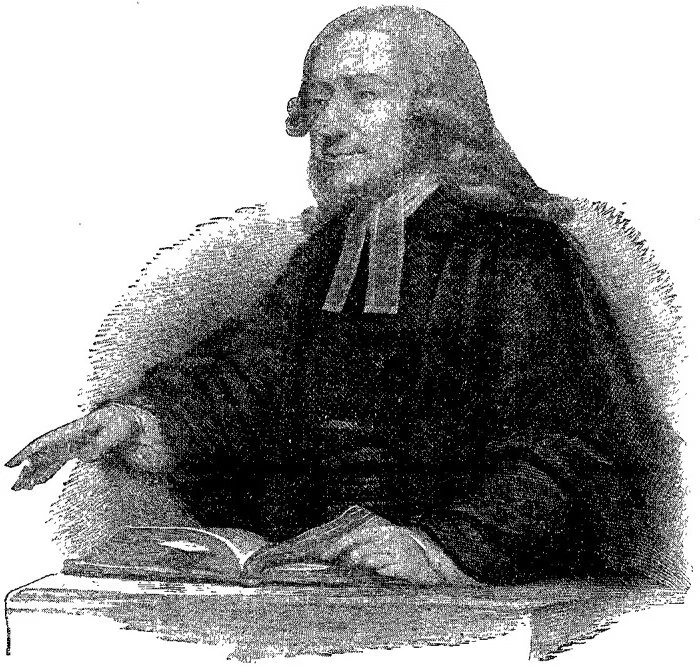
Of the hypocrisy engendered by that Christian Citizenship, John Wesley, the founder of Methodism, in explaining the comparative absence of the manifestation of the Holy Spirit in the Christian Church of the third century, says:—
“It does not appear that these extraordinary gifts of the Holy Ghost were common in the Church for more than two or three centuries. We seldom hear of them after that fatal period when the Emperor Constantine called himself a Christian, and from a vain imagination of promoting the Christian cause thereby, heaped riches and power and honor upon the Christians in general, but in particular upon the Christian clergy. From this time they almost totally ceased. . . . The cause of this was not because there was no more occasion for them. . . . The real cause was ‘the love of many,’ almost all Christians (so-called), was ‘waxed cold.’ The Christians had no more of the spirit of Christ than the other heathen. . . . This was the real cause why the extraordinary gifts were no longer to be found in the Christian Church; because the Christians were turned heathen again, and had only a dead form left.”—Quoted in debates of O. L. Sutliff with Prynne, p. 68.
In answer to the idea that the kingdom of God was established on earth by the success of Constantine’s Christian citizenship schemes, John Wesley used this strong but truthful language:—
“A wonderful instance of spiritual blindness is given us in a very celebrated work of a late eminent writer, who supposes that the New Jerusalem came down from heaven when Constantine called himself a Christian! I say called himself a Christian, for I dare not affirm that he was one any more than Peter the Great. I cannot but believe he would have come near the mark if he had said that it was the time when a huge cloud of infernal brimstone and smoke came up from the bottomless pit.”—Wesley’s Sermon’s, vol. 2, p. 97.
From these quotations it is plain that John Wesley considered that clothing Christians in general, and the Christian clergy in particular, with civil power, instead of “preparing the way of the Lord” really prepares the way of the prince of the bottomless pit; and that those who cannot see that this is so furnish a “wonderful instance of spiritual blindness.” According to John Wesley, we have in the Christian Citizenship movement which seeks to “prepare the way of the Lord” by electing only Christians to office, a “wonderful instance of spiritual blindness.” John Wesley saw clearly the wickedness of such movements. Would that those who now revere his memory could have their eyes anointed that they might see.
Before the day of Pentecost, the disciples asked for political office in the political kingdom which they supposed their Master had come to establish (Mark 10:36, 37); and for power to punish those who rejected Him whom they thought to be head of that kingdom (Luke 9:56). But the outpouring of the Holy Spirit dissolved all their Christian Citizenship schemes, and their message was “repent . . . and ye shall receive the Holy Ghost” (Acts 2:38). “Add to your [not to your neighbor’s by human law] faith, virtue, and to virtue knowledge . . . for so an entrance shall be administered unto you abundantly into the everlasting kingdom of our Lord and Saviour Jesus Christ.”p. 58
When all who will, have thus been prepared by the kingdom of grace, then “the Son of man shall come in his glory, and all his holy angels with him,” and “then shall he sit upon the throne of his glory.” Matt. 25:31. “Christian Citizenship” can neither promote the kingdom of grace nor the kingdom of glory; it can neither prepare subjects for that kingdom nor enthrone its King. It can and does promote hypocrisy. What its advocates need is the anointing of the Holy Spirit that they may know what this meaneth: “Not by might nor by power, but by my Spirit, saith the Lord.” Zech. 4:6. A. F. B.