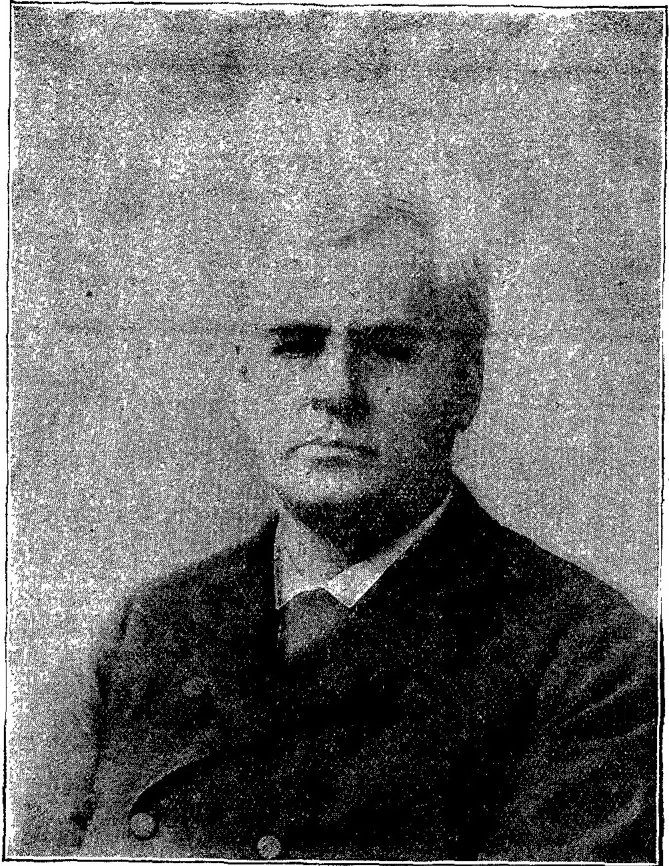
Copyright by Fleming H. Revell Co. From autobiography of A. J. Gordon.
DR. A. J. GORDON.
“THIS same Jesus, which is taken up from you into heaven, shall so come in like manner as ye have seen him go into heaven” is the parting promise of Jesus to his disciples, communicated through the two men in white apparel, as a cloud received him out of their sight. When after more than fifty years in glory he breaks the silence and speaks once more in the Revelation which he gave to his servant John, the post-ascension gospel which he sends opens with, “Behold, he cometh with clouds,” and closes with “Surely I come quickly.” Considering the solemn emphasis thus laid upon this doctrine, and considering the great prominence given to it throughout the teaching of our Lord and of his apostles, how was it that for the first five years of my pastoral life it had absolutely no place in my preaching? Undoubtedly the reason lay in the lack of early instruction. Of all the sermons heard from childhood on, I do not remember listening to a single one upon this subject. In the theological course, while this truth had its place indeed, it was taught as in most theological seminaries of this country, according to the post-millennial interpretation; and with the most reverent respect for the teachers holding this view I must express my mature conviction that, though the doctrine of our Lord’s second coming is not ignored in this system, it is placed in such a setting as to render it quite impractical as a theme for preaching and quite inoperative as a motive for Christian living. For if a millennium must intervene before the return of our Lord from heaven, or if the world’s conversion must be accomplished before he shall come in his glory, how is it possible for his disciples in this present time to obey his words: “Watch, therefore, for ye know not what hour your Lord shall come”?</column-break>
I well remember in my early ministry hearing two humble and consecrated laymen speaking of this hope in the meetings of the church, and urging it upon Christians as the ground of unworldliness and watchfulness of life. Discussion followed with these good brethren, and then a searching of the Scriptures to see if these things were so: and then a conviction of their truth; and then? The godly William Hewitson declares that the discovery of the scriptural hope of our Lord’s second coming wrought in him a change amounting almost to a second conversion. What if another, not presuming to be named in company with this consecrated saint, should nevertheless set his hand and seal to the affirmation that the strongest and most permanent impulse of his ministry came from his apprehension of the blessed hope of our Lord’s second coming?
But how is it that this doctrine, so plainly and conspicuously written in Scripture, could have remained so long undiscovered? In answering this question we see how little ground we have for glorying over the Jews. They did not recognize Christ in his first advent because they discerned in Scripture only those predictions which announced him as a reigning and conquering Messiah. This conception they wove into a veil of exposition and tradition so thick that when Jesus appeared as the lowly and humble Nazarene they knew him not, but “hid as it were their faces from him.” And this strong prepossession still obscures their vision so that “even unto this day when Moses is read the veil is upon their heart.”
With the larger mass of Gentile Christians the case is just the reverse. They know Christ crucified, and believing that the cross is to conquer the world and that the preaching of the gospel in the present dispensation is to bring all men to God, they see no need of the personal coming of the Christ as King to subdue all things under his feet and to reign visibly on the earth. This conception in turn has been woven into an elaborate veil of tradition for Gentile believers and “until this day, remaineth the same veil untaken away” in the reading of the New Testament.
It was not so in the beginning. For three hundred years the Church occupied the position of a bride awaiting the return of the bridegroom from heaven—she meanwhile