THE Protestant churches of the country, represented in the Christian Citizenship department of the Christian Endeavor Society and the National Christian Citizenship League, propose to establish the kingdom of God in the earth through the instrumentality of human legislation.
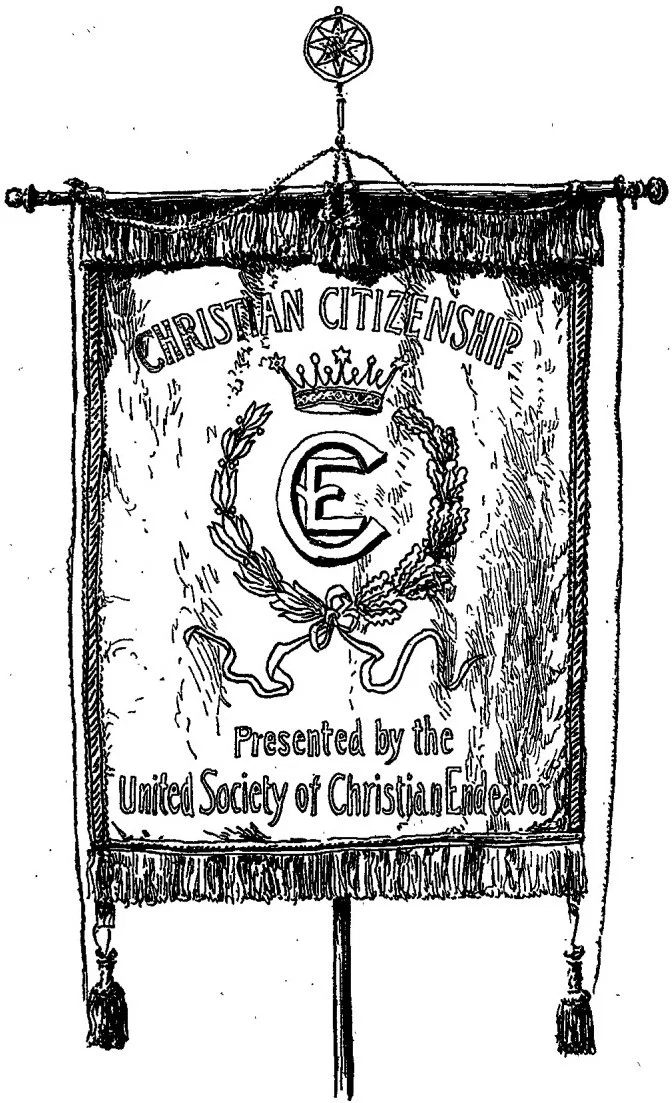
For the benefit of those who have not read the recent issues of the AMERICAN SENTINEL, two quotations are reprinted to show the objects of the Christian Citizenship movement:—
“What is my work as a member of the good citizenship committee? It is to enthrone Christ in every town and city in the State, to have every mayor and every councilman a Christian, then Christ will rule.”—Official Report of the Fourteenth International Christian Endeavor Convention. (Boston, 1895.) p. 215.
“Not until the kingship of Jesus Christ is established over our land and the world, and his teachings made the rule in all public affairs will the Christian Citizenship League have achieved its purpose to prepare the way of the Lord. And then it shall be found that not only has the way for His coming been prepared, but that he has indeed and in truth come.”—The Christian Citizen (Dec. 1896), the official organ of the Christian Citizenship League.
This method of establishing the kingdom of Christ on the earth is not new. It has been often tried and as often has failed. It was first attempted by Constantine and the bishops of his day. One would suppose that the terrible results both to Church and State of that first attempt would furnish an everlasting warning to Christians not to repeat the attempt, but instead of being warned, there are those connected with the Christian Endeavor movement who are so blind to the ruin wrought by that attempt, as to believe that when Church and State were united in the days of Constantine, it was really Christianity that wrapped itself in purple robes and ascended the throne of the Cæsars!
Here is the statement to that effect:—
“In less than three centuries from the ascension of Christ, Christianity, in the person of Constantine the Great, had ascended the throne of the Cæsars and wrapped itself in the royal purple, and ruled the Roman Empire.”—Id. p. 38.
Any man or organization of men that teaches that Christianity ascended the throne of the Cæsars as a result of the Christian citizenship schemes of Constantine and the bishops of his time, has wrong conceptions of both Christianity and citizenship. And in proportion as these teachings are accepted and acted upon by the people of the United States, just in that proportion will both Christianity and civil liberty disappear from the land.
There was a time in the history of Protestantism when the Christian citizenship movement of the Church in Constantine’s time was regarded as the destroyer of primitive Christianity and civil liberty.
After quoting that famous article in the Augsburg confession which condemns the confusion of religion with politics, the greatest Protestant historian says:—
“With what wisdom, in particular, the confessors of Augsburg protested against that confusion of religion and politics which, since the deplorable epoch of Constantine, had changed the kingdom of God into an earthly and carnal institution!”—D’Aubigne’s History of the Reformation, Book XIV., chap. VII., par. 34.
Inasmuch as Baptists are now so prominently connected with Christian Citizenship, a comment from one of their historians on the Christian Citizenship of Constantine’s time is here quoted to show how these Baptists are leaving the old landmarks.
Dr. Thomas Armitage in his “History of Baptists; Traced by their Vital Principles and Practices” has this to say of Constantine and Christian Citizenship:—
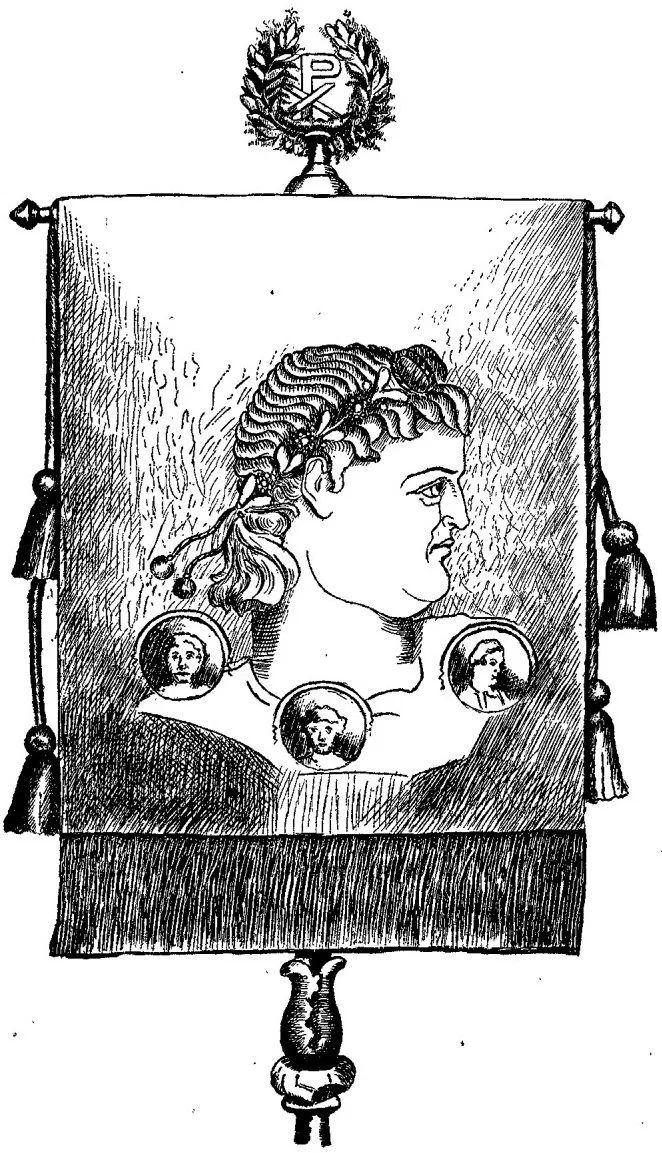
“He is said to have seen the cross in the sky, but possibly his Christianity had borne a higher character had he discovered love for the true cross of Christ in hisp. 41 soul: crosses in the firmament are of rather light moral worth. Unfortunately, it was years after this traditional vision that his nominal Christianity allowed him to kill his son, his second wife and others of his family. Full of ambition and passionate resentment, it would require considerably more to-day than a sky miracle, a sword in the hand, and a conquering army at the Malvian Bridge to give him membership ‘in good standing’ in the Baptist Church recently established at Rome. It is said that the cross in the heavens was attended with the inscription*: ‘By this sign conquer!’ What, and whom? His own sin? His own soul? It seems not. But rather Maxentius and Rome and a throne. At the beginning Jesus had made himself king in Zion, to disallow all imperialism there; and did he now rise from his throne to hang his cross of peace an ensign of blood in the firmament, and to indicate that he turned over his universal lordship to an unregenerated heathen? This cross story needs revision.”—pp. 297, 298.
Inasmuch also, as Christian Citizenship, indorsed by so many Baptists, now proposes to have “his [Christ’s] teaching made the rule in all public affairs,” another quotation from Dr. Armitage is made to show how the bishops sought and obtained the national sanction of their views of Christ’s teachings, and its results as seen by a Baptist.
Describing the Council of Nicæa as it sat waiting for the entrance of Constantine, its Christian Citizenship chairman, Dr. Armitage makes use of this eloquent and truthful language:—
“Alas for them! with all their fortitude, the simplicity of the Upper Room, the ‘piece of broiled fish and the honeycomb,’ had given place to royal apparel, princely fare, and ‘kings’ houses;’ but there was no Son of man returning fresh from Edom. They sat waiting in solemn silence; but a new head of the church came in, and they rose to do him reverence. . . . The sword of nations and the shepherd’s crook lay at his side; but where was the Good Shepherd who laid down his life for the sheep? This is Cæsar, and not ‘another King, one Jesus!’ . . . How are the mighty fallen! Their lawful sovereign and good friend was hailed as their head, and they waited for his ‘image and superscription’ to attest their orthodoxy. For the first time the old Baptist churches of the world are found crouching at a monarch’s feet! Farewell, soul liberty, hie thee to the wilderness for a time!”—pp. 203, 204.
This is the Baptist view of that first attempt to establish the kingdom of God on the earth by means of “purified politics.” However, the contemporary Christian Citizenship view as expressed by Eusebius is that then was fulfilled “the prediction of the holy prophets, according to what they uttered ages before, ‘and the Saints of the Most High shall take the kingdom.’”—Oration in praise of Constantine, chap. iii.
So blind were the church leaders in the days of Constantine that when they had laid aside the pilgrim garb and donned the purple robe; when they had exchanged the “sword of the Spirit” for the scepter of civil power; they really thought the saints of the Most High possessed the kingdom. But instead, as Dr. Armitage says, there was “inflicted a blow upon the Christian system from which it has not yet recovered.”
And as surely as this was true of the Christian Citizenship movement in the fourth century, just as surely is it true of the Christian Citizenship movement of the nineteenth century. And as then so now the mournful warning will be given, “Farewell, soul liberty, hie thee to the wilderness for a time.” A. F. B.