LAST week Bishop Keane was deposed from the rectorship of the Catholic University at Washington. The day following the public announcement of this fact an eminent Roman Catholic layman said to the Washington correspondent of the New York Herald*:—
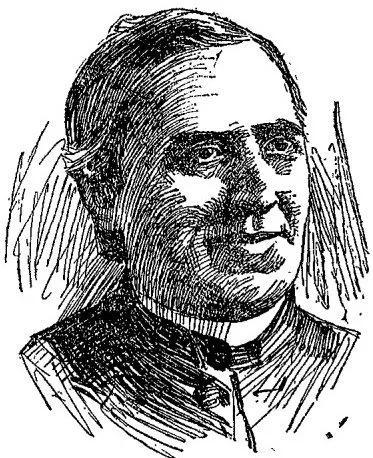
To us who have closely watched events for the last five years the deposition of Bishop Keane means nothing less than a restoration of the supremacy of the ultramontane or clerical party in the American Church.† As such, it must be regarded as the most important event in the history of the church since Archbishop Ireland appealed to Rome to sustain him, as against the “clericals,” and especially the Archbishop of New York, in the famous school question.
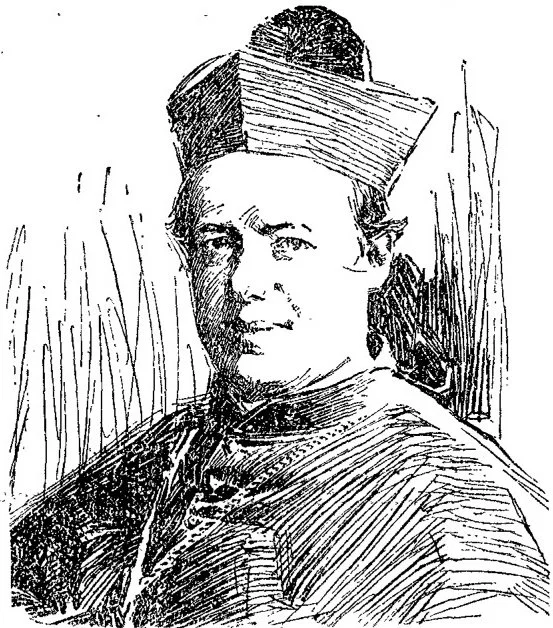
“It will be recalled,” continues the Herald’s informant, “that on that occasion the Archbishop of St. Paul won, or seemed to win, a notable victory. He procured an utterance from Rome, which his friends professed to regard as an indorsement of himself and a rebuke for Archbishop Corrigan. The appointment of Cardinal, then Archbishop Satolli, which followed soon afterward, was known to be agreeable to Archbishop Ireland, and in opposition to the expressed wishes of the ultramontane bishops.
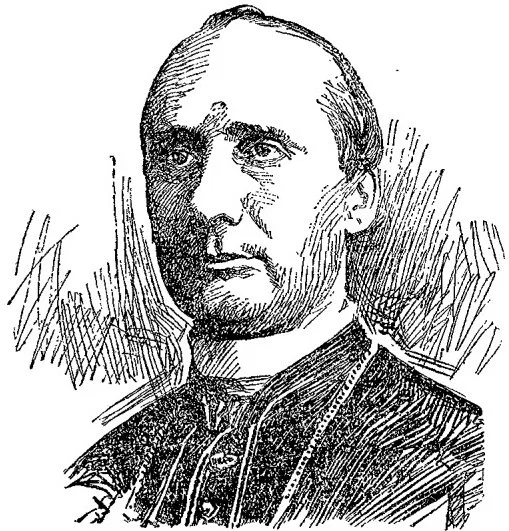
“Now it appears Archbishop Corrigan has found at the Vatican a reaction of sentiment in his favor. It would not, perhaps, be too much to say that after five years’ waiting he has his revenge, for if anything is clear it is that the arrival of Mgr. Martinelli, and especially the removal of Bishop Keane, is distasteful to the Ireland party.” “If our surmises are correct,” concludes this eminent Catholic, “ultramontanism in America has again been carried to the front.”
These facts are of great interest, not only to Catholics, but to Protestants as well, for instead of revealing simply a contest between parties in the Roman Catholic Church, the unfolding of events shows the consummate skill of Leo XIII. and the deceptive policy of the system which he represents. Having accomplished his purpose in giving free reign to “the church” in America, the Pope now asserts his authority in a manner and to an extent which leaves nothing to be desired by the most ultra montanist.
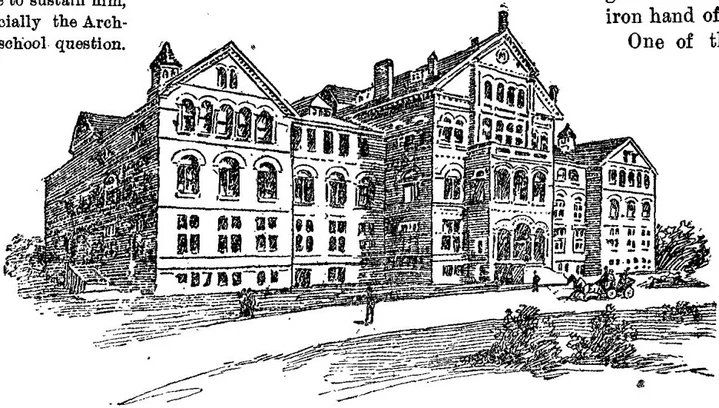
For several years past, and until within a few days, “liberal” Roman Catholicism was in the ascendancy in the United States, but a new era has been ushered in. The able and crafty Leo XIII., “the prisoner in the Vatican,” for years pursued a “liberal” policy, not only toward America, but generally, so much so that the world was deceived into believing that Rome was actually changing. But it is now seen that beneath the velvet glove of the “successor of St. Peter” is the iron hand of Rome.
One of the fruits abroad of the general liberal policy of Leo XIII., was a victory for “the church” in Germany. All, and more, than “the church” lost under Bismarck, she has regained through Leo’s craft since the accession to the throne of William II. Lutheranism is still the established religion of Germany, but Rome must not be spoken against, and thep. 322 laws restricting her “rights and privileges” have either been repealed or are dead letters upon the statute books.
In the United States “the church” has made marvelous progress, not only in numbers, but in influence; and this latter feature of her growth has been due in large measure to the idea that Romanism in America was essentially different from Romanism in Europe, and that even there the Papacy was becoming more democratic, more liberal, more Christian.
Leo’s professions of friendship for republics generally, and for the United States in particular, were received by thousands of nominal Protestants at par, and many who only a few years before regarded Rome as the “mother of harlots,” of the Scriptures, were ready to hail her as “one branch of the great army of the Redeemer.”
Doubtless this was just as the Pope wanted it to be. The Papacy had much to gain and nothing to lose by a “liberal” policy. Once recognized by Protestantism as one branch of the true church, and that without any acknowledgment on her part of the validity of Protestant faith or polity, Romanism had gained a position of vantage from which she can never be dislodged. That position Rome now occupies in the United States, and she gained and holds it, not by right but by craft; she has come into it by flatteries. And now having by guile secured from American “Protestantism” recognition as one grand division of the true church, that Protestantism is estopped from making warfare upon Roman Catholicism. Friendly rivalry there may indeed still be, but antagonism on the part of Protestants who have admitted the claims of Rome would be only self-stultification; for if Romanism is Christianity then antagonism to Romanism is antagonism to Christianity.
But while unwary “Protestantism” is thus placed at a disadvantage Rome is free; for while “Protestantism,” not only in America, but in England, and to some extent upon the Continent as well, has been seduced into the recognition of the fundamental claims of Rome, the Papacy has conceded nothing. The Pope has simply played the liberal element of the Roman Catholic Church against liberal Protestantism, and, as we have seen, has won.
Apropos to this subject is the following extract from a letter by Mgr. Leon Bouland to Rev. James O’Connor, of this city, under date of September 12, 1896. Mgr. Bouland said:—
As a result of my investigations I am more firmly convinced than ever that it is vain to expect any reform from the Vatican or the Roman priesthood; and therefore I experience a new happiness in separating myself from them. When they extend the hand with professions of a deceptive liberalism, they only seek to ply their arts of seduction more sedulously.
This is exactly what Rome has been doing, not only in the United States but everywhere, notably in England. In that country the High Church party has for years been lured Romeward with the hope of organic union with the papal church upon the basis of the recognition of the Anglican Church and Anglican orders. But recently, after prominent English church leaders had gone so far as to make graceful retreat impossible, the Pope consents to “reopen” the question, examines the whole ground carefully, and blandly, but firmly tells the ritualist of the Anglican Church, and Anglicans generally, that they are entitled to no recognition as belonging to the Church of Christ; that being outside of the Roman Catholic Church they are outside of the Christian Church; and by seeking union with Rome they have virtually admitted it.
Touching this point the Outlook of the 10th inst. says: “The English Catholics in the Established Church must now choose between remaining in what they have practically conceded to be a schismatical position, or going over, as Manning and Newman and many other members of the same party did years ago, to the Roman Catholic body.”
This is only the simple truth. Rome has placed weak-kneed Protestantism in both Europe and America at a decided disadvantage, and can now well afford to renew her claim that she is “the Church of Christ” to the exclusion of all others. The Protestantism that has ceased to protest has no sufficient answer to this claim.