The question of civil jurisdiction in moral matters is becoming one of deep and widespread interest in religious circles. Arguments as to its fitness, both for and against, are advanced with much earnestness and warmth by those in high positions, but without permanently deciding the question. In fact, every point in the controversy appears to assume various phases, under the treatment of partisan logic, and is fast becoming a factor in political strife. Already many view the matter as a party principle, rather than a question of fundamental truth.
With such, reason is brushed aside, and truth is forbidden a part; expediency outweighs every other consideration. Professing alliance with God, they do not ask whether his attitude toward such problems in general, favors their cause or not. A goal is to be reached; and if it is not attained in one way, another must be devised by which it can be.
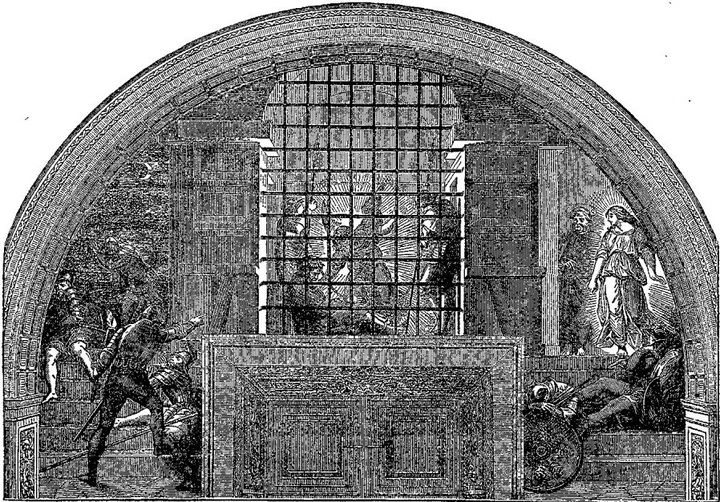
But, strange to say, all those who favor coercion in religious matters by application of civil law, profess to be working in the interest of God's cause. But does God uphold such work in the interest of religion? He has done infinitely much to bring men to walk in his ways, even to giving his only begotten Son in their behalf, but has he ever given his sanction to compulsory measures in holding men to the path of right? The only absolutely reliable history of the early church will give the facts in this line, and we may rest assured that as he viewed the case then, he will regard it now, since “with him is no variableness, neither shadow of turning.”
We need not trouble to search the records of the Old Testament, where the special interpositions of God in behalf of his people are so plainly set forth; that may be considered as going too far back. But let us note one case in the Christian church where the civil law was being applied in behalf of religion, and see which side of the controversy God supported.
About twelve years after the death of Christ, the king of Judea took a hand in the religious controversy of the day, and by virtue of his civil authority put to death James, a prominent disciple of Christ. Seeing that this act was approved by the Jews, whose political support he greatly desired, he proceeded to please them further by having Peter, another prominent worker in the infant church, apprehended and put in prison, intending to deliver him over to the will of his religious enemies, immediately after Easter. Acts 12:1-4.
The record of this case reveals that human nature has changed little, if any, in some respects, since that early day. It has ever been demonstrated that men can be induced to go to great lengths, even to doing unreasonable things, through the enthusiasm which it is possible to excite in some large gathering. What they had not courage to do under ordinary circumstances, they will do under the stress of excitement, especially where religious fervor is wrought up to a very high pitch. It was this way when Christ was to be sacrificed to the demands of the Jewish priesthood. The occasion of a pass-over gathering was waited for, when crowds of ignorant, yet enthusiastic pilgrims would be assembled from all parts of the country, and a general excitement could be aroused in favor of taking his life. It required no less an occasion to inspire the nerve to carry out a design so treacherous and diabolical as the sacrifice of the sinless Christ. The priests were reminded of this, too, by the Saviour at the moment of his arrest. Said he, “When I was daily with you in the temple, ye stretched forth no hands against me; but this is your hour, and the power of darkness.” Luke 22:53.
This was a point well understood by Herod, and one which he intended to make count in his arrangement for the immolation of Peter. The apostle was, therefore, held in prison, not to await a legal decision in his case, for his fate had been decreed from the moment he was placed under arrest. But Peter was kept there simply in anticipation of the time when the king could not only be reasonably sure that the multitude would sustain his murderous intent, but that by destroying so prominent an enemy to the prevailing religion, in so public a manner, he also might gain a wider political influence among those whose religion he had so signally upheld. The plot was, indeed, a deep-laid one, but was destined not to mature, because of an interference which had not entered Herod's calculations.
Peter, lying in the inner prison, chained to a soldier on either side, and with a strong guard at the door ofp. 22 the prison, was supposed to be safely in the grasp of the civil power. Indeed, on the last night of his confinement, no doubt was entertained of the apostle suffering on the morrow at the hands of an excited populace. Everything was ready for the autodafe, and there was great expectation on the part of those who were preparing to witness it. But on the very eve of the anticipated tragedy, an arm was outstretched to stay and frustrate the plans of the civil power. In answer to the united prayers of the church for deliverance, God sent an angel from heaven to strike off the prisoner's chains, and lead him forth to liberty.
It surely cannot be said that, on that occasion, God took the side of Peter, and against the civil decree because the form of religion which was sought to be upheld by coercion was not heaven-born. No, indeed; for the Jews received their forms of worship directly from God. And although the measure about to be executed was highly pleasing to the chosen people of heaven, yet God opposed it with the might of an angel of light. It may be suggested, however, that God's attitude on that occasion was solely because his people had forsaken his ways. Exactly so. Had they retained the spirit by which they were called to be God's people, they would not have been found uniting with the civil power to destroy a fellow man, simply because his religious convictions did not coincide with their own; and the same is true to-day of any people who claim, as did the Jews, to be specially favored of heaven. The very fact of their uniting with the civil power to restrain others in the matter of conscience, is the best of evidence that they, too, like their prototypes of old, have wandered from the ways of Him who said, “If any man hear my words, and believe not, I judge him not; for I came not to judge the world, but to save the world.” John 12:47.
How much more Christlike it would be, if all professed Christians would unite to save sinners, a work which God upholds, rather than to call upon the courts of the land to condemn them, a work which Christ affirms he did not come to do or sanction. It has been the work of Satan from the first to find fault with and condemn others on religious lines. Should God uphold the civil power in doing the same, he would thus sustain Satan in his work, and so divide his kingdom against itself, which would bring about its speedy dissolution. We may, therefore, rest assured that God is not in any move looking toward the church sustaining the civil power in making statutes to regulate forms of religion. J. O. C.