It is said that the natives of the Society Islands improved in every way for the first few years after embracing Christianity, but as time passed by, formality took the place of true, Christian devotion.
About fifty years ago, the French took possession of two of the largest islands, doing away with their religious laws. Every one was left free to do and believe as he pleased, so long as the civil laws were not violated.
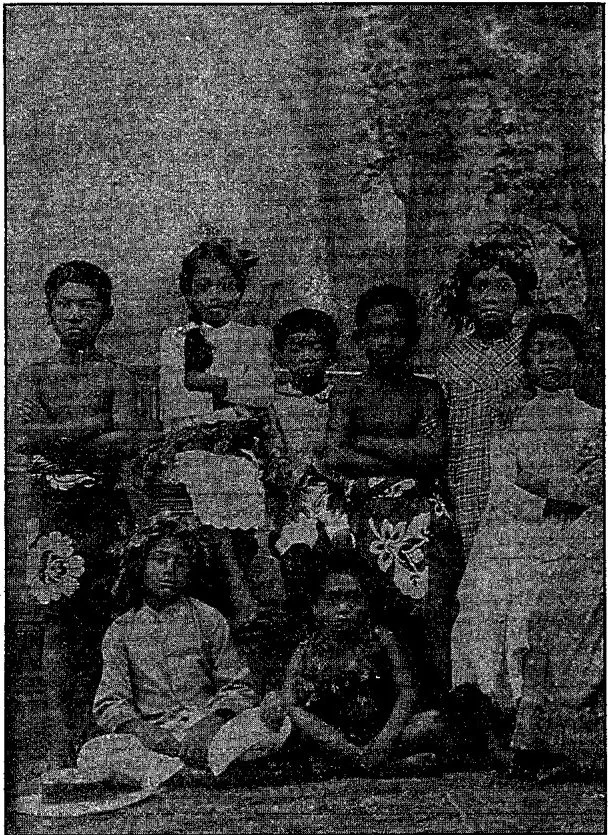
GROUP OF NATIVE CHILDREN.
One might fish, trade, buy or sell, stay at home, or attend church upon Sunday. It soon became apparent that many had refrained from work and had attended church on Sunday more from fear of the laws of the land than that God would be displeased with them. As soon as the law was repealed, church members, and nearly everybody, would not only cook, but do their marketing upon that day.
In Tahiti, Sunday is the great market day, when it is customary for all who live near enough to go to the market in the morning, some to sell and others to buy. It is the day of all days when the people spend their time in festivities. Many go to church in the morning, and then spend the afternoon and evening in drinking and making23merry, going through with all sorts of old, heathenish performances.
Raiatea, one of the largest islands of the group, has stood out against the French government until only a few months ago. The people of this island have looked upon themselves as better than their brethren who were under the French laws, because they had laws against work of any kind upon Sunday. I remember of seeing a stranger on the island, who was not a believer, but wished to attend one of the religious meetings in the adjoining district. He arose Sunday morning, and traveled to the place of worship, reaching it a little before meeting time. As he was preparing to take a bath in the river before going into the church, an officer informed him that it was against the law to bathe at that time; that he might wash his face and hands, but that he could not take a full bath until after four o’clock that evening. He also stated that this law was made to keep people from doing anything that would detain them from church.
It is customary in these islands to have a watch meeting at the church New Year’s eve, to bid adieu to the old year and welcome the new one in. I attended such a meeting on the island of Raiata three years ago. There everything was church and state fully united, and they looked forward to the time when the Lord would cast the French into the sea, or destroy them in as marked a manner as he did the enemies of the Israelites. The time was occupied by exhortations, prayer and singing. Each district represented had its own choir, and only one choir was to sing at a time. About nine o’clock their pastor appointed a certain choir to sing a hymn. There was a misunderstanding, and two of the choirs began singing different hymns at the same time. They were requested to stop, but could not be induced to do so, as each wished to be the one to sing. So they continued singing for nearly thirty minutes. By this time nearly the whole congregation of about one thousand were on their feet, and they were preparing to have a pitched battle in the church to settle the difficulty. Through the efforts of their queen and others, peace was at last restored, but it took until about 11 o’clock for them to get settled down so that they could go on with their meeting.
On Sunday, a meeting of another denomination was held on board a ship in the harbor, and the queen and some of her friends were invited to attend. She accepted the invitation, but, upon returning to land, found officers waiting to impose a fine against her for attending a meeting which was not conducted by their own church.
Can the government, by passing religious laws, make better citizens and Christians? It certainly has failed in these islands, as is acknowledged by all who are acquainted with what was the Raiatean government. It is apparent that all these religious laws only tended to give the people a very poor idea of what true Christianity is. It was all form and no practice. The result is that the people poorly realize that they are responsible before God for the way they live, for they considered it their chief duty to do as the rulers directed them in religious matters. As the French took possession of the islands, religious laws were abolished. When they were no longer restrained by the law, but few attended church, and fishing and all kinds of work were done by them on Sunday. A native church member portrayed the matter to me, telling how that now they have no religion, as many of the people are busy with other things Sunday, and do not attend church. I asked why it was so. She replied that there is no law now for bidding them to work on Sunday, and that they had not kept it since the law was repealed. I then asked her if she thought that they would refrain from labor if they had another Sunday law. She thought that would be all that was needed to get the people to keeping the day properly again.
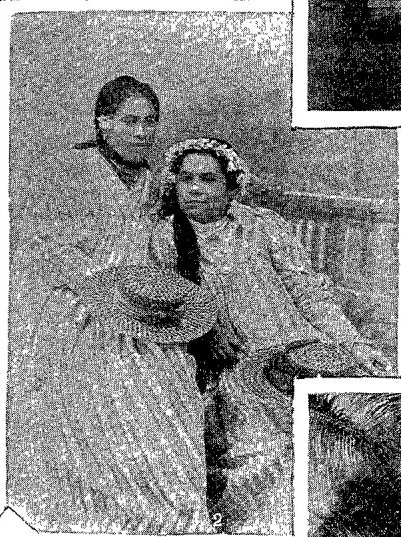
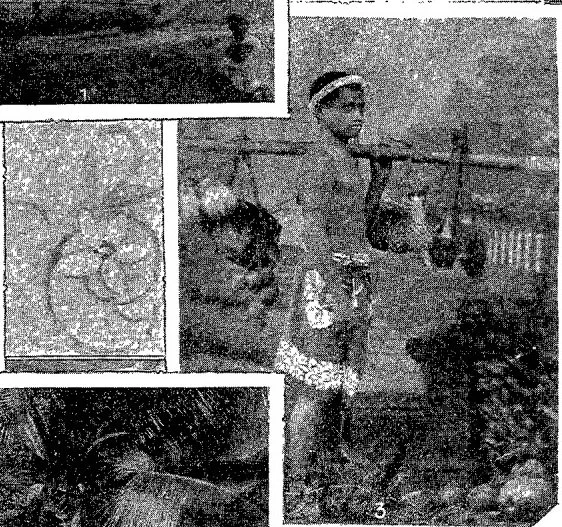
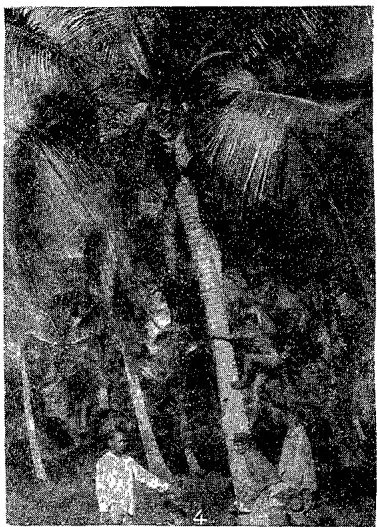
VIEWS ILLUSTRATING SCENES IN THE SOCIETY ISLANDS.
But, who would they obey, God or the government, if they were to keep Sunday simply because the government would fine them for working upon that day? If men will not obey a plain command of God, but rest upon24a certain day because the government commands them to do so, can God look upon that as obedience to his law? No; it is simply obeying the law of the land: for when men obey because the state commands, they do it not in respect for God, but for fear of temporal punishment. The tendency of all such laws is to make professed Christians, who have a form of godliness, but deny the power thereof.
What God wants is men who are true to him, even though all the world may be against them. Where are the Daniels of to-day, who will serve God in the face of a frowning world? Where are the Pauls, who will give their lives to living and preaching the gospel, and give up the idea of making Christians by passing religious laws in the governments of the world? Christ says, “Whatsoever ye would that men should do to you, do ye even so to them.” But we are not doing to others as we would have them do to us, when we try to compel them to do what we wish them to do. Such attempts have always resulted in evil, and always will.
The author of Christianity says, “Whosoever will, let him take the water of life freely.”