"Cast thy bread upon the waters,
Ye who have but scant supply;
Angel eyes will watch above it;
You will find it by and by."
MRS. PARSONS stepped into the church on the avenue for the first time. She had lately moved into the neighborhood, and it was with a feeling of dread she entered the strange church. She had been accustomed to the little humble mission church, where the people were in circumstances as humble as herself, and where she knew every one,—their trials, joys, and sorrows.
“You are a stranger here too, are you not?”
This morning she missed their looks of greeting, and a sense of loneliness crept over her as she sat in the cushioned pew, and felt the indifferent or inquisitive glances that fell upon her.
She was not dressed as most of the people were here, and the organ, and the singing, and the perfume, and the high stained windows, all seemed very grand and different from what she was used to. Somehow she felt out of place, and the blood tingled in her cheeks as if she was doing something wrong to sit here in this grand place.
But after the music ended, in which she did not catch a word of the song, the minister prayed. There was a soft rustling, as of moving garments and bowing heads; but Mrs. Parsons had always been used to kneeling, and so she arose and knelt before the divine Presence. It was then that she forgot all about the grand place and the grand people. She was before Heaven, before God, and learning of the divine Master. The external, that men look upon, was swept away, and she realized that here were human hearts, full of need, so much the more if they did not realize it. Her prayer grew fervent and unselfish. She seemed a child without fear; for love casteth out fear; she reached up to greet her heavenly Father, and prayed that the dew of His love might distil upon the congregation, and that, if there was one lonely, humble soul to whom He could send her, to send her, and make her a blessing. Her heart had lost its fear, and her soul loved all.
When the prayer was over, Mrs. Parsons arose, strangely uplifted in heart. There was a smile on her lips, altho tears were in her eyes, and every word of the sermon fell as seed on good ground. The pastor preached from the beautiful text, "Cast thy bread upon the waters; for thou shalt find it after many days."
Mrs. Parsons' heart glowed. Was there a place for her to cast her bread? She had not a whole loaf—she had only a few crumbs. She knew how the hungry birds pecked at her humble window for her few morning crumbs. Were there souls that God would commission her to spread her bounty before?
When the service was over, and the congregation began to file out, a sense of discouragement fell over her. The people swept by, looking so self-satisfied, so haughty, and she was so humble, so little, so poor; she had nothing to give to these; they wanted nothing. The smile began to fade from her face. The people hurried past her without a glance, and she timidly shrank back, that they might pass.
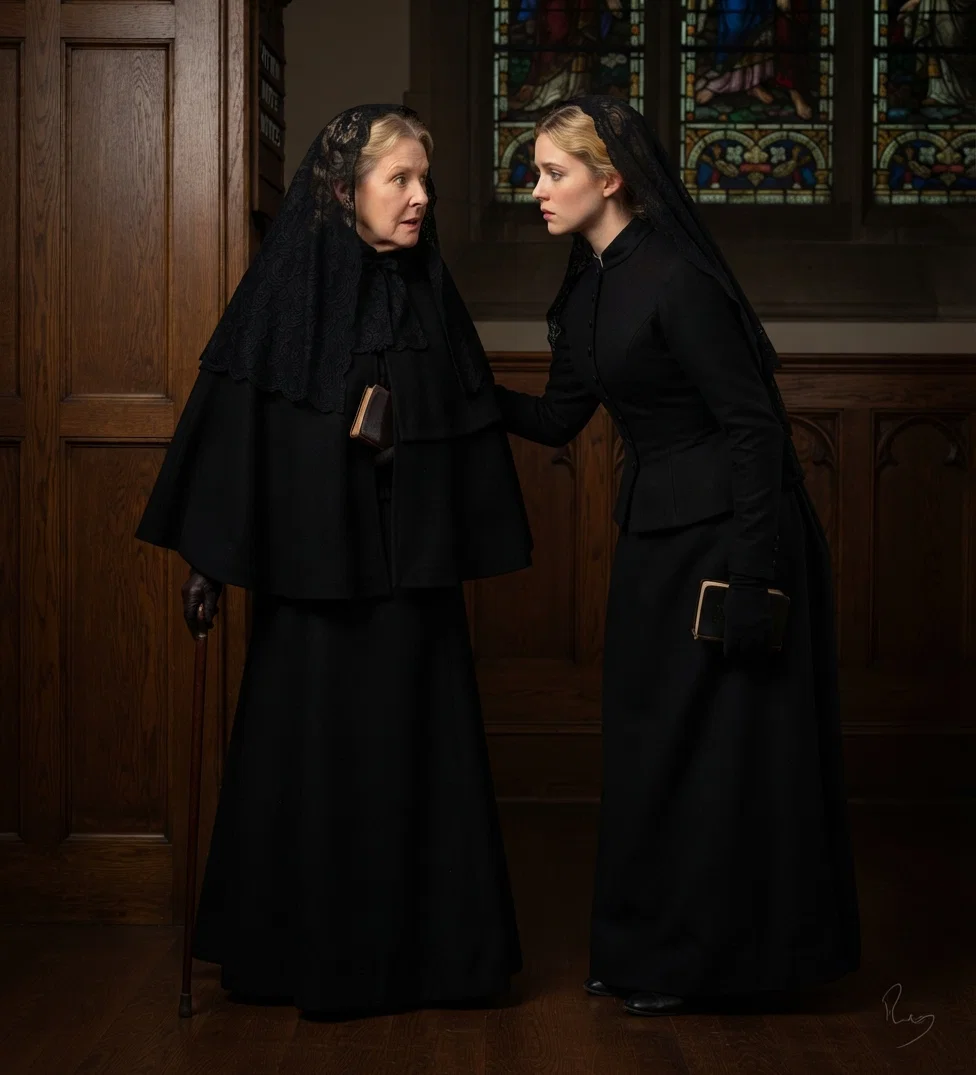
As she stood waiting, her eyes fell on a little woman as plainly dressed as herself, who seemed to stand back with the same embarrassment. She appeared like a stranger, for no one spoke to her.
"There," she said to herself, "if the Lord gives me a chance, I will speak to that poor, humble soul. Maybe she is one of the Lord's own."
Sure enough, as the crowd passed, she was brought close to the woman, and their eyes met. Mrs. Parsons' smile was cordially returned, and their hands clasped.
"You are a stranger here too, are you not?" said Mrs. Parsons.
"Well, hardly," said the lady. "I've been here for several weeks, but there are few who know me. How kind it was of you to speak to me; for I am very lonely!" The tears came to her eyes.
"Bless your dear heart!" said Mrs. Parsons. "Do you live near by?"
"I live several blocks from the church," said the lady. "How I should like to hear the afternoon service; but I shall hardly be able to walk back again!"
Mrs. Parsons looked her all over again. Yes, she certainly was not a rich woman, and would understand her meager store at home. The light flashed into her face.
"I've only crumbs," she said, "but they are the Lord's. They are all He has given me; but I am willing to share them. Could you not come home with me and take lunch? I have not much to offer; but we might both return to service this afternoon together. I live right near by."
"How kind of you!" said the lady. "I don't know but I can. There is no one to call me home to-day."
And so it happened that Mrs. Walters and Mrs. Parsons became acquainted. What a delightful visit they had together, talking of the Lord's dealings with them, of the coming of His kingdom, and the work to be done! Mrs. Walters said that she felt her soul had been refreshed.
The humble repast was taken with joy and thanksgiving, and it was humble indeed,—just bread, butter, and sauce.
"Do you know," said Mrs. Walters, "I believe the great need among Christian people to-day is love. I remember how the early Methodists used to love each other. Why, we could scarcely break up after meeting, and there was the greatest freedom in our social services. We used to sing and weep together; but a cold formality now seems to keep souls apart."
"Yes, I have noticed it," said Mrs. Parsons; "I have felt it; but we must just learn of Jesus, and individually do as He did."
"I've been so impressed lately with the text, 'Inasmuch as ye have done it unto one of the least of these My brethren, ye have done it unto15Me.' Wonderful, wonderful, precious thought! Who wouldn't do it for Him if He were here?'
'Yes; but He is here in every soul. The least is His. How the thought glorifies our humblest services; and to think in the judgment it will not be asked what great deed we have done for the world, but how we have treated the very least one!'
Mrs. Parsons and Mrs. Walters then related incidents of service where great blessings had come to them by what they had done in the name of Christ, for the least and the lowest, and parted the best of friends, after the afternoon service.
Mrs. Parsons was hindered from visiting Mrs. Walters, tho she had received many an urgent invitation. Mrs. Walters often dropped in after morning services, and never came empty-handed, for she knew that Mrs. Parsons, tho rich in faith, was poor in this world's goods.
They were both widows. Mrs. Walters, however, had only herself to look after, while Mrs. Parsons had five small children. How hard it was to make both ends meet; but somehow the Lord always provided in times of extremity!
Mrs. Walters made Mrs. Parsons promise that if ever she was hard pressed she would come and talk it over with her. The time came when poverty pinched harder than ever. Tessie, her youngest child, had been sick, and Mrs. Parsons had been hindered from doing the usual stint of work. The rent was not only due, but coal and flour were both gone.
'What shall I do?' said Mrs. Parsons. Then she remembered the promise she had made, and said: 'I'll run over to Mrs. Walters. Perhaps she'll be able to think of some way to manage.'
But Mrs. Parsons was not prepared for what awaited her. Mrs. Walters met her in an elegantly-furnished parlor, that betokened wealth and taste.
'You dear soul,' she cried gladly, 'so you have come at last; and I know something urgent has sent you over.'
'Yes, but you do not live here, do you?'
'Indeed I do. Lay off your things, and stay to dinner with me.'
'O Mrs. Walters, I always thought you were just a poor woman like myself! Whatever could you have thought of my audacity in inviting you to my humble home?'
'Audacity! That's a wrong word. I thought of your Christlikeness in doing it, and knew it would be counted as done to the least of His little ones. But, Mrs. Parsons, I see care and trouble in your face; now tell me all about it.'
Mrs. Parsons told her timidly of the straits in which she found herself.
'This is just the opportunity I've been waiting for. Now, beloved, I have a fund put away for you. Don't say a word of thanks to me; rather let me thank God for the privilege of doing unto others as others have done unto me, and to have it counted as done unto Him.'
Mrs. Walters pressed fifty dollars into her friend's hand. 'It's all yours,' she said gladly.
Mrs. Parsons was almost overcome, and looked wonderingly at the money, saying in her bewilderment, 'Mine? mine? how is it mine?'
'Ah, Mrs. Parsons, do you not remember the text the minister preached from the first Sunday I met you? It was, 'Cast thy bread upon the waters; for thou shalt find it after many days.' This is the smallest part of the return of the good deed of love you did me. Angels some day will gem your crown with stars, and Jesus will say to you, 'As ye have done it unto one of the least of these My brethren, ye have done it unto Me.'"
'What returns He gives! Praise His name!' said Mrs. Parsons. 'And if my return is so much, what will yours be?'
'He knows,' smiled Mrs. Walters. 'No reward can be sweeter than the peace and joy I feel within, knowing that you, dear friend, are lifted out of your perplexity, and that some of the bread you have cast upon the waters is beginning to return to you, after many days. Come, now, let us go down to dinner.'