1 Chronicles 17:2
Then Nathan said unto David, Do all that is in thine heart; for God is with thee.
Translations
Then Nathan said to David, Do all that is in your heart; for God is with you.
King James Version, KJV Cambridge Paragraph Bible
Then Nathan said unto David, Do all that is in thine heart; for God is with thee.
Then Nathan said to David, Do all that is in thy heart; for God is with thee.
And Nathan said unto David, Do all that is in thine heart; for God is with thee.
And Nathan said unto David, Do all that is in thy heart; for God is with thee.
and Nathan saith unto David, 'All that [is] in thy heart do, for God [is] with thee.'
And Nathan said to David, Do all that is in thy heart; for God is with thee.
Then said Nathan unto David, All that is in thy heart, do,—for, God, is with thee.
Berean Standard Bible, Majority Standard Bible
And Nathan replied to David, “ Do all that is in your heart, for God is with you.”
Nathan said to David, “ Do all that is in your heart; for God is with you.”
And Nathan said to David, Do whatever is in your heart, for God is with you.
Then Nathan said to Dauid, Do all that is in thine heart: for God is with thee.
Douay-Rheims (Challoner revision)
And Nathan said to David: Do all that is in thy heart: for God is with thee.
Pictures
Cross-references
- 2 Samuel 7:1-3
And it came to pass, when the king sat in his house, and the LORD had given him rest round about from all his enemies;
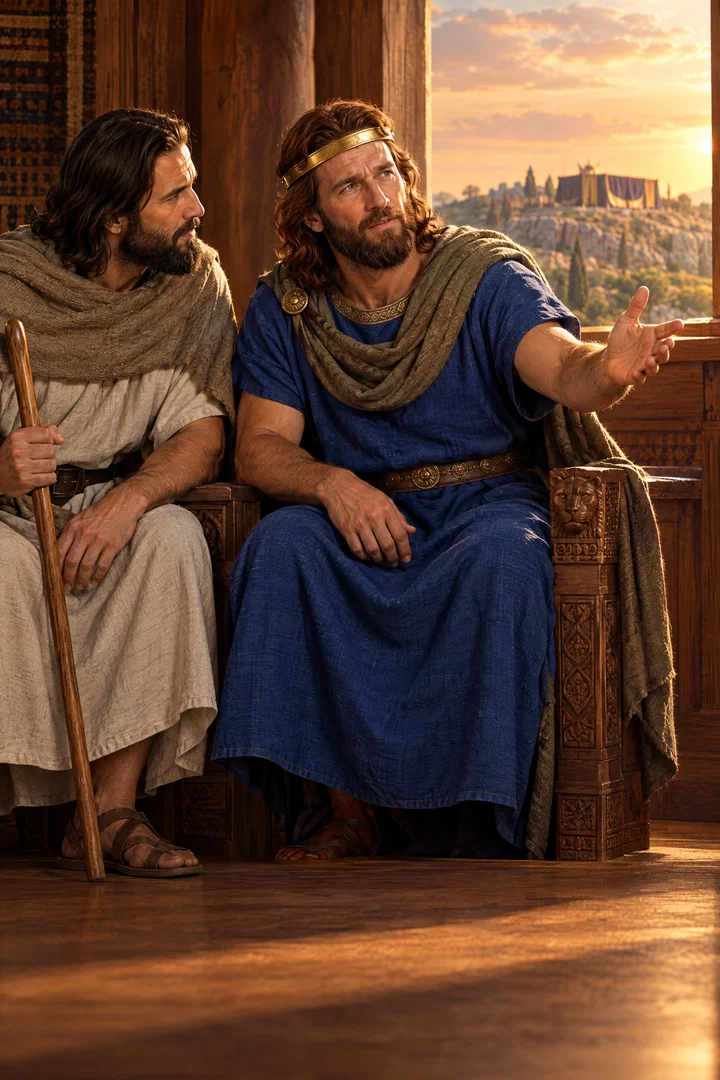
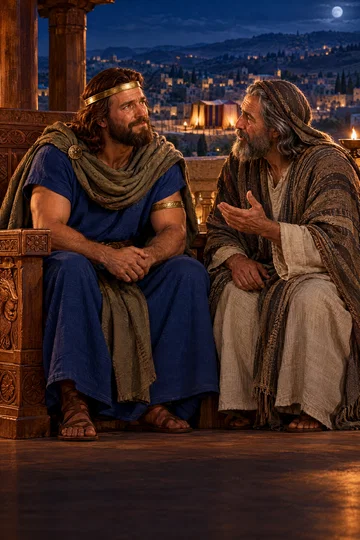
Nathan initially approves David’s plan to build a temple.
- 1 Chronicles 22:8
But the word of the LORD came to me, saying, Thou hast shed blood abundantly, and hast made great wars: thou shalt not build an house unto my name, because thou hast shed much blood upon the earth in my sight.
God forbids David to build the house because he shed much blood.
Commentary
Each commentary is drawn from primary sources: the writings of Ellen G. White and Adventist pioneers and periodicals. Each commentary is separate. Its own words are not a quotation; follow the references to read the source passages.
Ellen G. White
1 source
David was troubled by the contrast between his own dwelling in a fine palace and the ark of God remaining in the tabernacle.Ms 23, 1886, par. 1–2 Out of remorse over that contrast he formed the desire to build a temple for God.Ms 23, 1886, par. 1–2 When the desire was laid before him, Nathan at first encouraged David to do all that was in his heart, on the ground that God was with him.Ms 23, 1886, par. 1–2 God, however, had another task for David, and had chosen Solomon instead to build the temple.Ms 23, 1886, par. 1–2
Sources
Pioneers and periodicals
7 sources
The verse belongs to David's plan to build God's house, conceived when he found the ark without shelter and desired a sanctuary worthy of the divine majesty.RH Jan 6, 1853RH Nov 10, 1863RH Dec 1, 1874 He opened that design to the prophet Nathan, who told him to do all that was in his heart because God was with him.RH Jan 6, 1853ST May 12, 1909RH Nov 10, 1863 Nathan at first approved the plan from his own judgment, deeming it wise and bidding David follow his desire on the ground that the Lord was with him.RH Jan 6, 1853RH Nov 10, 1863ST Jul 9, 1896RH Dec 1, 1874
That assurance was premature, for Nathan had spoken before receiving the Lord's direction.ST Jul 9, 1896 It was corrected that same night when God instructed Nathan to tell David he would not build the house.RH Jan 6, 1853ST Jul 9, 1896 God accepted David's good intentions yet refused him the honor of building, leaving the edifice to be raised by his son Solomon.RH Jan 6, 1853RH Nov 10, 1863 The refusal came because David as a warrior had shed much blood.RH Jan 6, 1853
David had caught the thought to build a house of worship from God, and listening for God's thoughts and thinking them after Him is what made him mighty.RH Nov 12, 1903 He was not permitted to carry the building to completion, yet God blessed him for keeping the plan in his mind and blessed his descendants still more because he kept it.RH Nov 12, 1903 His being forbidden though he wanted to build a temple proves that no work is to be undertaken until a warrant from God is obtained, for without it the expense is heavy and the labor is a task.RH Jan 8, 1861 The proposed building was to give the ark its noblest temple and to consecrate the country into its temple, which Elizabeth's establishing of Protestantism in England resembled.RH Dec 1, 1874
Sources