1 Chronicles 23:30
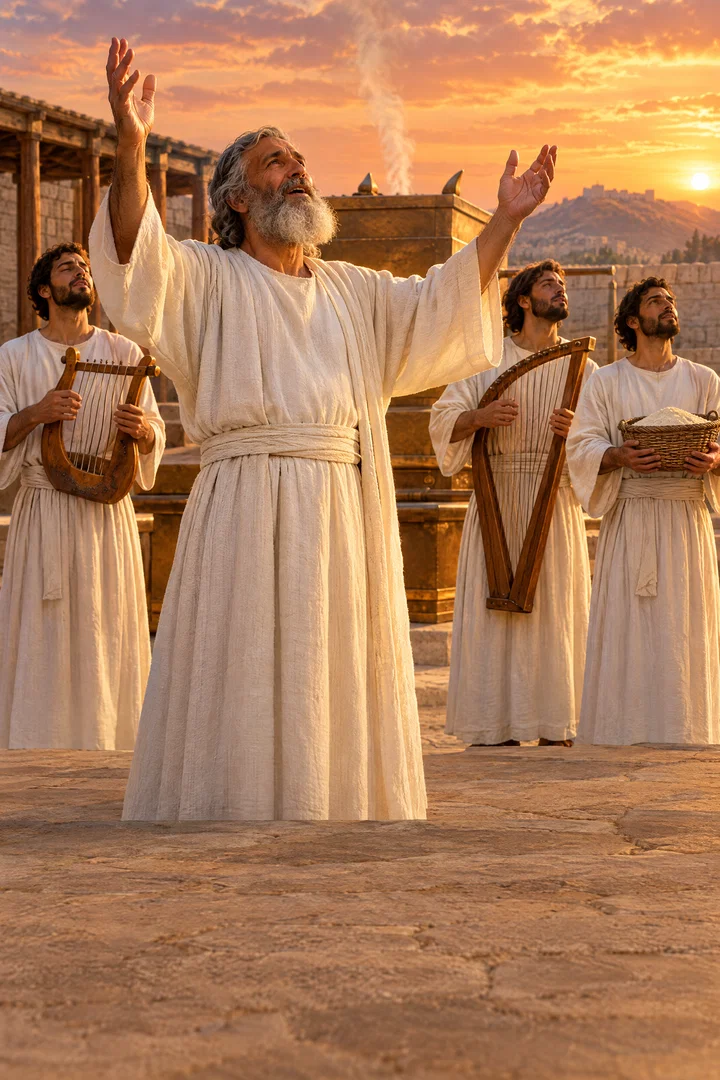
And to stand every morning to thank and praise the LORD, and likewise at even;
Translations
And to stand every morning to thank and praise the LORD, and likewise at even:
And to stand every morning to thank and praise the LORD, and likewise at even;
and to stand every morning to thank and praise the Lord, and likewise at even;
And to stand every morning to thank and praise the LORD, and likewise at evening;
and to stand every morning to thank and praise the LORD, and likewise at even;
American Standard Version, Darby Translation
and to stand every morning to thank and praise Jehovah, and likewise at even;
and to stand, morning by morning, to give thanks, and to give praise to Jehovah, and so at evening;
and to stand, morning by morning, to give thanks and offer praise unto Yahweh,—and, likewise, at even;
Berean Standard Bible, Majority Standard Bible
They were also to stand every morning to give thanks and praise to the LORD, and likewise in the evening.
and to stand every morning to thank and praise the LORD, and likewise in the evening;
They had to take their places every morning to give praise and make melody to the Lord, and in the same way at evening;
And for to stand euery morning, to giue thanks and praise to the Lord, and likewise at euen,
Douay-Rheims (Challoner revision)
And the Levites are to stand in the morning to give thanks, and to sing praises to the Lord: and in like manner in the evening,
Pictures
Cross-references
- Psalms 95:2
Let us come before his presence with thanksgiving, and make a joyful noise unto him with psalms.
both call for coming before God with thanksgiving
- Psalms 119:62
At midnight I will rise to give thanks unto thee because of thy righteous judgments.
Both describe rising at a set time to give thanks to God.
- Psalms 34:1
I will bless the LORD at all times: his praise shall continually be in my mouth.
Both call for continual praise and blessing of the Lord.
- Psalms 50:14
Offer unto God thanksgiving; and pay thy vows unto the most High:
both command offering thanksgiving to God
- Ephesians 5:20
Giving thanks always for all things unto God and the Father in the name of our Lord Jesus Christ;
Both call for regular thanksgiving and praise to God.
- Numbers 8:25-26
And from the age of fifty years they shall cease waiting upon the service thereof, and shall serve no more:
Both describe the Levites’ ages and duties of service.
Commentary
Each commentary is drawn from primary sources: the writings of Ellen G. White and Adventist pioneers and periodicals. Each commentary is separate. Its own words are not a quotation; follow the references to read the source passages.
Pioneers and periodicals
7 sources
The verse belongs to the history of David in Chronicles, which supplies facts omitted from Samuel and Kings, assumes knowledge of the preceding books, says little about the northern kingdom or the sinful acts of David and Solomon, and preserves genealogies and hereditary duties because after the exile the land had to be assigned to its hereditary owners and the temple service taken up by those whose hereditary duty it was.RH Apr 6, 1916 It stands in the last chapters of 1 Chronicles that establish the worship of God under David, his preparation for the building of the temple, and the accession of Solomon to the throne under God's special blessing.ST Jun 27, 1911 After the temple was built, it assigns the Levites the work of waiting on the priests in the sanctuary service, including preparing the showbread, leading the singing of thanksgiving and praise morning and evening, collecting the tithe, and doing a large amount of work in connection with the service of the Lord.ST Dec 17, 1912
One office it gives them is to stand every morning and evening, during the national sacrifices, and offer formal words and songs of thanksgiving and praise to the Lord for His goodness and mercy.RH Dec 22, 1910ST Dec 17, 1912RH Jul 2, 1914ST Nov 17, 1898RH Jul 22, 1915 In David's time they began this sanctuary service at twenty years of age, and at fifty years of age they returned from the warfare of the service, not being discharged but still having charge of the work while no longer expected to perform arduous duties.ST Dec 17, 1912 Their work was largely confined to the court.ST Dec 17, 1912 Their work typified the work of the gospel ministry of the present day.ST Dec 17, 1912
The morning and evening hours were the time of the daily sacrifice ready on the altar in the court and the priests entering the holy place at the time of incense, a time of intense interest when worshipers assembled at the tabernacle engaged in earnest searching of heart and confession of sin and united in silent prayer with faces toward the holy place, so their petitions ascended with the cloud of incense while faith laid hold on the merits of the promised Saviour prefigured by the atoning sacrifice.RH Jul 2, 1914 The appointed hours for the morning and evening sacrifice were regarded as sacred and came to be observed as the set time for worship throughout the Jewish nation, kept even when Jews were scattered as captives in distant lands by still turning faces toward Jerusalem at the appointed hour to offer petitions to the God of Israel, giving Christians an example for morning and evening prayer.RH Jul 2, 1914 The verse presents gratitude and praise as regular, daily acts, not something reserved for special occasions.ST Nov 17, 1898 It belongs to the former dispensation in which numerous sacrifices were required, among them a thank offering, and it proves that God expects thankfulness on the part of His people.RH Jul 22, 1915
Sources