1 Chronicles 25:1
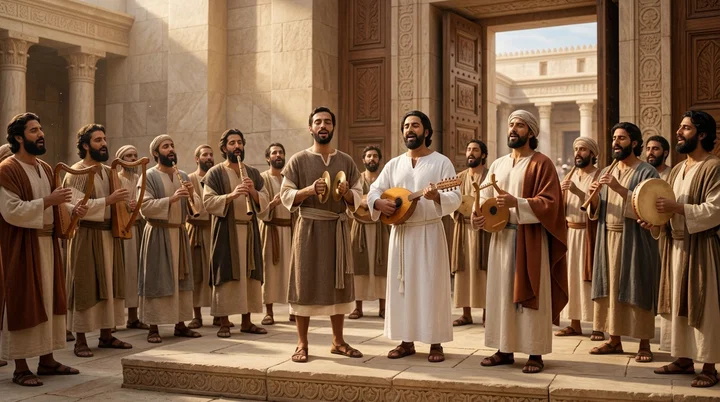
Moreover David and the captains of the host separated to the service of the sons of Asaph, and of Heman, and of Jeduthun, who should prophesy with harps, with psalteries, and with cymbals: and the number of the workmen according to their service was:
Translations
American King James Version, King James Version, KJV Cambridge Paragraph Bible, Webster Bible
Moreover David and the captains of the host separated to the service of the sons of Asaph, and of Heman, and of Jeduthun, who should prophesy with harps, with psalteries, and with cymbals: and the number of the workmen according to their service was:
Moreover David and the captains of the host separated for the service certain of the sons of Asaph, and of Heman, and of Jeduthun, who should prophesy with harps, with psalteries, and with cymbals: and the number of them that did the work according to their service was:
Moreover David and the captains of the host set apart for the service certain of the sons of Asaph, and of Heman, and of Jeduthun, who should prophesy with harps, with psalteries, and with cymbals: and the number of them that did the work according to their service was:
And David and the heads of the host separate for service, of the sons of Asaph, and Heman, and Jeduthun, who are prophesying with harps, with psalteries, and with cymbals, and the number of the workmen is according to their service.
And David and the captains of the host separated for the service those of the sons of Asaph and of Heman and of Jeduthun who were to prophesy with harps and lutes and cymbals; and the number of the men employed according to their service was:
And David and the captains of the host set apart for service, unto the sons of Asaph and Heman and Jeduthun, such as should prophesy, with lyres, with harps, and with cymbals,—and, the number of the workers, for their service, was:
Berean Standard Bible, Majority Standard Bible
Additionally, David and the commanders of the army set apart some of the sons of Asaph, Heman, and Jeduthun to prophesy with the accompaniment of lyres, harps, and cymbals. The following is the list of the men who performed this service:
Moreover, David and the captains of the army set apart for the service certain of the sons of Asaph, of Heman, and of Jeduthun, who were to prophesy with harps, with stringed instruments, and with cymbals. The number of those who did the work according to their service was:
Further, David and the chiefs of the servants of the holy place made selection of certain of the sons of Asaph and of Heman and of Jeduthun for the work of prophets, to make melody with corded instruments and brass; and the number of the men for the work they had to do was:
So Dauid and the captaines of the armie separated for the ministerie the sonnes of Asaph, and Heman, and Ieduthun, who should sing prophesies with harpes, with violes, and with cymbales, and their nomber was euen of the men for the office of their ministerie, to wit,
Douay-Rheims (Challoner revision)
Moreover David and the chief. officers of the army separated for the ministry the sons of Asaph, and of Heman, and of Idithun: to prophesy with harps, and with psalteries, and with cymbals according to their number serving in their appointed office.
Pictures

Cross-references
- 1 Chronicles 23:5
Moreover four thousand were porters; and four thousand praised the LORD with the instruments which I made, said David, to praise therewith.
Counts four thousand Levites appointed to praise the Lord with instruments.
- 1 Chronicles 15:19
So the singers, Heman, Asaph, and Ethan, were appointed to sound with cymbals of brass;
Both describe appointed musicians and instruments for worship.
Commentary
Each commentary is drawn from primary sources: the writings of Ellen G. White and Adventist pioneers and periodicals. Each commentary is separate. Its own words are not a quotation; follow the references to read the source passages.
Ellen G. White
1 source
David joined with the captains of the host in setting apart the sons of Asaph, Heman, and Jeduthun to the service of music.RH Oct 5, 1905 Those appointed were to prophesy with harps, with psalteries or lyres, and with cymbals.RH Oct 5, 1905 The workmen were numbered and organized according to their service, with duties assigned and counted according to each group's work.RH Oct 5, 1905 They were divided into twenty-four courses, each under twelve men trained and skilled in playing instruments.RH Oct 5, 1905
Sources
Pioneers and periodicals
8 sources
1 Chronicles 25:1 belongs to the closing history of David's reign and records part of his plans for the service of the house of God.ST May 19, 1909 It belongs to the account of David establishing the worship of God.ST Jun 27, 1911
David and the captains of the host, the army and military leaders, separated and set apart the sons, families, and descendants of Asaph, Heman, and Jeduthun for musical service in the sanctuary and temple.RH Oct 5, 1905RH Jan 12, 1911RH Apr 14, 1903ST Apr 18, 1911ST Jun 27, 1911 They were appointed to serve as musicians with assigned duties counted according to each group's work.RH Oct 5, 1905 This music was organized into choirs as part of the sanctuary service, with duties rotating among courses.RH Apr 14, 1903
To prophesy in the verse means to sing songs of praise and play musical instruments in worship, rather than to speak as a prophet.RH Nov 18, 1909 They prophesied with harps, with psalteries or lyres, and with cymbals.RH Oct 5, 1905RH Jan 12, 1911RH Apr 14, 1903ST Apr 18, 1911 The verse thus describes David and the army leaders setting apart the sons of Asaph, Heman, and Jeduthun for temple service, where they would prophesy with musical instruments.ST Jun 27, 1911
The verse presents music as part of the service of worship.RH Jan 12, 1911 This service was gentler than the earlier use of trumpets and ram's horns to summon the assembly and frighten enemies, and it accompanied prayer and priestly rites.RH Jan 12, 1911
The musicians were divided into twenty-four courses, each led by twelve men trained and skilled in playing instruments.RH Oct 5, 1905 In making these appointments to special positions, including appointing priests, David acted in a prophetic order, exercising authority over the religious as well as the civil life of Israel.RH Mar 10, 1910
Sources