1 Samuel 13:2
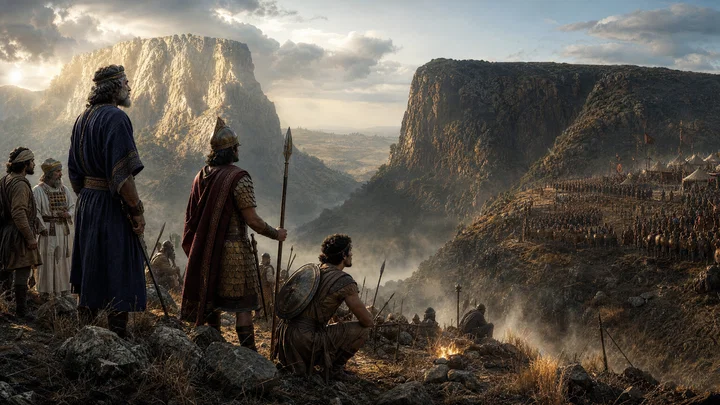
Saul chose him three thousand men of Israel; whereof two thousand were with Saul in Michmash and in mount Beth-el, and a thousand were with Jonathan in Gibeah of Benjamin: and the rest of the people he sent every man to his tent.
Translations
Saul chose him three thousand men of Israel; whereof two thousand were with Saul in Michmash and in mount Bethel, and a thousand were with Jonathan in Gibeah of Benjamin: and the rest of the people he sent every man to his tent.
King James Version, KJV Cambridge Paragraph Bible
Saul chose him three thousand men of Israel; whereof two thousand were with Saul in Michmash and in mount Beth-el, and a thousand were with Jonathan in Gibeah of Benjamin: and the rest of the people he sent every man to his tent.
Saul chose him three thousand men of Israel; of which two thousand were with Saul in Michmash and in mount Beth-el, and a thousand were with Jonathan in Gibeah of Benjamin: and the rest of the people he sent every man to his tent.
And Saul chose him three thousand men of Israel; whereof two thousand were with Saul in Michmash and in the mount of Beth-el, and a thousand were with Jonathan in Gibeah of Benjamin: and the rest of the people he sent every man to his tent.
Saul chose him three thousand men of Israel, whereof two thousand were with Saul in Michmash and in the mount of Beth-el, and a thousand were with Jonathan in Gibeah of Benjamin: and the rest of the people he sent every man to his tent.
and Saul chooseth for himself three thousand [men] out of Israel; and two thousand are with Saul in Michmash, and in the hill-country of Beth-El; and a thousand have been with Jonathan in Gibeah of Benjamin; and the remnant of the people he hath sent each to his tents.
And Saul chose him three thousand men out of Israel: there were with Saul two thousand in Michmash and in mount Bethel, and a thousand were with Jonathan in Gibeah of Benjamin; and the rest of the people he sent every man to his tent.
Saul chose him three thousand men out of Israel, of whom there were with Saul, two thousand in Michmash and in the hill-country of Bethel, and, a thousand, were with Jonathan, in Gibeah of Benjamin,—but, the rest of the people, he let go, every man to his own home.
Berean Standard Bible, Majority Standard Bible
He chose for himself three thousand men of Israel: Two thousand were with Saul at Michmash and in the hill country of Bethel, and a thousand were with Jonathan in Gibeah of Benjamin. And the rest of the troops he sent away, each to his own home.
Saul chose for himself three thousand men of Israel, of which two thousand were with Saul in Michmash and in the Mount of Bethel, and one thousand were with Jonathan in Gibeah of Benjamin. He sent the rest of the people to their own tents.
And Saul took for himself three thousand men of Israel, of whom he kept two thousand with him in Michmash and in the mountain of Beth-el, and a thousand were with Jonathan in Gibeah in the land of Benjamin: the rest of the people he sent back to their tents.
Then Saul chose him three thousand of Israel: and two thousande were with Saul in Michmash, and in mount Beth-el, and a thousande were with Ionathan in Gibeah of Beniamin: and the rest of the people he sent euery one to his tent.
Douay-Rheims (Challoner revision)
And Saul chose him three thousand men of Israel: and two thousand were with Saul in Machmas, and in mount Bethel: and a thousand with Jonathan in Gabaa of Benjamin, and the rest of the people he sent back every man to their dwellings.
Pictures
Commentary
Each commentary is drawn from primary sources: the writings of Ellen G. White and Adventist pioneers and periodicals. Each commentary is separate. Its own words are not a quotation; follow the references to read the source passages.
Ellen G. White
2 sources
After the victory over the Ammonites, Saul sent most of Israel's army home to their tents and kept three thousand men for himself.PP 616.1 Two thousand of these were stationed with Saul himself at Michmash and Mount Bethel, and one thousand were placed with Jonathan at Gibeah of Benjamin.PP 616.1 Disbanding most of the army at that moment was a serious mistake, for the people were encouraged by victory and an immediate attack upon other enemies could have advanced Israel's freedom.PP 616.1
In that same setting Saul later came under severe pressure from the Philistines while his own troops were scattering from him.PP 618.2–621.2 Because Samuel had not arrived by the appointed time, Saul himself offered a burnt offering.PP 618.2–621.2 He acted from impatience, and in doing so he violated God's command that only those consecrated to the priestly office should offer sacrifices.PP 618.2–621.2 Samuel rebuked him for failing to keep God's command and declared that his kingdom would not continue, though God would have established his kingdom over Israel forever if he had obeyed.PP 618.2–621.2
Sources
Pioneers and periodicals
4 sources
The books of Samuel are one book in Hebrew and record the history of Israel from Eli to the old age of David, with the first book functioning in effect as the last book of Judges because Samuel himself was the last of the judges.ST Mar 31, 1909 Samuel was an Ephraimite by birth who was given to God as the first-born, and so was a priest in Israel as well as a prophet called in early youth.ST Mar 31, 1909 The verse stands in 1 Samuel 13-14, within the section on the choosing of Saul as king that covers the beginning of his reign in rashness and weakness, the death of Samuel, the waning and rejection of the house of Saul and his family, and the calling and anointing of David.ST Mar 31, 1909ST Apr 15, 1913
The verse records Saul keeping three thousand men of Israel, with two thousand with him at Michmash and Mount Bethel and one thousand with Jonathan at Gibeah of Benjamin, while he sent the rest of the people home to their tents.ST Aug 3, 1882 This reduction of the army took place after the victory over the Ammonites.ST Aug 3, 1882 It opens an account of Saul's warlike action, marked by rashness, amid the harsh conditions the Philistines imposed on Israel.
The verse belongs to Saul's first great test, which he failed.ST Oct 31, 1895 By sending the rest of the people home and settling into ease instead of acting promptly against Israel's other enemies, Saul cost the nation an opportunity to protect its liberty and honor God.ST Aug 3, 1882 Despite this failure, God did not then remove Saul but gave him further trial and an opportunity to recover his personal character.ST Oct 31, 1895
Sources