1 Samuel 25:8
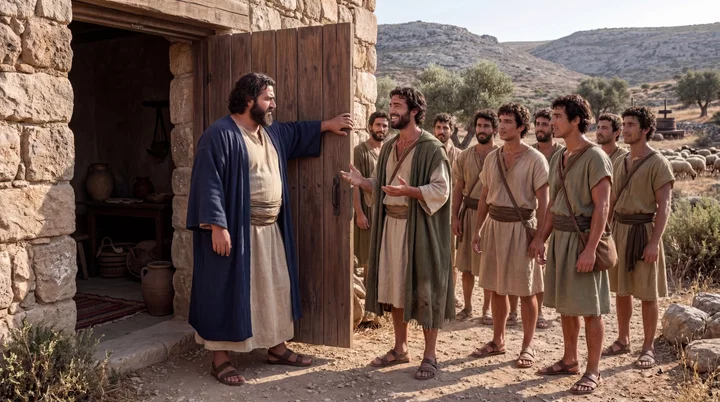
Ask thy young men, and they will shew thee. Wherefore let the young men find favour in thine eyes: for we come in a good day: give, I pray thee, whatsoever cometh to thine hand unto thy servants, and to thy son David.
Translations
Ask your young men, and they will show you. Why let the young men find favor in your eyes: for we come in a good day: give, I pray you, whatever comes to your hand to your servants, and to your son David.
King James Version, KJV Cambridge Paragraph Bible
Ask thy young men, and they will shew thee. Wherefore let the young men find favour in thine eyes: for we come in a good day: give, I pray thee, whatsoever cometh to thine hand unto thy servants, and to thy son David.
Ask thy young men, and they will show thee. Wherefore let the young men find favor in thy eyes: for we come in a good day: give, I pray thee, whatever cometh to thy hand, to thy servants, and to thy son David.
Ask thy young men, and they will tell thee: wherefore let the young men find favour in thine eyes; for we come in a good day: give, I pray thee, whatsoever cometh to thine hand, unto thy servants, and to thy son David.
Ask thy young men, and they will tell thee: wherefore let the young men find favor in thine eyes; for we come in a good day: give, I pray thee, whatsoever cometh to thy hand, unto thy servants, and to thy son David.
'Ask thy young men, and they declare to thee, and the young men find grace in thine eyes, for on a good day we have come; give, I pray thee, that which thy hand findeth, to thy servants, and to thy son, to David.'
Ask thy young men, and they will tell thee. Therefore let the young men find favour in thine eyes; for we come in a good day: give, I pray thee, what thy hand may find to thy servants, and to thy son David.
Ask thy young men, that they may tell thee, that so my young men may find favour in thine eyes, for, on a good day, have we come! Give, I pray thee, what thy hand findeth, to thy servants, and to thy son, to David!
Ask your young men, and they will tell you. So let my young men find favor with you, for we have come on the day of a feast. Please give whatever you can afford to your servants and to your son David.’”
Ask your young men, and they will tell you. So let my young men find favor with you, for we have come on the day of a feast. Please give whatever you can spare to your servants and to your son David.’”
Ask your young men, and they will tell you. Therefore let the young men find favor in your eyes, for we come on a good day. Please give whatever comes to your hand to your servants and to your son David.’”
If your young men are questioned they will say the same thing. So now, let my young men have grace in your eyes, for we are come at a good time; please give anything you may have by you to your servants and to your son David.
Aske thy seruants and they wil shew thee. Wherefore let these yong men finde fauour in thine eyes: (for we come in a good season) giue, I pray thee, whatsoeuer commeth to thine hand vnto thy seruants, and to thy sonne Dauid.
Douay-Rheims (Challoner revision)
Ask thy servants, and they will tell thee. Now therefore let thy servants find favour in thy eyes: for we are come in a good day, whatsoever thy hand shall find give to thy servants, and to thy son David.
Pictures
Cross-references
- 1 Samuel 25:17
Now therefore know and consider what thou wilt do; for evil is determined against our master, and against all his household: for he is such a son of Belial, that a man cannot speak to him.
A servant reports Nabal’s conduct and warns Abigail of the danger.
Commentary
Each commentary is drawn from primary sources: the writings of Ellen G. White and Adventist pioneers and periodicals. Each commentary is separate. Its own words are not a quotation; follow the references to read the source passages.
Ellen G. White
2 sources
David and his men were in the wilderness of Paran in sore need of provisions for themselves.21MR 213.1–214.3PP 664.3–4 Nabal was a wealthy man with vast possessions in that region, a descendant of Caleb, and of churlish and niggardly character.PP 664.3–4 The Carmel involved is not Mount Carmel but a place in the territory of Judah near the hill-town of Maon.PP 664.3–4
The request was sent at sheep-shearing time, a season of hospitality in accordance with the custom of the times, so coming in a good day means coming at a favorable time.PP 664.3–4 David sent ten young men to Nabal to greet him in David's name with peace to him and his house and all that he had.PP 664.3–4 The messengers were to state that David's men had done no harm to Nabal's shepherds at Carmel and nothing had been missing while they were there, because David and his men had protected Nabal's flocks and herds from marauders, and they were to appeal to Nabal's own young men to confirm it.21MR 213.1–214.3PP 664.3–4
The verse is a courteous request to let the young men find favor and to give whatever was available to David's servants and to David as his son.21MR 213.1–214.3PP 664.3–4 Nabal answered insolently and refused to share his abundance, thus returning evil for good.21MR 213.1–214.3
Sources
Pioneers and periodicals
3 sources
The request in the verse stands in the larger contrast between Saul's course of rashness, weakness, failure and rejection ever downward and David's choosing and checkered but ever-rising career.ST Apr 11, 1911 It belongs to the time when David had Saul in his power and did him no harm.ST Feb 17, 1904 It shows David in great difficulty and outward want, reduced to asking Nabal for whatever came to his hand for his servants and for himself. The name of Nabal, the man in the story, signifies fool.ST Jun 9, 1890 The incident throws light on the habits and customs of the people and the influence of surrounding nations upon them, and shows God's providence shaping and molding national events while God still remembers the promised Seed.ST Apr 11, 1911
The whole story of 1 Samuel 25:1-44 illustrates selfish covetousness and the folly of living for this short life without securing eternal life.ST Jun 9, 1890 When persecuted personally David never sought the destruction of his persecutors.ST Feb 17, 1904 Even one so high in grace and service suffered necessity familiarly, so being brought low is no unusual condition and no mark of hatred from God, and lack of bread gives no ground to infer lack of divine love. This rebukes repining and distrust and calls the needy heart to quiet submission instead of complaining against God. Prayer is not selfish desire or gratification of the flesh, but its primary purpose is the honor of God and the furtherance of His cause, with personal benefit only secondary and conditioned on the will of God and the glory of His name.ST Feb 17, 1904
Sources