1 Samuel 7:9
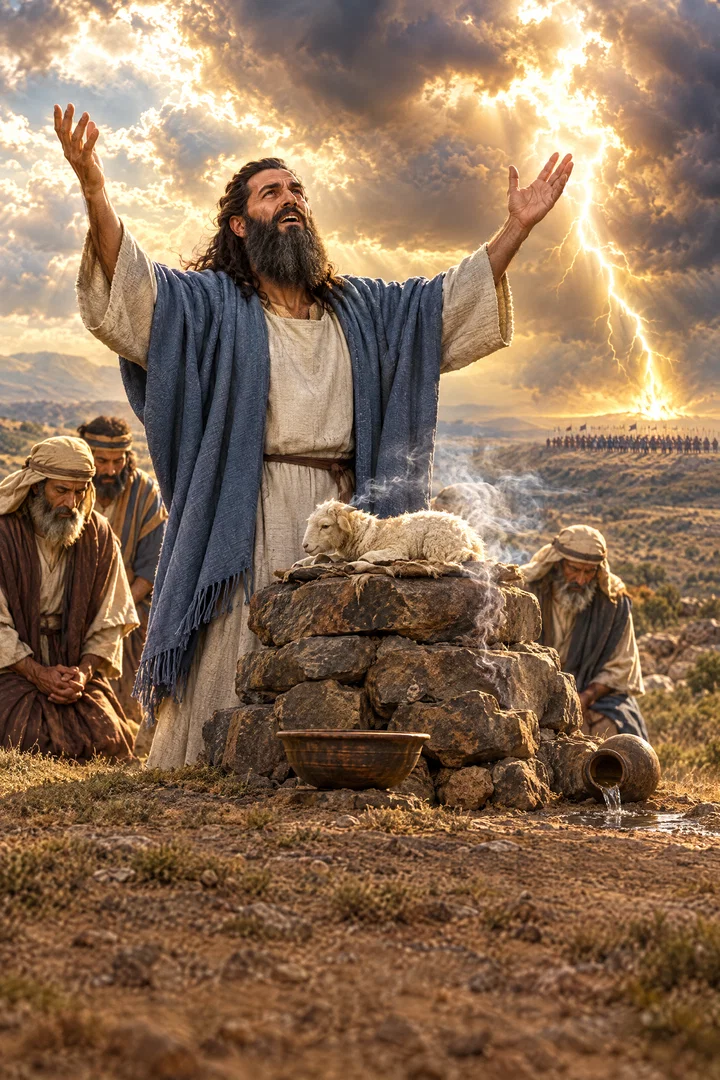
And Samuel took a sucking lamb, and offered it for a burnt offering wholly unto the LORD: and Samuel cried unto the LORD for Israel; and the LORD heard him.
Translations
And Samuel took a sucking lamb, and offered it for a burnt offering wholly to the LORD: and Samuel cried to the LORD for Israel; and the LORD heard him.
And Samuel took a sucking lamb, and offered it for a burnt offering wholly unto the LORD: and Samuel cried unto the LORD for Israel; and the LORD heard him.
And Samuel took a sucking lamb, and offered it for a burnt offering wholly unto the Lord: and Samuel cried unto the Lord for Israel; and the Lord heard him.
And Samuel took a sucking lamb, and offered it for a burnt-offering wholly to the LORD: and Samuel cried to the LORD for Israel; and the LORD heard him.
And Samuel took a sucking lamb, and offered it for a whole burnt offering unto the LORD: and Samuel cried unto the LORD for Israel; and the LORD answered him.
And Samuel took a sucking lamb, and offered it for a whole burnt-offering unto Jehovah: and Samuel cried unto Jehovah for Israel; and Jehovah answered him.
And Samuel taketh a fat lamb, and causeth it to go up — a burnt-offering whole to Jehovah; and Samuel crieth unto Jehovah for Israel, and Jehovah answereth him;
And Samuel took a sucking-lamb, and offered it as a whole burnt-offering to Jehovah; and Samuel cried to Jehovah for Israel, and Jehovah answered him.
So Samuel took one sucking lamb, and offered it up, as an entire ascending-sacrifice unto Yahweh,—and Samuel made outcry unto Yahweh, for Israel, and Yahweh answered him.
Berean Standard Bible, Majority Standard Bible
Then Samuel took a suckling lamb and offered it as a whole burnt offering to the LORD. He cried out to the LORD on behalf of Israel, and the LORD answered him.
Samuel took a suckling lamb, and offered it for a whole burnt offering to the LORD. Samuel cried to the LORD for Israel, and the LORD answered him.
And Samuel took a young lamb, offering all of it as a burned offering to the Lord; and Samuel made prayers to the Lord for Israel and the Lord gave him an answer.
Then Samuel tooke a sucking lambe, and offered it all together for a burnt offering vnto the Lord, and Samuel cryed vnto the Lord for Israel, and the Lord heard him.
Douay-Rheims (Challoner revision)
And Samuel took a sucking lamb, and offered it whole for a holocaust to the Lord: and Samuel cried to the Lord for Israel, and the Lord heard him.
Pictures
Cross-references
- 1 Samuel 7:2
And it came to pass, while the ark abode in Kirjath-jearim, that the time was long; for it was twenty years: and all the house of Israel lamented after the LORD.
Twenty-year humbling precedes intercession.
Commentary
Each commentary is drawn from primary sources: the writings of Ellen G. White and Adventist pioneers and periodicals. Each commentary is separate. Its own words are not a quotation; follow the references to read the source passages.
Ellen G. White
3 sources
Before this intercession Israel had been in the power of the Philistines for twenty years, had been greatly humbled, and had repented of their sins.1SP 408.1–409.2SG4 110.2 Samuel was in his youth when he began to judge Israel, and he called the people together for fasting and prayer and deep humiliation before God while bearing solemn testimony from God to them.4T 517.4 In that setting he took a nursing lamb and offered it wholly, entirely as a burnt offering to the Lord.1SP 408.1–409.2
He cried out and interceded to the Lord for Israel, and the people, having learned where their strength lay, entreated him not to cease crying to God for them.4T 517.41SP 408.1–409.2SG4 110.2 The Lord heard Samuel and heard the prayer offered in their behalf, and was again merciful to them.4T 517.41SP 408.1–409.2SG4 110.2 When the Philistines were aroused to meet Israel in battle and made war with them, the Lord wrought in their behalf in a miraculous manner, turned victory to the side of Israel, and they overcame their enemies.4T 517.41SP 408.1–409.2SG4 110.2
Sources
Pioneers and periodicals
5 sources
The verse belongs to the record of Israel's backsliding in the days of Samuel in the first seven chapters of 1 Samuel and of its restoration through Samuel's ministry, a history of inestimable spiritual value to the people of God today. Its setting is the lawless period between the judges and the kings when every man did what was right in his own eyes. At that time Hophni and Phinehas, the sons of Eli, were sons of Belial who knew not the Lord, and their greedy extortions caused the people to abhor God's service, while heathen excesses had been introduced into worship and strange gods and Ashtaroth were among Israel.
At Mizpeh, in a national revival during the Philistine oppression as Israel turned to the Lord, Samuel presented a sucking lamb as a whole burnt offering and cried to the Lord for Israel.ST Jan 26, 1882ST Dec 12, 1895ST Jul 15, 1889 The repentant people faced danger as the Philistines were approaching to attack in battle, and their hope was in God's help.ST Jan 26, 1882ST Jul 15, 1889RH Aug 21, 1856 Samuel's offering and prayer took place while the Philistines gathered against them.ST Jan 26, 1882RH Aug 21, 1856
The Lord heard him and answered with direct interposition, not a fortunate combination of circumstances.ST Dec 12, 1895ST Jul 15, 1889 The answer was a supernatural thunderstorm with thunder and lightning that threw the Philistines into confusion and flight, discomfited Israel's enemies, and turned danger into deliverance.ST Dec 12, 1895ST Jul 15, 1889RH Aug 21, 1856 Israel's cry, Hitherto hath the Lord helped us, marks the victory as evidence of God's help.RH Aug 21, 1856 That victory came in the very place where twenty years before Israel had been defeated for failing to recognize God and trusting in its own strength.ST Jul 15, 1889
God withholds His power when His people presumptuously carry the ark into battle with the Philistines while sinning against Him, but manifests His power in marked degree as soon as the ark is taken by the Philistines, for spiritual blessings could not be granted to a sinful people.ST Jul 15, 1889ST Dec 12, 1895 The ark contained the law of God, the ten commandments written with His own finger on tables of stone, which is the reflex of His divine will and represents the character and perfection of Almighty God, immutable and unchangeable with not one jot or tittle abrogated or set aside.ST Jul 15, 1889 In that sense the ark is a type of God's presence, and the fall and destruction of the image of Dagon, representing a false god and false religion, before the ark proves the God whose law was in the ark is the true God alone.ST Jul 15, 1889
It is always safe to walk in conformity with His will, but death and destruction come from disobedience, for God does not accompany those walking in forbidden paths.ST Jul 15, 1889 To willfully continue in iniquity after seeing its sinfulness is the height of presumption, while God reveals His will to be followed in the path to eternal life.ST Jul 15, 1889 The verse means God overrules events for the eternal good of those who trust Him and brings them back over the same ground where self-reliance once brought defeat so weak points can be fully tested and precious victories gained, and He still opens the way of deliverance from great temptation today.ST Jul 15, 1889 Those He helps must believe in His present power to save and openly give Him the glory instead of explaining His work away by natural causes.ST Jul 15, 1889
Sources