2 Chronicles 14:10
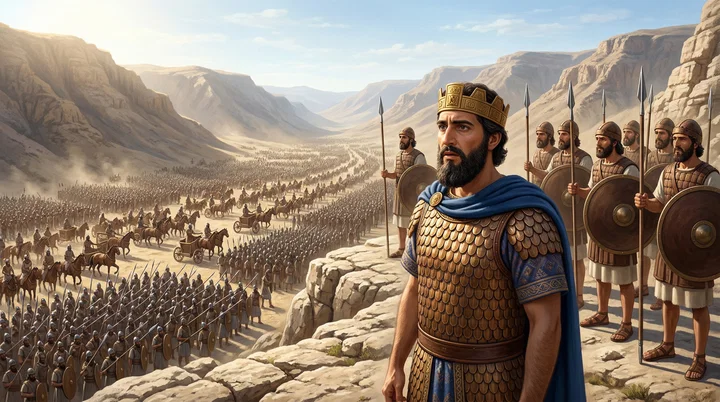
Then Asa went out against him, and they set the battle in array in the valley of Zephathah at Mareshah.
Translations
American King James Version, King James Version, KJV Cambridge Paragraph Bible
Then Asa went out against him, and they set the battle in array in the valley of Zephathah at Mareshah.
Then Asa went out against him, and they set the battle in array in the valley of Zephathath at Mareshah.
Revised Version, American Standard Version, World English Bible
Then Asa went out to meet him, and they set the battle in array in the valley of Zephathah at Mareshah.
and Asa goeth out before him, and they set battle in array in the valley of Zephathah at Mareshah.
And Asa went out against him, and they set the battle in array in the valley of Zephathah near Mareshah.
And Asa went out to meet him,—and they set in array for battle, in the valley of Zaphonah, at Mareshah.
Berean Standard Bible, Majority Standard Bible
So Asa marched out against him and lined up in battle formation in the Valley of Zephathah near Mareshah.
And Asa went out against him, and they put their forces in position in the valley north of Mareshah.
Then Asa went out before him, and they set the battell in aray in the valley of Zephathah beside Mareshah.
Douay-Rheims (Challoner revision)
And Asa went out to meet him, and set his army in array for battle in the vale of Sephata, which is near Maresa:
Pictures
Cross-references
- 1 Kings 15:9-15
And in the twentieth year of Jeroboam king of Israel reigned Asa over Judah.
Parallel account of Asa’s reign and reforms.
Commentary
Each commentary is drawn from primary sources: the writings of Ellen G. White and Adventist pioneers and periodicals. Each commentary is separate. Its own words are not a quotation; follow the references to read the source passages.
Ellen G. White
2 sources
Asa went out to meet Zerah the Ethiopian's invading army, leading Judah out and arranging his forces with the enemy in battle array in the valley of Zephathah at Mareshah.Ms 80, 1904, par. 20–23RH Jul 31, 1913 That meeting of the two armies in the valley formed the setting for what followed.Ms 80, 1904, par. 20–23RH Jul 31, 1913 The confrontation set the stage for Asa to pray for God's help against a far larger force.Ms 80, 1904, par. 20–23
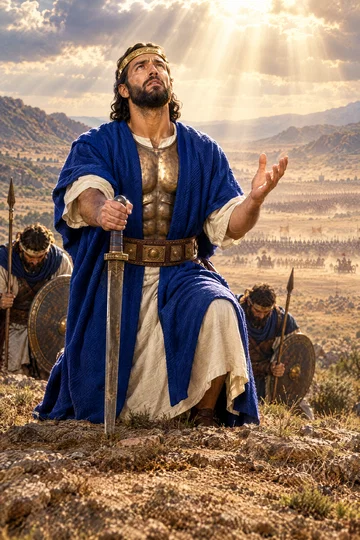
In that setting Asa relied on God rather than on his fortified cities or his trained army.RH Jul 31, 1913 He prayed for God's help in the face of the invasion.RH Jul 31, 1913 In answer to that prayer, God granted Judah victory.RH Jul 31, 1913
Sources
Pioneers and periodicals
5 sources
The verse stands in the account of Asa's reign over Judah, within the history running from Solomon through Rehoboam, Abijah and Asa into Jehoshaphat.ST Jun 27, 1911 Asa was the greatest king in Judah after Solomon and the united kingdom.ST Jun 27, 1911 It records Asa leading Judah out against the invading enemy, with the two armies set in array for battle in the valley of Zephathah at Mareshah.RH Jul 31, 1913ST Dec 8, 1898ST May 26, 1909 The invaders were the Ethiopians, led by Zerah.RH Jul 31, 1913ST May 26, 1909
The verse belongs to the account of Judah's great victory during Asa's good reign, which God gave him as he sought to reform Judah.ST Dec 8, 1898ST May 26, 1909RH Aug 1, 1871 The battle setting became the occasion for Asa to rely on God rather than on his fortified cities or trained army.RH Jul 31, 1913 Asa prayed for God's help, and God granted victory, which is connected with his prayer and described as a glorious victory for Israel.RH Jul 31, 1913RH Aug 1, 1871
Sources