2 Samuel 7:5
Go and tell my servant David, Thus saith the LORD, Shalt thou build me an house for me to dwell in?
Translations
Go and tell my servant David, Thus says the LORD, Shall you build me an house for me to dwell in?
King James Version, Revised Version
Go and tell my servant David, Thus saith the LORD, Shalt thou build me an house for me to dwell in?
Go and tell my servant David, Thus saith the Lord, Shalt thou build me a house for me to dwell in?
Go and tell my servant David, Thus saith the LORD, Wilt thou build me a house for me to dwell in?
Go and tell my servant David, Thus saith Jehovah, Shalt thou build me a house for me to dwell in?
'Go, and thou hast said unto My servant, unto David, Thus said Jehovah, Dost thou build for Me a house for My dwelling in?
Go and say to my servant, to David, Thus saith Jehovah: Wilt thou build me a house for me to dwell in?
Go and say unto my servant—unto David: Thus, saith Yahweh,—Shalt, thou, build me a house, for me to dwell in;
Berean Standard Bible, Majority Standard Bible
“ Go and tell My servant David that this is what the LORD says: Are you the one to build for Me a house to dwell in?
“ Go and tell my servant David, ‘ The LORD says, “ Should you build me a house for me to dwell in?
Go and say to my servant David, The Lord says, Are you to be the builder of a house, a living-place for me?
Goe and tell my seruant Dauid, Thus saieth the Lord, Shalt thou buylde me an house for my dwelling?
Douay-Rheims (Challoner revision)
Go, and say to my servant David: Thus saith the Lord: Shalt thou build me a house to dwell in?
Pictures
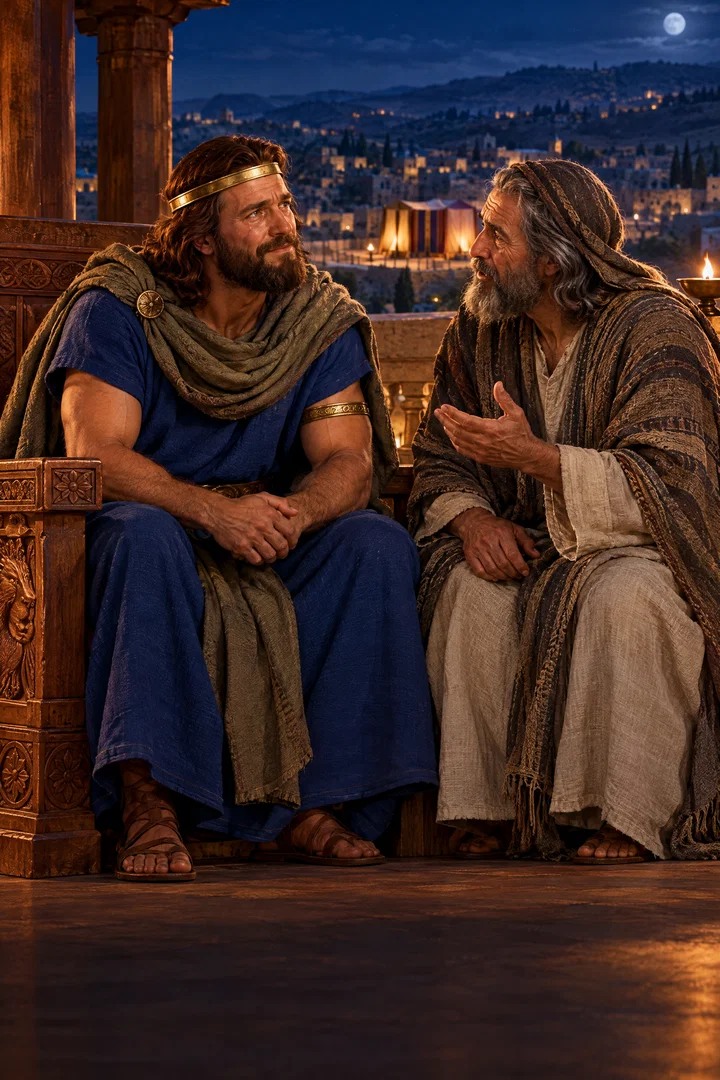
Cross-references 20 of 37
- 1 Chronicles 22:7-10
And David said to Solomon, My son, as for me, it was in my mind to build an house unto the name of the LORD my God:
David’s bloodshed disqualified him from building the house; Solomon was chosen to build it.
- 1 Chronicles 17:4
Go and tell David my servant, Thus saith the LORD, Thou shalt not build me an house to dwell in:
God tells David not to build Him a house.
- 2 Samuel 7:11-16
And as since the time that I commanded judges to be over my people Israel, and have caused thee to rest from all thine enemies. Also the LORD telleth thee that he will make thee an house.
God promises to establish David’s house and says his descendant will build the temple.
- 1 Kings 5:5
And, behold, I purpose to build an house unto the name of the LORD my God, as the LORD spake unto David my father, saying, Thy son, whom I will set upon thy throne in thy room, he shall build an house unto my name.
Solomon is appointed to build the house the LORD promised David.
- 1 Chronicles 28:2
Then David the king stood up upon his feet, and said, Hear me, my brethren, and my people: As for me, I had in mine heart to build an house of rest for the ark of the covenant of the LORD, and for the footstool of our God, and had made ready for the building:
David recounts his desire to build God a house of rest.
- 1 Kings 8:27
But will God indeed dwell on the earth? behold, the heaven and heaven of heavens cannot contain thee; how much less this house that I have builded?
The heavens cannot contain God, much less the temple.
- Luke 1:32-33
He shall be great, and shall be called the Son of the Highest: and the Lord God shall give unto him the throne of his father David:
Jesus reigns on David’s throne, fulfilling the promise of an enduring kingdom.
- Acts 7:48
Howbeit the most High dwelleth not in temples made with hands; as saith the prophet,
Both say God does not dwell in a house built by human hands.
- 2 Samuel 7:1
And it came to pass, when the king sat in his house, and the LORD had given him rest round about from all his enemies;
Rest from enemies prompted David’s proposal to build the house.
- 1 Kings 8:17-19
And it was in the heart of David my father to build an house for the name of the LORD God of Israel.
approves David's desire but reserves building to his son
- Isaiah 66:1
Thus saith the LORD, The heaven is my throne, and the earth is my footstool: where is the house that ye build unto me? and where is the place of my rest?
God asks what house could be built for him, declaring heaven his throne.
- Psalms 89:3-4
I have made a covenant with my chosen, I have sworn unto David my servant,
God’s promise to David establishes Christ’s enduring kingship.
- Psalms 132:1-5
LORD, remember David, and all his afflictions:
David vows to find a dwelling place for God.
- 2 Samuel 7:11
And as since the time that I commanded judges to be over my people Israel, and have caused thee to rest from all thine enemies. Also the LORD telleth thee that he will make thee an house.
God will make David a house in return
- 2 Chronicles 3:1
Then Solomon began to build the house of the LORD at Jerusalem in mount Moriah, where the Lord appeared unto David his father, in the place that David had prepared in the threshingfloor of Ornan the Jebusite.
Identifies the site where Solomon built the sanctuary.
- 2 Samuel 7:12
And when thy days be fulfilled, and thou shalt sleep with thy fathers, I will set up thy seed after thee, which shall proceed out of thy bowels, and I will establish his kingdom.
The promise that David’s son would succeed him is confirmed to Solomon.
- Isaiah 9:6-7
For unto us a child is born, unto us a son is given: and the government shall be upon his shoulder: and his name shall be called Wonderful, Counsellor, The mighty God, The everlasting Father, The Prince of Peace.
Foretells the promised ruler reigning on David’s throne.
- Zechariah 6:12
And speak unto him, saying, Thus speaketh the LORD of hosts, saying, Behold the man whose name is The BRANCH; and he shall grow up out of his place, and he shall build the temple of the LORD:
The greater Son of David builds the temple.
- 1 Chronicles 22:11
Now, my son, the LORD be with thee; and prosper thou, and build the house of the LORD thy God, as he hath said of thee.
David charges Solomon to build the LORD’s house.
- Psalms 132:13-14
For the LORD hath chosen Zion; he hath desired it for his habitation.
Identifies Zion as the place God chose for his dwelling.
Commentary
Each commentary is drawn from primary sources: the writings of Ellen G. White and Adventist pioneers and periodicals. Each commentary is separate. Its own words are not a quotation; follow the references to read the source passages.
Ellen G. White
3 sources
When the message was given, David lived in a palace of cedar in Jerusalem while Israel dwelt in costly houses, yet God was still worshiped in the curtained tabernacle.Ms 23, 1886, par. 1–2 There remained the ark made in the wilderness and carried from Horeb through the forty years, and there the Shekinah, the visible emblem of His presence, dwelt between the cherubim.Ms 23, 1886, par. 1–2 Seeing his own magnificent dwelling and the costly dwellings of the people, David was impressed and filled with remorse that the ark, which symbolized the mighty God, the Maker of the heavens and the earth, was so much more poorly provided for.Ms 23, 1886, par. 1–2
He made known to Nathan the prophet his purpose to build a temple for the Lord to dwell in, and Nathan at first encouraged him to carry it out.Ms 23, 1886, par. 1–2 The verse is God's answer sent through Nathan, telling His servant David that he himself was not to build a house for the Lord to dwell in.PP 711.3–712.3Ms 23, 1886, par. 1–2 Although David wanted to provide a temple for the ark and sanctuary, the privilege was denied him.PP 711.3–712.3Ms 23, 1886, par. 1–2
By divine appointment and providence, David's son Solomon was selected to accomplish the great work and would build the house for God in Jerusalem instead of David.PP 711.3–712.3Ms 23, 1886, par. 1–2 God withheld the building from David because His plans were better and He had a special work and another service for David to perform.Ms 23, 1886, par. 1–2MH 473.2–3 The refusal of David's sincere intention did not mean he was rejected, for God blesses and uses those devoted to His glory.MH 473.2–3
Sources
Pioneers and periodicals
35 sources
After the Lord had given him rest from his enemies, David sat in his house of cedar while the ark dwelt within curtains, and out of gratitude he purposed to build a permanent house for the Lord.RH May 27, 1902ST Jul 3, 1884 That very night the word of the Lord came to Nathan in vision, turning his first approval aside and forbidding David to build, by asking whether he would build a house for God to dwell in.ST Jul 3, 1884ST Jul 3, 1884RH Jan 6, 1853ST Aug 10, 1904RH Jun 29, 1916 David was not permitted because he had been a man of war who had shed blood abundantly, and the work of peace belonged to his son, a man of rest named to mean peaceable who would build in quietness.RH May 27, 1902RH Jan 6, 1853RH May 5, 1851RH Sep 13, 1906 Instead of David building God's house, the Lord would make David a house, taking him from following the sheep and establishing his house and throne forever, a promise fulfilled in part in Solomon and fully in Christ reigning as King.ST Sep 10, 1896RH Jul 31, 1900RH Apr 12, 1860 God is not confined to a house made by hands, for even heaven cannot contain Him, yet He accepted David's purpose as a spiritual act and blessed him for it, showing that a sincere desire may be refused without rejection when God sees what is best.ST Oct 8, 1885RH Mar 4, 1902RH Nov 12, 1903ST Jun 14, 1883
Setting and Wording
The message came after the Lord had given David rest round about from all his enemies, when David sat in his house of cedar while the ark of God dwelt within curtains in the tent he had pitched for it in the city of David, and out of that contrast David proposed to prepare a suitable permanent abiding place for the ark.RH May 27, 1902ST Jul 3, 1884ST Oct 21, 1889 It was spoken after many years of warfare when that rest had been given, in answer to the desire David had told to Nathan the prophet to build a house for the ark of God.ST Jul 3, 1884ST Oct 21, 1889ST Apr 19, 1910 In the order of David's history the plan stands after the bringing up of the ark and the slaying of Uzzah and before his victories over various kingdoms and his kindness to Mephibosheth son of Jonathan.ST Apr 14, 1909 It came that very night at Jerusalem about B.C. 1042, when David was about 44 years old and had rest from his enemies after his wars were over.ST Oct 8, 1885ST Jul 9, 1896ST Jul 9, 1896
The word of the Lord came to Nathan to be told to David, asking whether David would build Him a house for Him to dwell in.ST Oct 8, 1885ST Jul 9, 1896 The wording the word of the Lord came and having a vision expresses the same kind of prophetic revelation.RH Jun 29, 1916 The question whether David will build a house for God to dwell in is a way of telling him not to build it, equivalent to thou shalt not build me an house.ST Jul 3, 1884RH Jan 6, 1853RH Jan 6, 1853
God addresses David as my servant, not as a private man but as the king.RH May 27, 1902 The title uses the general Hebrew word for servant found 783 times in the Old Testament, which covers hired man, servant, laborer, soldier, minister, magistrate, messenger, angel, prophet, priest, king, and is even applied to Christ.RH May 27, 1902RH May 30, 1865 It is used respectfully, as when one calls himself another's obedient servant, and does not mean a person in involuntary and abject bondage as slavery is now understood, so where the same term is rendered bondman it still does not mean a slave in the modern sense and the title given to David gives no sanction to slavery.RH May 30, 1865
God had never openly commanded Israel or its judges to build Him a cedar house, and no such command stands in the inspired books.ST May 21, 1902RH Mar 4, 1902RH Mar 4, 1902 After walking with His people and dwelling in a tent while they journeyed, He had not required a house at their hands.ST May 21, 1902ST Oct 21, 1889 The plan to build was therefore David's own thought, formed as he reflected on God's goodness and desired to show gratitude, though God desired such a dwelling and would have been pleased with it.RH Mar 4, 1902ST Jul 9, 1896RH Mar 4, 1902
Nathan was a true prophet and a regular adviser to the king.ST Jul 3, 1884 He first approved the plan on his own judgment because the Lord was with David, telling him to do all that was in his heart.ST Aug 10, 1904ST Jul 9, 1896RH Oct 27, 1863 Then the same night he was sent back with a changed message to take back his initial counsel and deliver the Lord's message instead.RH Sep 13, 1906ST Jul 3, 1884
Refusal and Promise
David was not allowed to build because he had been a man of war who had shed blood abundantly and made great wars.RH May 27, 1902RH Jan 6, 1853RH Sep 13, 1906RH Jan 6, 1853 The house was an important and holy work in which heaven would hold out peace to a rebellious world, and none but those whose lives had been passed in peace could be employed in its erection.RH May 27, 1902 His purpose to build was pleasing to the Lord, yet the purpose was to be fully carried out only through his son.RH May 27, 1902RH Jan 6, 1853
That son was to be a man of rest, named Solomon meaning peaceable, given rest from his enemies and peace and quietness in his days, fitting the object lesson of a house of rest.RH May 27, 1902 David received the temple pattern by the Spirit and passed it to Solomon.RH May 27, 1902RH May 5, 1851 Before his death he made preparations and provided the materials, though the edifice itself was raised by Solomon.RH May 27, 1902RH Jan 6, 1853RH Nov 10, 1863
God accepted David's good intentions but refused him the honor of building.RH Mar 4, 1902RH Nov 10, 1863 He took note of David's concern for His work and worship, valued his devotion and purpose as a spiritual act, and blessed him for harboring it.ST Oct 8, 1885RH Mar 4, 1902 He richly rewards care for the place of worship, so David's thought concerning the house was rewarded with eternal glory bearing fruit to all eternity.ST Oct 8, 1885
The promise was redirected so that instead of David building God's house the Lord would make David a house.RH Jul 31, 1900ST Oct 8, 1885RH Mar 4, 1902 God reminded him of the humble position from which He had taken him from the sheepcote and from following the sheep to rule Israel, and of His care for him.ST Sep 10, 1896 He promised to establish David's house and kingdom and throne forever, appointing David's son Solomon to build a house for His name.ST Sep 10, 1896ST Oct 8, 1885RH Mar 4, 1902
The verse marks the transition from the tabernacle as God's dwelling among Israel within curtains to the house or temple as a permanent sanctuary and place of worship.RH Jul 31, 1900RH May 5, 1851ST Jun 14, 1883 The question concerns building God a permanent house in place of the existing sanctuary.RH Jul 31, 1900RH May 5, 1851 David desired to replace the tabernacle with a permanent house.ST Jun 14, 1883
The promise to David was confirmed to Solomon to encourage him in building the temple.ST Oct 9, 1884 That confirmation did not make God's presence and favor unconditional but joined them to the condition of obedience to God's commandments.ST Oct 9, 1884 Yet the preservation of Solomon and Judah rested on the Lord's word to David despite Solomon's apostasy.ST Nov 18, 1903
Prophecy and Application
The refusal carries a promise whose limited fulfillment came in Solomon and the temple he built, but whose full meaning points to Christ as the promised Seed and the enduring royal house fulfilled in Him.ST Sep 10, 1896RH Jul 31, 1900RH Apr 12, 1860 It stands as a stage in the development of the promise of the Seed, pointing to Christ reigning as King on the throne in God's kingdom as the fifth universal kingdom on earth.RH Jul 15, 1873ST May 21, 1902 In the same prophetic outlook the message concerning God's sanctuary points forward to the Lord's reign and to Israel planted permanently, with fulfillment seen in God's sanctuary among His people in the world made new.RH Feb 3, 1853 Scripture itself so joins a messianic application with details tied to a historical person and setting that some particulars apply only to Solomon while the promise as a whole can still refer to Christ.RH Apr 12, 1860
The house itself prophesies the greater Son of David, who makes flesh His tabernacle and builds the temple of the Lord.RH May 27, 1902 That Son was foreshadowed by a son who was to be a man of rest, named to mean peaceable and given rest from enemies with peace and quietness in his days, fitting the object lesson that the house of the Lord must be a house of rest.RH May 27, 1902 The greater Son is the one who gives rest, who is peace, who made peace through the blood of His cross, and who gives His peace.RH May 27, 1902
David did not intend a dwelling that God needed, for God is not confined to a temple made by human hands.RH Mar 4, 1902ST Jun 14, 1883 Even the prayers of David and Solomon acknowledged that the Most High does not dwell in temples and that the heaven and heaven of heavens cannot contain Him.RH Mar 4, 1902ST Jun 14, 1883 The house on earth was set apart for teaching God's holy principles of truth, though God had never openly commanded Israel or any judge to build Him a cedar house and the plan was David's own thought.RH Mar 4, 1902
The contrast is that people can build material structures, but God builds a living temple.RH Jul 31, 1900ST Sep 3, 1902 He promised to build David a house by establishing his family line forever in Christ Jesus.ST Sep 3, 1902 He also builds and cleanses believers as a dwelling for Himself through the Spirit, making them living temples and a living temple of people.RH Jul 31, 1900ST Sep 3, 1902
The overnight correction of Nathan proves that infallibility rests not in the man himself but in divine inspiration and the direct impression of the Holy Spirit, so that appeal must be made from the prophet ill informed to the prophet well informed.ST Aug 10, 1904 His first encouragement to do all that was in the heart was only personal opinion from private judgment, given without the full circumstances being known and therefore erroneous, though others explain it as counsel given without full information rather than a mistake in the ordinary sense.ST Aug 10, 1904RH Sep 13, 1906 A prophet should obey God's command even when doing so means taking back initial counsel, admitting the error, and delivering the Lord's message instead.ST Aug 10, 1904ST Jul 3, 1884
A good and sincere desire is not always God's plan, and God may refuse it because He sees what is best for His servant and His cause.ST Dec 8, 1914 Such refusal does not mean rejection, for God took note of David's concern for His work and worship, valued his devotion and purpose as a spiritual act, and blessed him for harboring it, with blessing extending even more to his descendants.ST Dec 8, 1914RH Nov 12, 1903 The Lord has great care for the place of His worship and richly rewards care for it with eternal glory, so David's thought concerning the house was rewarded with the promise that the Lord would make him a house and establish his house, kingdom and throne forever, a thought bearing fruit to all eternity, while God blesses and uses those devoted to His glory by entrusting them with another service instead.ST Dec 8, 1914ST Oct 8, 1885
Sources