Amos 6:2
Pass ye unto Calneh, and see; and from thence go ye to Hamath the great: then go down to Gath of the Philistines: be they better than these kingdoms? or their border greater than your border?
Translations
Pass you to Calneh, and see; and from there go you to Hamath the great: then go down to Gath of the Philistines: be they better than these kingdoms? or their border greater than your border?
Pass ye unto Calneh, and see; and from thence go ye to Hamath the great: then go down to Gath of the Philistines: be they better than these kingdoms? or their border greater than your border?
Pass ye unto Calneh, and see;
And from thence go ye to Hamath the great:
Then go down to Gath of the Philistines:
Be they better than these kingdoms?
Or their border greater than your border?Pass ye to Calneh, and see; and from thence go ye to Hamath the great: then go down to Gath of the Philistines: are they better than these kingdoms? or their border greater than your border?
Pass ye unto Calneh, and see; and from thence go ye to Hamath the great: then go down to Gath of the Philistines: be they better than these kingdoms? or is their border greater than your border?
Pass ye unto Calneh, and see; and from thence go ye to Hamath the great; then go down to Gath of the Philistines: are they better than these kingdoms? or is their border greater than your border?
Pass ye over [to] Calneh and see, And go thence [to] Hamath the great, And go down [to] Gath of the Philistines, Are [they] better than these kingdoms? Greater [is] their border than your border?
Pass unto Calneh, and see; and from thence go to Hamath the great; and go down to Gath of the Philistines: are they better than these kingdoms? or their border greater than your border?
Pass ye over to Calneh, and see, and go on from thence to Hamath the great,—and go down to Gath of the Philistines, are they better than these kingdoms? or their boundary larger than your boundary?
Berean Standard Bible, Majority Standard Bible
Cross over to Calneh and see;
go from there to the great Hamath;
then go down to Gath of the Philistines.
Are you better than these kingdoms?
Is their territory larger than yours?Go to Calneh, and see.
From there go to Hamath the great.
Then go down to Gath of the Philistines.
Are they better than these kingdoms?
Is their border greater than your border?Go on to Calneh and see; and from there go to Hamath the great; then go down to Gath of the Philistines: are you better than these kingdoms? or is your land wider than theirs?
Goe you vnto Calneh, and see: and from thence goe you to Hamath the great: then goe downe to Gath of the Philistims: be they better then these kingdomes? or the border of their land greater then your border,
Douay-Rheims (Challoner revision)
Pass ye over to Chalane, and see, and go from thence into Emath the great: and go down into Geth of the Philistines, and to all the best kingdoms of these: if their border be larger than your border.
Pictures
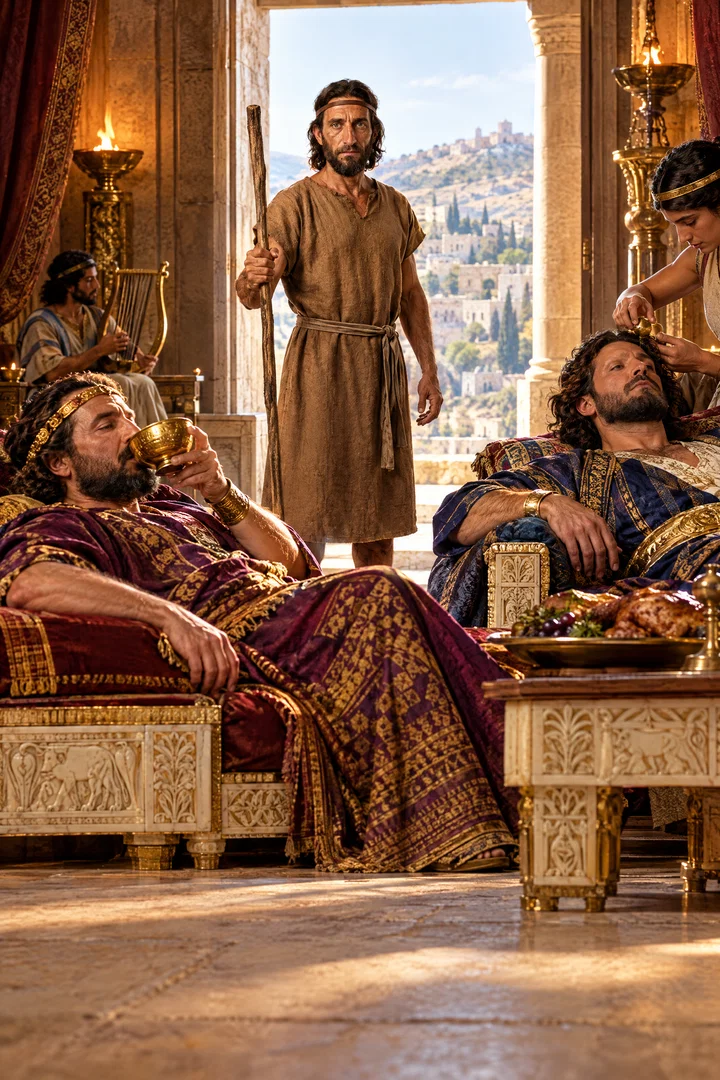
Commentary
Each commentary is drawn from primary sources: the writings of Ellen G. White and Adventist pioneers and periodicals. Each commentary is separate. Its own words are not a quotation; follow the references to read the source passages.
Pioneers and periodicals
5 sources
Israel is told to pass over to Calneh and look, to go from there to great Hamath, then to go down to Gath of the Philistines, and to ask whether those kingdoms are better than these kingdoms or whether their territory is larger than Israel's own.RH Jun 22, 1916ST Aug 25, 1898 The call summons Judah and Israel to measure themselves against those neighboring powers.ST Aug 25, 1898ST Aug 25, 1898 In holding up Calneh, Hamath, and Gath for comparison, it sets Judah and Israel in a prominent place among the nations around them.ST Aug 25, 1898ST Aug 25, 1898 By bidding Israel consider what befell those cities, it warns that prosperity and strength give no security against punishment.RH Jun 22, 1916
The challenge stands within a woe pronounced on those at ease in Zion, a prophecy applying more or less to the present time.RH Dec 23, 1858 It is aimed at those who push the evil day far away, who chant to the viol and devise instruments of music, who drink wine from bowls and anoint themselves while feeling no grief over affliction.RH Dec 23, 1858 It is aimed also at those who rejoice in a thing of nothing and boast that horns have been taken by their own strength.RH Dec 23, 1858 Their boasted spires, numbered by thousands, stand as horns and emblems of pride, marked out as special objects of divine vengeance in the day of wrath.RH Dec 23, 1858
The appeal is one instance of the prophets setting themselves against the idle, selfish, insolent, luxurious, and sensual.RH Jun 22, 1911 Its warning against complacent luxury belongs together with their defense of the poor and oppressed.RH Jun 22, 1911 Israel's ruin came after excessive luxury and drunkenness, so the woe was the outcome of pride and debauchery and not an arbitrary act of God.
Sources