Amos 6:5
That chant to the sound of the viol, and invent to themselves instruments of musick, like David;
Translations
American King James Version, Webster Bible
That chant to the sound of the viol, and invent to themselves instruments of music, like David;
That chant to the sound of the viol, and invent to themselves instruments of musick, like David;
That chant to the sound of the viol,
And invent to themselves instruments of musick, like David;that sing idle songs to the sound of the viol; that devise for themselves instruments of music, like David;
that sing idle songs to the sound of the viol; that invent for themselves instruments of music, like David;
Who are taking part according to the psaltery, Like David they invented for themselves instruments of music;
that chant to the sound of the lute, [ and] invent them instruments of music, like David;
Who are bawling at the bidding of the harp,—like David, have they invented for themselves instruments of song:
Berean Standard Bible, Majority Standard Bible
You improvise songs on the harp like David
and invent your own musical instruments.who strum on the strings of a harp,
who invent for themselves instruments of music, like David;Making foolish songs to the sound of corded instruments, and designing for themselves instruments of music, like David;
They sing to the sounde of the viole: they inuent to themselues instruments of musike like Dauid.
Douay-Rheims (Challoner revision)
You that sing to the sound of the psaltery: they have thought themselves to have instruments of music like David;
Pictures
Cross-references
- 1 Chronicles 23:5
Moreover four thousand were porters; and four thousand praised the LORD with the instruments which I made, said David, to praise therewith.
Both texts associate David with making musical instruments.
- Amos 5:23
Take thou away from me the noise of thy songs; for I will not hear the melody of thy viols.
God rejects songs and the sound of instrumental music.
- Psalms 33:2
Praise the LORD with harp: sing unto him with the psaltery and an instrument of ten strings.
Both call for praising God with stringed instruments.
Commentary
Each commentary is drawn from primary sources: the writings of Ellen G. White and Adventist pioneers and periodicals. Each commentary is separate. Its own words are not a quotation; follow the references to read the source passages.
Ellen G. White
1 source
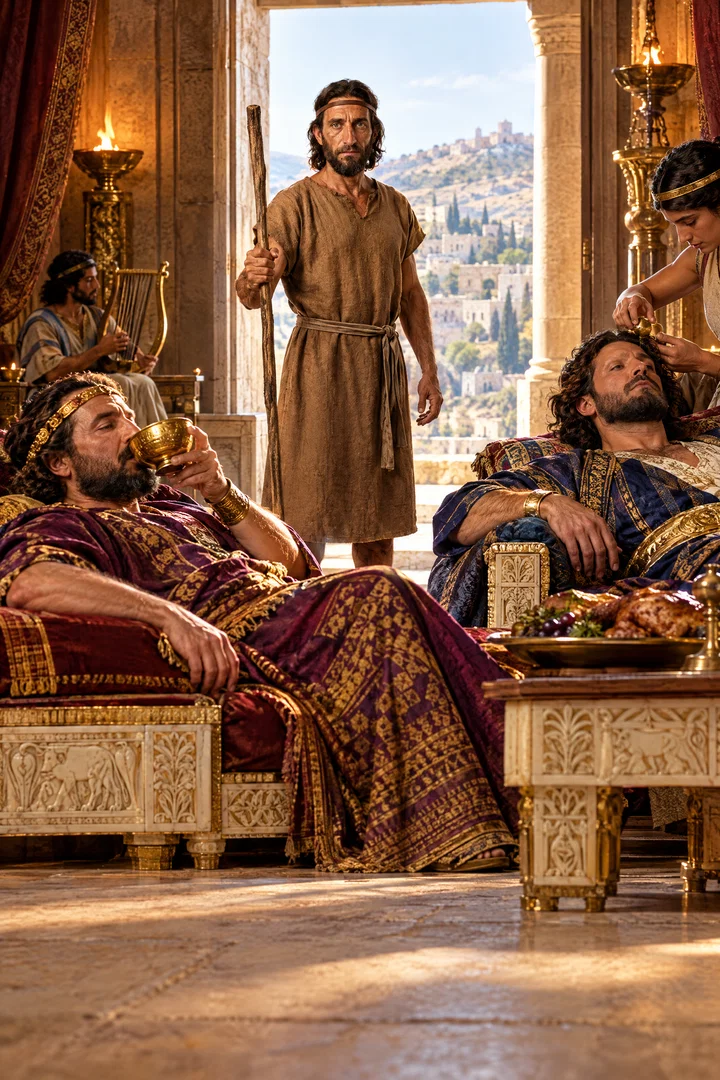
The verse portrays a condition of idle luxury among those at ease in Zion, who put the evil day far from thought while by their course causing the seat of violence to come near.ST That self-indulgent ease shows itself in lying upon beds of ivory and stretching upon couches, in feasting on lambs taken from the flock and calves taken from the stall, in chanting to the sound of the viol and devising instruments of music as David did, in drinking wine from bowls and anointing with the chief ointments, all while feeling no grief for the affliction of Joseph.ST Such wine-drinking revelry was one of the causes that finally brought about the captivity of Israel.ST Therefore those who lived in this indulgence would go captive with the first who go captive, and their banquet of stretched-out ease would be taken away.ST
Sources
Pioneers and periodicals
11 sources
It pictures the wealthy in Israel in a time of prosperity living in stone houses adorned with ivory, feasting on choice lambs and calves, drinking wine freely amid perfumes and ointments, while chanting idle songs to the viol and devising instruments for their own entertainment after the pattern of David.RH Jan 29, 1914STRH Jun 22, 1916ST Aug 25, 1898ST Aug 25, 1898 That luxury was kept up by violence and robbery, oppressing the poor and needy, perverting judgment with false weights and measures, while uprightness was hated.RH Jan 29, 1914STRH Jun 22, 1916 The wrong condemned is not instrumental music itself, which is proper in worship when rightly used, but revelry and self-indulgence in place of repentance, for music and even elaborate worship are distasteful and insulting when heart and life are corrupt and unreformed.RH Jun 22, 1916ST Mar 17, 1914ST Dec 13, 1905 Those at ease who put far away the evil day and disregard coming judgment were under woe, and their drunken revelry and excess brought downfall and captivity, with their banquet of ease removed.STRH Dec 23, 1858RH Sep 8, 1853 The same warning rests on professed churches and teachers now who join pride and vain show and boasted strength with pleasure-seeking, rejoicing in nothingness while they are not grieved for the affliction of God's people and hasten toward the day of the Lord.RH Dec 23, 1858RH Mar 19, 1857
Setting and Plain Meaning
Amos's words belong to an indignant address to the northern kingdom at Bethel and Samaria, spoken in the last half century before the Assyrian captivity during the prosperity that followed the great successes of Jeroboam II.RH Jan 29, 1914RH Jun 22, 1916 They picture the rich living in houses built of hewn stone and paneled with ivory, lying on beds of ivory and stretching themselves on couches.RH Jan 29, 1914STRH Jun 22, 1916 Their life was eating lambs out of the flock and calves out of the stall, drinking wine in bowls, feasting to excess amid delicate perfumes and chief ointments, with riotous feasting and drunkenness, licentiousness and debauchery.RH Jan 29, 1914STRH Jun 22, 1916
That luxury was gained and kept through oppression and gross injustice, by violence and robbery, by selling the poor and needy as slaves, by false weights and measures and corrupt judgment, and by causing the seat of violence to come near.RH Jan 29, 1914STRH Jun 22, 1916 In such a time to be upright was to be hated and unpopular.RH Jun 22, 1916 It showed idolatry and depravity, failure of justice between man and man as a divine foundation of society, failure to join privilege with responsibility, and failure to live up to granted light and knowledge, which would surely bring punishment.RH Jun 22, 1916
The musical phrase means chanting idle or dissolute songs to the sound of the viol, in soft strains of varied music, and devising instruments of music patterned after David for their own enjoyment and entertainment.RH Jun 22, 1916ST Aug 25, 1898ST Aug 25, 1898 It is a rebuke of the idle, frivolous, luxurious and self-indulgent.RH Jan 29, 1914RH Jun 22, 1911 Their conduct stood against concern for the poor and oppressed, and against what might have been their standing as spiritual leaders among the nations, for they set aside the statutes of God and fell helpless prey to evil passions.RH Jan 29, 1914RH Jun 22, 1911
Warning and Present Application
The condemnation falls not on instrumental music itself, which is proper in worship when used appropriately, but on its wrong use and timing in a setting of revelry and self-indulgence.ST Mar 17, 1914 The fault was singing and playing instruments while ignoring prophecies warning of apostasy and coming punishment, when repentance and mourning over threatened downfall were required.ST Mar 17, 1914 Making music like David is wrong when heart and life are corrupt, for music without the right spirit and grace is distasteful.ST Dec 13, 1905 Even elaborate worship becomes an insult when will and conduct do not conform to divine requirements.RH Jun 22, 1916ST Dec 13, 1905
Those described are absorbed in music and invention while neglecting duty.RH Mar 19, 1857 That absorption belongs with shallow religious life and a refined epicureanism that puts worldly pleasures above humble faith and obedience.RH Mar 19, 1857 They stand under woe as those at ease in Zion who put far away the evil day and disregard the coming day of judgment.STRH Dec 23, 1858RH Sep 8, 1853 Excessive luxury and wine-drinking revelry and drunkenness were causes of Israel's downfall.ST Therefore those who lived in this ease would go captive with the first who go captive, and their banquet of stretched-out ease would be removed.ST
The same condition applies in the present time to professed churches and teachers whose actions deny the truth.RH Dec 23, 1858RH Mar 19, 1857 Chanting to the sound of the viol and inventing instruments of music like David appears as part of pride, vain show, aristocracy, and boasted progress and strength.RH Dec 23, 1858 It is joined with rejoicing in a thing of naught and boasting in spires as horns, with drinking wine in bowls and anointing with chief ointments while not grieved for the affliction of Joseph.RH Dec 23, 1858 Such a course shows lack of trust in God and hastens toward the day of the Lord when proud high towers perish under vengeance.RH Dec 23, 1858
Sources