Amos 8:2
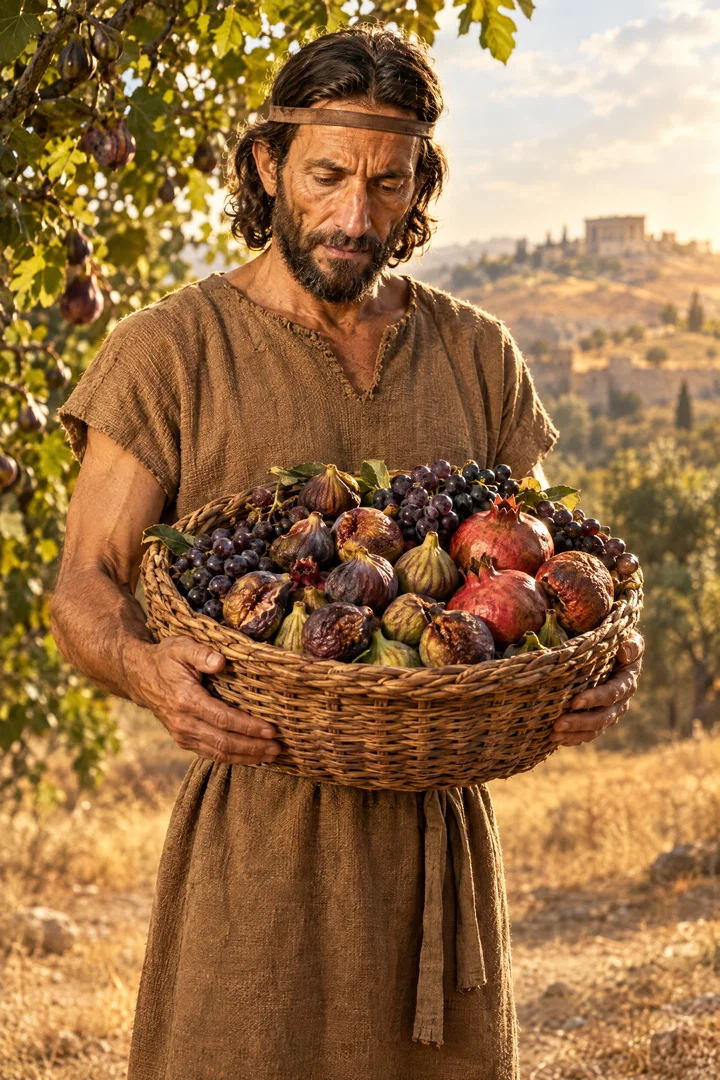
And he said, Amos, what seest thou? And I said, A basket of summer fruit. Then said the LORD unto me, The end is come upon my people of Israel; I will not again pass by them any more.
Translations
And he said, Amos, what see you? And I said, A basket of summer fruit. Then said the LORD to me, The end is come on my people of Israel; I will not again pass by them any more.
And he said, Amos, what seest thou? And I said, A basket of summer fruit. Then said the LORD unto me, The end is come upon my people of Israel; I will not again pass by them any more.
And he said, Amos, what seest thou? And I said, A basket of summer fruit. Then said the Lord unto me,
The end is come upon my people of Israel;
I will not again pass by them any more.And he said, Amos, what seest thou? And I said, A basket of summer fruit. Then said the LORD to me, The end is come upon my people of Israel; I will not again pass by them any more.
And he said, Amos, what seest thou? And I said, A basket of summer fruit. Then said the LORD unto me, The end is come upon my people Israel; I will not again pass by them any more.
And he said, Amos, what seest thou? And I said, A basket of summer fruit. Then said Jehovah unto me, The end is come upon my people Israel; I will not again pass by them any more.
And He saith, 'What art thou seeing, Amos?' and I say, 'A basket of summer-fruit.' And Jehovah saith unto me: 'The end hath come unto My people Israel, I do not add any more to pass over to it.
And he said, Amos, what seest thou? And I said, A basket of summer-fruit. And Jehovah said unto me, The end is come upon my people Israel: I will not again pass by them any more.
So then he said, What canst thou see, Amos? And I said, A basket of summer fruit. Then said Yahweh unto me, The end hath come unto my people Israel, I will not again any more forgive them;
Berean Standard Bible, Majority Standard Bible
“ Amos, what do you see?” He asked.“ A basket of summer fruit,” I replied.So the LORD said to me, “ The end has come for My people Israel; I will no longer spare them.”
He said, “ Amos, what do you see?”I said, “ A basket of summer fruit.”Then the LORD said to me,
“ The end has come on my people Israel.
I will not again pass by them any more.And he said, Amos, what do you see? And I said, A basket of summer fruit. Then the Lord said to me, The end has come to my people Israel; never again will my eyes be shut to their sin.
And he said, Amos, what seest thou? And I sayd, A basket of sommer fruite. Then sayd the Lord vnto me, The ende is come vpon my people of Israel, I wil passe by them no more.
Douay-Rheims (Challoner revision)
And he said: What seest thou, Amos? And I said: A hook to draw down fruit. And the Lord said to me: The end is come upon my people Israel: I will not again pass by them any more.
Pictures
Cross-references
- Amos 7:8
And the LORD said unto me, Amos, what seest thou? And I said, A plumbline. Then said the Lord, Behold, I will set a plumbline in the midst of my people Israel: I will not again pass by them any more:
Both visions repeat that God will no longer pass by Israel.
Commentary
Each commentary is drawn from primary sources: the writings of Ellen G. White and Adventist pioneers and periodicals. Each commentary is separate. Its own words are not a quotation; follow the references to read the source passages.
Pioneers and periodicals
15 sources
The basket of ripe summer fruit is a sign that the end has come upon Israel and that God will no longer pass by, spare, or overlook the people and their wrongdoing.RH Jun 22, 1916ST Sep 29, 1898ST Nov 11, 1908 It was spoken to the ten-tribe kingdom before its fall, when prosperity was joined with injustice, idolatry, and corruption, because the people had failed to live up to the light and responsibility given them.RH Jun 22, 1916ST Sep 29, 1898 It condemns those who swallow up the needy and cause the poor to fail by greedy cheating in trade, exploiting the poor, withholding wages by fraud, and oppression that advances only self-interest.ST Sep 29, 1898ST Feb 7, 1906 The same warning reaches to the last days, when extravagant luxury proves short-lived amid growing wealth, strife between labor and capital, and professed religionists who love self, heap up treasure, live in pleasure, and condemn the just, yet it is given in mercy that rich and poor may learn and be saved.ST Sep 29, 1898ST Jul 31, 1901ST The reckoning brings upheaval, mourning, and calamity upon the land, when songs of temple and palace turn to howlings and the dead lie many in every place, and it marks a decisive time of testing and sifting when God sets His plumbline and there comes a famine for the Word sought in calamity but not found by those who rejected it.ST Sep 29, 1898ST Nov 11, 1908ST Aug 5, 1913ST Apr 15, 1903
Basket Signifies Imminent End
The ripe summer fruit gathered in a basket is a sign that the end has come upon Israel.RH Jun 22, 1916ST Sep 29, 1898ST Nov 11, 1908ST Aug 5, 1913 It shows that God will not again pass by them, and will no longer pass over, spare, or overlook the people and their wrongdoing.RH Jun 22, 1916ST Sep 29, 1898ST Nov 11, 1908ST Aug 5, 1913 The ripeness of the fruit marks fullness and certainty, so that punishment is sure for having failed to live up to given light and responsibility.RH Jun 22, 1916ST Nov 11, 1908
The warning was given to the ten-tribe kingdom before its fall.RH Jun 22, 1916ST Sep 29, 1898 It came when prosperity was marked by injustice, idolatry, and corruption.RH Jun 22, 1916 In that setting it expressed the certain punishment that follows failure to live up to the light and responsibility given to them.RH Jun 22, 1916
The announcement is the Lord's own message through Amos.ST May 19, 1909 It belongs to a faithful warning to Israel and Judah to turn from sin, put away idols, and worship God.ST May 19, 1909 It was spoken fearlessly as God's work under God's call, though he was only a herdsman from Tekoa.ST May 19, 1909 He delivered it while opposed by Amaziah the priest of Bethel, who told him to flee to Judah.ST May 19, 1909
Oppression Judged in Last Days
The basket points to those who swallow up the needy and make the poor of the land to fail, whose hard-hearted greed cheats in trade and exploits the poor to advance only their own interest.ST Sep 29, 1898ST Aug 19, 1897 The same condemnation falls on withholding the hire of workers by fraud, and on indifferent oppression done merely for self-advantage.ST Feb 7, 1906ST Nov 29, 1899 In the last days this spirit reappears among professed religionists who are lovers of self and covetous, heaping treasure together, living in pleasure, keeping back wages by fraud, and condemning and killing the just.ST Nov 29, 1899 Extravagant luxury and prosperity of this kind are short-lived and give way to judgment.ST Jul 31, 1901 That judgment comes amid growth of wealth, conflict between labor and wealth, and class troubles arising from economic oppression, as set forth in Amos 8:1-10 concerning the troubled commercial order and what will come of it.STST Jan 28, 1897
The reckoning brings upheaval and mourning upon the land, with dangers and perils and calamity when remembered deeds are visited.ST Sep 29, 1898ST Feb 7, 1906 Then, as the next verse declares, the songs of the temple and of the palace where the rich dwell become howlings, and dead bodies lie many in every place, cast forth in silence.ST Aug 5, 1913ST Aug 28, 1901 What was spoken to the ten-tribe kingdom before its fall stands as a warning applicable to later times and to the last days.ST Sep 29, 1898ST Aug 5, 1913 The forewarning is given in mercy as a lesson to rich and poor, so that both may be saved.ST Feb 7, 1906
Amos 7-9 foretells the downfall of apostasy and points forward to the last days, when there will be a famine of the Word.ST Nov 11, 1908ST Dec 8, 1909 Those who rejected the word will then seek it in calamity but will not find it.ST Nov 11, 1908 Amos 8 is to be read alongside the signs in the sun, moon, and stars that announce the end.ST Apr 15, 1903 For the Laodicean church it marks the decisive time when God sets His plumb line among His people and no longer passes by, a time of testing and sifting and setting apart a sanctified people.RH Jan 29, 1857
Sources