Deuteronomy 14:10
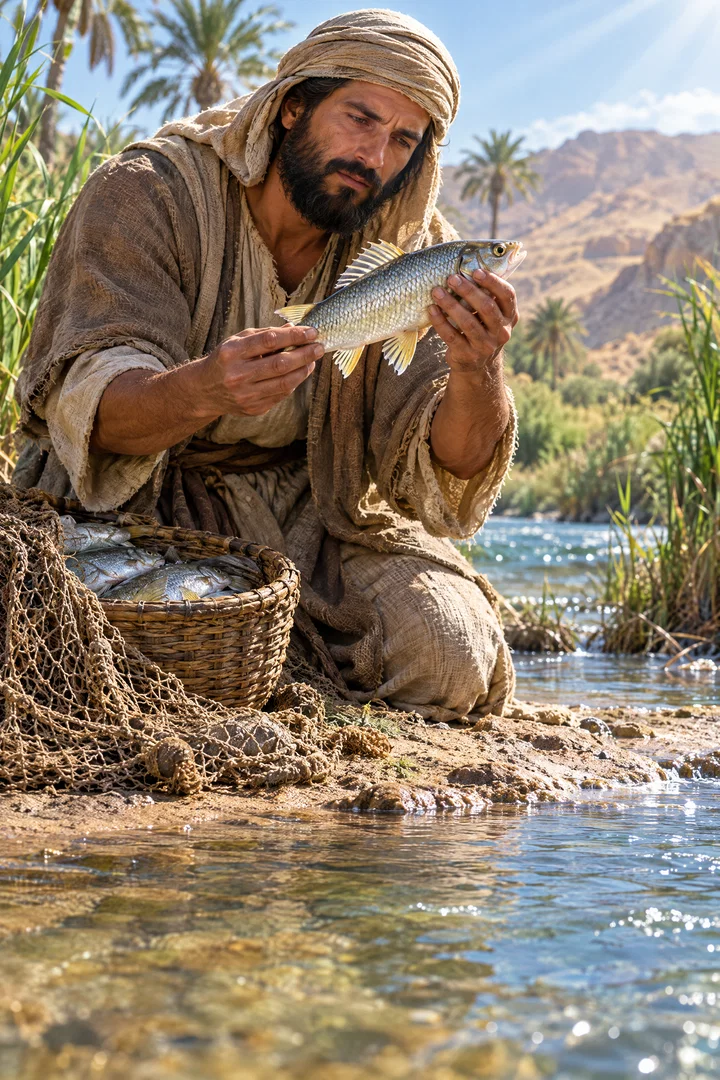
And whatsoever hath not fins and scales ye may not eat; it is unclean unto you.
Translations
And whatever has not fins and scales you may not eat; it is unclean to you.
And whatsoever hath not fins and scales ye may not eat; it is unclean unto you.
and whatsoever hath not fins and scales ye may not eat; it is unclean unto you.
And whatever hath not fins and scales ye may not eat; it is unclean to you.
Revised Version, American Standard Version
and whatsoever hath not fins and scales ye shall not eat; it is unclean unto you.
and anything which hath not fins and scales ye do not eat; unclean it [is] to you.
but whatsoever hath not fins and scales ye shall not eat: it shall be unclean unto you.
and, whatsoever hath not, fins and scales, ye may not eat,—unclean, it is unto you.
Berean Standard Bible, Majority Standard Bible
but you may not eat anything that does not have fins and scales; it is unclean for you.
You shall not eat whatever doesn’t have fins and scales. It is unclean to you.
But any which have no skin-plates or wings for swimming, you may not take; they are unclean for you.
And whatsoeuer hath no finnes nor scales, ye shall not eate: it shall be vncleane vnto you.
Douay-Rheims (Challoner revision)
Such as are without fins and scales, you shall not eat, because they are unclean.
Pictures
Cross-references
- Leviticus 11
And the LORD spake unto Moses and to Aaron, saying unto them,
The clean- and unclean-meat laws are given there and repeated in Deuteronomy 14.
- 1 Timothy 4:3-5
Forbidding to marry, and commanding to abstain from meats, which God hath created to be received with thanksgiving of them which believe and know the truth.
Commands to abstain from foods are contrasted with receiving food sanctified by God’s word and prayer.
- Leviticus 11:7-8
And the swine, though he divide the hoof, and be clovenfooted, yet he cheweth not the cud; he is unclean to you.
Both prohibit eating swine’s flesh because swine are unclean.
- Acts 10:14-15
But Peter said, Not so, Lord; for I have never eaten any thing that is common or unclean.
Peter objects to eating unclean food, then hears that God has cleansed it.
- Matthew 15:11
Not that which goeth into the mouth defileth a man; but that which cometh out of the mouth, this defileth a man.
Jesus teaches that defilement comes from what proceeds from a person, not from eating.
- Genesis 9:3
Every moving thing that liveth shall be meat for you; even as the green herb have I given you all things.
The broad grant of food is limited by specific food restrictions.
- Hebrews 9:10
Which stood only in meats and drinks, and divers washings, and carnal ordinances, imposed on them until the time of reformation.
Cited for the abolition of laws concerning meats and drinks.
- Mark 7:15
There is nothing from without a man, that entering into him can defile him: but the things which come out of him, those are they that defile the man.
Jesus contrasts inward defilement with food restrictions.
- Isaiah 66:17
They that sanctify themselves, and purify themselves in the gardens behind one tree in the midst, eating swine’s flesh, and the abomination, and the mouse, shall be consumed together, saith the LORD.
It is cited alongside the prohibition of pork as support for avoiding unclean food.
- Romans 14:14
I know, and am persuaded by the Lord Jesus, that there is nothing unclean of itself: but to him that esteemeth any thing to be unclean, to him it is unclean.
The passage distinguishes dietary fitness from ceremonial uncleanness discussed there.
Commentary
Each commentary is drawn from primary sources: the writings of Ellen G. White and Adventist pioneers and periodicals. Each commentary is separate. Its own words are not a quotation; follow the references to read the source passages.
Ellen G. White
2 sources
The instruction belongs to directions given through Moses forbidding the eating of unclean things, including swine and certain other animals.DA 617.2 The forbidding of fish without fins and scales as unclean was not an arbitrary exercise of authority but was given to preserve the life and health of the people, because such foods could pollute the blood and shorten life.DA 617.2ST Mar 21, 1878 To retain the faculties of mind and body the blood must be kept pure by simple, healthful food, so the animals specified were those least objectionable for food.ST Mar 21, 1878
The leading Jews who delighted in teaching and administering the law distorted these restrictions and carried this prohibition with the other regulations of eating and drinking to unreasonable lengths, requiring the straining of all water lest even the smallest speck or unclean insect render it unclean.DA 617.2ST Mar 21, 1878 This made life a burden of ceremonies and restrictions, keeping the mind on a continual strain in discriminating between clean and unclean and following a multitude of priestly injunctions, and keeping people in constant fear of infringing customs and traditions taught as law.ST Mar 21, 1878 By this endless round of forms minds were fastened upon external service to the neglect of true religion apart from Christ, a focus on trivial rules while grave sins were overlooked, which Jesus condemned.DA 617.2ST Mar 21, 1878
Sources
Pioneers and periodicals
52 sources
What lacks both fins and scales in the waters may not be eaten, for it is unclean to the eater, and only what has both together may be eaten, which shuts out oysters, clams and shell-fish as unfit for food.ST Aug 13, 1912ST Dec 17, 1894ST Jan 30, 1901
The rule stands in the nineteen-verse list of Deuteronomy 14:1-21 that names with decisive precision what may or may not be eaten, rehearsing Leviticus 11 a second time in fuller form and limiting any general permission to eat flesh to clean kinds only.ST Apr 21, 1914ST May 23, 1911ST Jul 15, 1908ST Mar 25, 1897
The distinction is not arbitrary and was not newly made at Sinai, but marks what is by nature unclean, unwholesome and unfit for food, a difference already known in Noah's day; it was given to keep God's people holy and separate, with physical health and cleanliness in view and also moral soundness, since diet affects conduct, blood and fitness for God's service.ST Jan 2, 1912ST Aug 13, 1912ST May 23, 1911ST Aug 10, 1915
The nature of the creatures has not changed, so the prohibition stays in force and still binds, and what was better to refrain from then is better to refrain from now; its Levitical legal form as binding law for Gentile believers passed away when the gospel went to the whole world, yet its principle still holds and unclean, unwholesome food should be avoided as far as consistent and possible.ST Mar 27, 1907ST Apr 25, 1906ST Aug 11, 1909ST Jul 29, 1913
The definite instruction limits the whatsoever of Deuteronomy 12:15 and Deuteronomy 14:26 to what God has expressly allowed, and it limits every creature of 1 Timothy 4:4 to what God created to be received and sanctified by His Word for food, so thanksgiving and blessing do not make an unclean creature clean.ST Dec 17, 1894ST May 24, 1905ST Feb 10, 1898ST Jun 11, 1912
Words and Setting
Any creature living in the waters that does not have both fins and scales may not be eaten, for it is unclean to the one who would eat it.ST Aug 13, 1912ST Dec 17, 1894ST Feb 13, 1907RH Jul 10, 1916 The rule is specific and restrictive, marking off what may be eaten from what is forbidden and holding broader permissions for food within its express prohibition.ST Dec 17, 1894ST Feb 13, 1907ST Jul 3, 1907 The uncleanness belongs to the nature of the creatures themselves, which are unfit and not good for people, rather than being created by an arbitrary enactment.ST Aug 13, 1912ST Feb 13, 1907 What is unclean by nature is made known to a people called to be holy like God Himself, and what was judged better to refrain from then remains better to refrain from now.RH Jul 10, 1916ST Jul 3, 1907
Both marks are required together, so what has fins and scales may be eaten, while what lacks either mark may not.ST Aug 13, 1912 The line is drawn between aquatic animals bearing both features as fit for food and those lacking one or the other as unclean.ST Aug 13, 1912
The prohibition covers oysters, shell-fish, and clams as water creatures lacking the required marks and therefore unfit for food.ST Jan 30, 1901ST Jan 14, 1889 Oysters are counted among the unclean and are four times called an abomination. Clams are scavengers feeding on vile, poisonous matter, so that eating clams taken from sewage-contaminated water can bring poisoning and death.ST Jan 14, 1889 The Lord who forbade shell-fish along with swine's flesh and rabbits knew how to discriminate between foods and had reason for the forbidding.ST Jan 30, 1901
The verse stands in a nineteen-verse list in Deuteronomy 14:1-21 that names with decisive precision the animals, fowls, fishes, and birds that may or may not be eaten.ST May 23, 1911 It is one of two Bible chapters that classify clean and unclean meats.ST Mar 25, 1897 The chapter rehearses the instructions in Leviticus 11 about clean and unclean meats.ST Mar 18, 1913 It gives the law on clean and unclean meats to Israel a second time in fuller form, confirming that Deuteronomy 12 did not permit eating unclean meat.ST Apr 21, 1914ST Feb 11, 1889 The general permission in Deuteronomy 14:26 to use what the soul desires when coming up to the great feasts does not set aside this specific prohibition, just as general laws of modern governments are limited by specific expressions.
The verse does not prohibit eating flesh altogether but permits some kinds of meat while prohibiting others, limiting the general permission to eat flesh to clean animals only.ST Jul 15, 1908ST Apr 1, 1889RH Apr 9, 1867 Its restriction on unclean food stands distinct from questions about days of worship.ST Apr 1, 1889 Geese and ducks are not named among the forbidden birds in these chapters.ST Mar 25, 1897
Nature and Purpose of Distinction
The division between clean and unclean is not arbitrary, with equally wholesome creatures put on different sides, and it was not newly invented at Sinai or first made in order to separate Jews from Gentiles.ST Jan 2, 1912ST Aug 13, 1912ST Jul 12, 1883 It identifies what is already unclean by its very nature, totally unfit and unwholesome for food, while the clean are much more favorable and better for food.ST Jan 2, 1912ST Aug 13, 1912ST Jun 17, 1903ST Feb 13, 1907 God merely told Israel what already existed rather than bringing about a new order, for the distinction existed from the beginning in the nature of the animals themselves, several hundred years before the Jews existed as a nation.ST Aug 10, 1915ST Jul 12, 1883 It was already recognized in Noah's day, when both clean and unclean went into the ark, so there was nothing ceremonial in it, and the distinction is traced back to Noah and not merely introduced as a ceremonial rule in the Levitical law.ST Aug 10, 1915ST Aug 26, 1913ST Jul 12, 1883 At the Deluge only a pair of each unclean kind was preserved in the ark and seven pairs of the clean. It is therefore a lasting principle and not a Jewish rite, since it was recognized before the Flood more than a thousand years before God's people were known as Jews, and swine and dogs are put on the same unclean basis.RH Nov 5, 1872
The instructions were given after human beings were permitted to eat meat following the original fruits and grains and later vegetables, and after Israel refused to obey and be kept free from disease.STST Feb 17, 1904 They were given to preserve the holy seed and to improve existing conditions that could not then be entirely changed, and were never part of God's perfect laws at the beginning.ST Oct 11, 1899 God makes these distinctions known to the people He calls to be holy like Himself, to keep His called people separate from the world and peculiar as long as they obeyed.RH Apr 17, 1879ST Apr 28, 1909 God gave the code after calling Israel out of Egypt to prepare them to enter the land flowing with milk and honey, beginning with health reform, diet, and the law of God.RH Jan 6, 1910 It originated in the mind of God and not in the science of that day, and was given to help man in the selection of his diet, because bodies are made up of what is eaten and the purest food makes the purest blood.RH Jan 6, 1910
The ban was made with physical health and cleanliness in view and also moral soundness and purity, because a man's diet is frequently accountable for a man's conduct.ST May 23, 1911 God desired a holy people whose blood would not be corrupted, and sought by this simple diet to purify their blood and make them a holy, happy people, even while He fed them with manna from heaven though they clung to the flesh-pots of Egypt.STRH Jan 6, 1910 He specified the animals least objectionable for food, so that to retain the faculties of mind and body the blood must be kept pure by simple, healthful food.ST Mar 21, 1878 Obedience gives better health and longer life, and the principle remains true beyond Israel's time because such foods do not support the best physical condition for serving God.STST Apr 29, 1913 The statutes separating clean and unclean were never part of God's first plan but were given as a concession when Israel refused to be weaned from flesh food.RH Dec 21, 1905 God had withheld flesh and provided food most conducive to health and righteous character in order to establish Israel as a healthy and holy people, but they lusted after flesh and their desire brought disease and leanness of soul, so because they were determined to eat flesh He gave rules distinguishing the more harmful from the less harmful so He could lead them forward only as fast as they were willing to follow, partially granting their desire for clean flesh with sickness left as its consequence.ST Feb 17, 1904RH Dec 21, 1905
Animals taken for food also kept before Israel the lesson that sin brings death and pointed to the death of the coming One, and Christ's death ended the sacrificial use of animals.ST Oct 11, 1899 The restrictions were also partly ceremonial or symbolic, since an unclean animal was not a fitting symbol of Christ and His work, though the distinction was for the good and health of God's people and the clean were set apart by God's word as food.ST Feb 13, 1896 The unclean were an abomination to offer to the Lord, while the clean could be offered in sacrifice and their flesh could be eaten.ST Jan 2, 1912
Lasting Authority for Today
The nature of the creatures has not changed, so what was unclean remains unclean still, and the express prohibition stays in force and still binds.ST Mar 27, 1907ST Apr 25, 1906ST Jul 3, 1907ST The judgment rests on the very nature of the animals themselves, because they are unfit, unwholesome, and not to be eaten, a judgment medical science confirms by forbidding pork in sickness.ST Mar 27, 1907ST Apr 25, 1906ST Fish without both fins and scales are unclean and not to be eaten, under one of the very specific instructions about what may be eaten and what may not be eaten.ST Jul 3, 1907ST Feb 11, 1889 Those food prohibitions rest on sound principles, and the same principles used to distinguish clean from unclean in ancient times still apply, since the distinction was already recognized in Noah's day and the clean were permitted for food.ST Jul 3, 1907ST Feb 11, 1889 The animals designated unclean have not changed their habits or nature, and God's people should therefore avoid them rather than follow a perverted appetite.ST Jul 3, 1907ST
The Levitical form of the law given to the Jewish nation alone passed away when Christ died. This happened because the gospel went to other nations where people could not live without transgressing Jewish ceremonial custom, and Gentile converts received only certain restrictions. The food prohibition was made to Israel under the Mosaic law and was later lifted when the gospel went to the whole world.ST Aug 11, 1909ST Jul 29, 1913 Its specific legal force was removed and its special dietary laws were abolished as binding laws for Gentile believers who might have no other food available or could not readily follow Jewish regulations.ST Aug 11, 1909ST Dec 17, 1894ST Aug 13, 1912ST Aug 13, 1912 The underlying qualities of the animals remain the same, and the distinction still teaches that God separated clean and unclean animals.ST Aug 11, 1909ST Aug 13, 1912
Though the law is not technically binding now, the principle on which clean and unclean are differentiated still holds and remains true beyond Israel's time.ST Jul 29, 1913ST Apr 15, 1897ST Dec 17, 1894 What was better for ancient Israel to refrain from is better to refrain from now, and as far as is consistent and possible unclean and unwholesome food should be avoided.ST Dec 17, 1894 These meats were unhealthful, and abstaining from them is better for health, so God's people should follow this instruction as far as possible and live by the principles behind the law.ST Dec 17, 1894 The specific prohibitions limit what may be eaten at the yearly gatherings, and the same general principles about prohibited foods apply.ST Apr 15, 1897 The swine remains unclean, and the principle of eating to God's glory excludes it from the diet.ST Jul 29, 1913
People learning from Scripture and science can use that knowledge in choosing food that honors God.ST Aug 13, 1912ST Aug 13, 1912 Choice is to be made not by appetite or likes and dislikes but by eating and drinking to the glory of God and for best good and best service. In light of Scripture and science pork is unhealthful, and those who know this are urged to follow as far as they can the original diet God approved, choosing fruits, grains, nuts, and vegetables to honor God.ST Aug 13, 1912 This points to a return to the original, non-flesh diet as an ideal.ST Aug 11, 1909 The law remained in Scripture, and Peter had never violated it and held that he could not violate it when commanded to eat in vision.ST Jul 12, 1883 The vision did not abolish the distinction and did not make everything lawful to eat.ST Jul 12, 1883
Connections to Other Scriptures
The specific food laws in Deuteronomy 14:1-21, together with Leviticus 11, limit the broader language of Deuteronomy 12:15 and Deuteronomy 14:26.ST Dec 17, 1894ST May 24, 1905 The general permission to eat whatsoever the soul desires when coming up to the great feasts, and to spend second-tithe money for whatsoever the soul desires and eat before God, does not set aside the express prohibition on water creatures without fins and scales.ST May 24, 1905ST Jul 18, 1911ST Aug 27, 1902 Just as general laws of modern governments are limited by specific expressions, what the soul desires remains inside God's prohibitions and does not include transgressing what He forbade or using tithe money for prohibited food, and all eating and drinking must be to God's glory.ST Jul 18, 1911 Though the law is held by some as not technically binding now, the same general principles about prohibited foods were held to apply and to limit what may be eaten at the yearly gatherings.ST Apr 15, 1897
The distinction between clean and unclean proves that not every creature is fit or best for food and does not conflict with 1 Timothy 4:1-4.ST Feb 10, 1898ST Jun 11, 1912ST Dec 5, 1895 Only the creatures God created to be received and sanctified or set apart by the Word of God for food are good for food, to be eaten with prayer and thanksgiving by those who believe and know the truth about what God has given, and what He has not so given is not to be received.ST Jun 11, 1912ST Dec 5, 1895 Every creature in 1 Timothy 4:4 is therefore limited to creatures God set apart as food, a classification confirmed by science which strictly forbids the prohibited foods such as swine's flesh for the sick or convalescent, leading many on scientific grounds alone to give them up entirely.ST Jun 11, 1912ST Dec 5, 1895 Thanksgiving and blessing do not make an unclean animal clean.ST Apr 25, 1906ST Only what God has declared fit in His Word is sanctified as food by the Word of God and prayer, so thankfulness alone does not make an unclean thing clean.ST Apr 25, 1906STST Jun 11, 1912
The chapter's distinction between clean and unclean remains the Word of God that sanctifies and sets apart what is good for His children to receive with thanksgiving and what is not.ST Apr 25, 1906 The law forbidding the use of certain animals and fowls as food in Leviticus 11 and Deuteronomy 14 is stressed above other diet rules.RH Aug 4, 1903RH Aug 4, 1903 Even flesh from clean animals was restricted alongside prohibitions on fat and blood.RH Aug 4, 1903RH Aug 4, 1903 The clean animal was to be eaten only on the first and second day after killing, for eating on the third day is abominable, which condemns the modern custom of letting meat ripen or decay to make it tender, a practice that fills flesh with germs and disease.RH Aug 4, 1903
This law identifying fish without both fins and scales as unclean and forbidden under Jewish law was one reason Daniel could not conscientiously eat some of the king's meat.RH Jan 12, 1869 Since dogs eaten by the heathen Chinese and swine eaten by Christians are both unclean on the same basis, the price of swine's flesh is an abomination like the price of a dog that must not be brought into the house of the Lord for any vow.RH Nov 5, 1872 Raising swine for market is therefore wrong as keeping contraband property, because the raiser cannot do right with the money, since God claims a tithe of all increase and to withhold the tithe robs God, so he must cease keeping swine rather than choose between selling without tithing and tithing abomination money.RH Nov 5, 1872
Health Effects and Daily Practice
The water creatures without fins and scales are unwholesome by nature, with oysters four times called an abomination, and medical practice confirms the judgment by forbidding pork to a fever patient and by strictly forbidding foods such as swine's flesh to the sick or convalescent, so that many give them up entirely on scientific grounds alone.ST Jun 11, 1912 Pork is hard to digest and does not assimilate readily, it carries potencies of disease and especially scrofula, it keeps humors in the blood and keeps wounds and bruises from healing cleanly without suppuration, and eating unclean animals is linked to possible harms including scrofula and cancer, while giving it up removes those troubles.ST Jan 2, 1912ST Oct 11, 1899 Clams fall under the same rule as unfit for food, for they are scavengers that feed on vile, poisonous matter, and eating clams taken from sewage-contaminated water can cause poisoning and death.ST Jan 14, 1889
Other animals used for food are becoming more and more diseased, while vegetables, grains, and fruits are almost universally cleaner and more wholesome.ST Jun 17, 1903 The fruit and cereal diet given in the beginning remains best, and even clean meat is not the best food, since at the beginning man was given no flesh at all and later God gave manna instead of flesh food.ST Jan 2, 1912ST Jan 30, 1901 The ban still binds in sickness, so bacon, meaning pork, must not be eaten for tuberculosis even when a doctor prescribes it.ST Jan 2, 1912 Healing should instead be sought by foods such as legumes like beans, peas and lentils, or by abundant fresh cow's milk, with only sufficient exercise, abundance of fresh air night and day, and a superabundance of food to outfeed the disease, and another physician should be consulted.ST Jan 2, 1912 Wisdom and good common sense are needed in changing from a flesh diet to a vegetarian diet and in cooking and combining foods, and those who know pork is unhealthful are urged to follow as far as they can the original diet God approved, choosing fruits, grains, nuts, and vegetables to honor God.ST Jun 17, 1903ST Aug 13, 1912
Each person is left free to reject God's plan, command, and entreaty, but rejecting the way of life brings its consequences.ST Jan 30, 1901 Lusting after the food eaten in Egypt and murmuring because they could not live like the world brought withdrawal of God's protecting care, wandering in the wilderness until all but Caleb and Joshua and the children perished, and failure to enter the promised land.RH Apr 17, 1879 Raising swine for market is wrong as keeping contraband property, because the raiser cannot do right with the money, since God claims a tithe of all increase and to withhold the tithe robs God, so he must cease keeping swine rather than choose between selling without tithing and tithing abomination money.RH Nov 5, 1872 Requiring only fish that have scales, along with Saturday worship, circumcision, marriage only within one's own people, hatred of pork, and care for widows and the unfortunate, marks a people as resembling the Jews, and its keeping by a tribe of black cannibal head-hunters in little-explored New Guinea shows knowledge of the worship of the true God and of His rest day surviving among the most degraded people.RH Jul 27, 1905
The leading Jews who delighted in teaching and administering the law carried this prohibition with the other regulations of eating and drinking to unreasonable lengths, making life a burden of ceremonies and restrictions.ST Mar 21, 1878 They kept the mind on a continual strain in discriminating between clean and unclean and following the multitude of priestly injunctions, straining all water lest the smallest speck or insect render it unclean, and living in constant fear of infringing customs and traditions taught as law.ST Mar 21, 1878 By this endless round of forms they fastened minds upon external service to the neglect of true religion apart from Christ.ST Mar 21, 1878 Living by this clean, strong dietary according to God's Word glorifies God and makes better servants of God than living for gratification of appetite, pointing to a return to the original, non-flesh diet as an ideal.STST Aug 11, 1909
Sources