Ecclesiastes 2:9
So I was great, and increased more than all that were before me in Jerusalem: also my wisdom remained with me.
Translations
American King James Version, King James Version, KJV Cambridge Paragraph Bible, Webster Bible, Revised Version, American Standard Version
So I was great, and increased more than all that were before me in Jerusalem: also my wisdom remained with me.
And I became great, and increased above every one who had been before me in Jerusalem; also, my wisdom stood with me.
And I became great, and increased more than all that had been before me in Jerusalem: also my wisdom remained with me.
So I became great, and increased, more than any one who had been before me in Jerusalem,—moreover, my wisdom, remained with me;
Berean Standard Bible, Majority Standard Bible
So I became great and surpassed all in Jerusalem who had preceded me; and my wisdom remained with me.
So I was great, and increased more than all who were before me in Jerusalem. My wisdom also remained with me.
And I became great; increasing more than all who had been before me in Jerusalem, and my wisdom was still with me.
And I was great, and increased aboue all that were before me in Ierusalem: also my wisedome remained with me.
Douay-Rheims (Challoner revision)
And I surpassed in riches all that were before me in Jerusalem: my wisdom also remained with me.
Pictures
Cross-references
- 1 Kings 9:15-19
And this is the reason of the levy which king Solomon raised; for to build the house of the LORD, and his own house, and Millo, and the wall of Jerusalem, and Hazor, and Megiddo, and Gezer.
lists the fortified works that made him great
Commentary
Each commentary is drawn from primary sources: the writings of Ellen G. White and Adventist pioneers and periodicals. Each commentary is separate. Its own words are not a quotation; follow the references to read the source passages.
Ellen G. White
4 sources
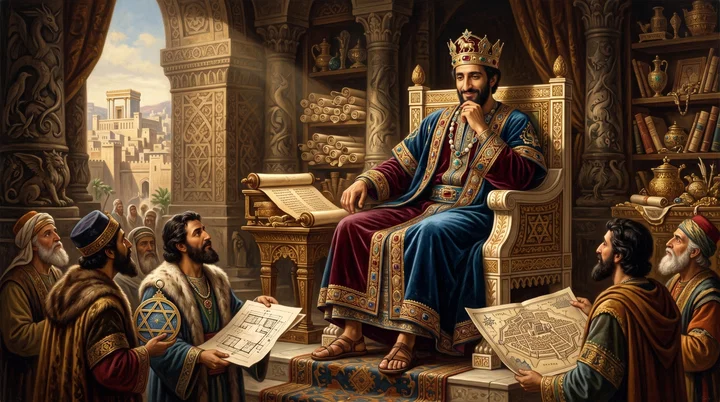
The verse is Solomon's own testimony that he was great and increased more than all that were before him in Jerusalem, becoming greater and more prosperous than all who had ruled there before him.ED 153.2–4PK 76.1RH Dec 28, 1905ED 153.1 The statement that his wisdom remained with him means that his wisdom stayed with him while he pursued wealth, accomplishments, and pleasure.RH Dec 28, 1905 His greatness and increase came by making great works, building houses, planting vineyards, making gardens and orchards, getting servants, gathering silver and gold and the treasure of kings, and getting singers and musical instruments and every delight.ED 153.1 This course was a search for the highest good in earthly things and for satisfaction in the pleasures of sense, after the pride of prosperity separated him from God and he turned from the joy of divine communion.ED 153.2–4RH Dec 28, 1905ED 153.1
His wisdom did not keep him from turning away from communion with God to seek satisfaction in earthly pleasures.RH Dec 28, 1905 Bitter experience taught him the emptiness of such a life, so that his great works, wealth, increase, extraordinary achievements, and pursuit of pleasure left him hating life and hating his labor under the sun, judging his labor and earthly gains to be vanity and vexation of spirit with no lasting profit under the sun.ED 153.2–4PK 76.1ED 153.1 His altars to heathen gods proved vain in their promise of rest to the soul.ED 153.2–4
Wearied and thirsting from earth's broken cisterns, Solomon in his later years returned to drink at the fountain of life, and the discipline of suffering accomplished its work in him.ED 153.2–4 By inspiration he recorded the history of his wasted years with its lessons of warning for after-generations, so that although his people reaped harvests of evil from his sowing, his life-work was not wholly lost.ED 153.2–4
Sources
Pioneers and periodicals
14 sources
It is the voice of Solomon the son of David, king in Jerusalem, telling how he rose to greatness as his reign went on and he gave himself to pleasure after his heart was led away.ST Sep 15, 1909ST Jun 22, 1904ST Jun 21, 1899 He grew great in prosperity, wealth, honor and power beyond all who were before him in Jerusalem, with all the earth could give to satisfy his desires in mirth, possessions, grand works and music.ST Mar 14, 1906ST Nov 27, 1884ST Sep 15, 1909RH Apr 21, 1868ST Oct 23, 1879 His wisdom stayed with him, so that he kept his exceptional wisdom even while carrying his search for wealth, achievement and pleasure to the fullest extent, yet it did not keep him from turning from communion with God to seek satisfaction in earthly things.RH Dec 28, 1905ST Mar 14, 1906RH Feb 19, 1914ST Feb 4, 1903 His verdict on that pursuit is that greatness and happiness do not go together, for worldly grandeur and gain apart from God are vanity and vexation of spirit, fleeting and empty and unable to satisfy the soul.ST Sep 15, 1909RH Feb 19, 1914RH Aug 26, 1875ST Jun 22, 1904ST Feb 4, 1903 Life's true purpose and greatest good is to fear God and keep His law, for this is the whole duty of man and every secret thing shall be brought into judgment.ST Sep 15, 1909ST Jun 21, 1899
Solomon's Greatness and Wisdom
So I was great, and increased more than all that were before me in Jerusalem is the word of Solomon the son of David, king in Jerusalem, testifying of his own increase to greatness as his reign went on and he gave himself to pleasure after his heart was led away.ST Sep 15, 1909ST Jun 22, 1904ST Jun 21, 1899 He was great and increased in greatness, prosperity and wealth beyond all that were before him in Jerusalem, surpassing those who had ruled before him there.RH Dec 28, 1905ST Mar 14, 1906ST Sep 15, 1909RH Feb 19, 1914RH Apr 21, 1868 His increase came as he gave himself over to pleasure in the course of his reign, making wealth and luxury and idolatry part of his unsatisfying experience.ST Sep 15, 1909ST Jun 22, 1904
His greatness was shown by the great works he built throughout his dominion.ST Nov 27, 1884 These were Millo, the strong fortification protecting Jerusalem on the north, about one hundred feet high of white marble with stones about thirty feet long by fifteen feet wide and seven and one-half thick; the wall of Jerusalem beginning at Millo and extending around the city with sixty towers; Hazor, the principal city and stronghold of all North Palestine; Megiddo, the fortified city commanding a main pass from the north into the hill country; Gezer, the fortified city commanding the Mediterranean coast road of communication between Egypt and Jerusalem; the Beth-horons on the boundary of Ephraim and Benjamin guarding the pass on the road from Gibeon to the Philistine plain, the main way of approach from Philistia on the west and from Moab and Ammon on the east; and Tadmor in an oasis in the desert of Hamath, two days journey from Upper Syria and one day from the Euphrates and six long days from Babylon, built to control the great caravan trade from the East and magnificent even in its ruins.ST Nov 27, 1884
He had wealth, honor, power, riches, sovereign power, fine palaces, gold furnishings and servants, with all the earth could give.ST Mar 14, 1906RH Apr 21, 1868ST Oct 23, 1879 That wealth, honor, power and wisdom gave him unusual freedom to satisfy his desires and to pursue whatever he desired, including mirth, possessions, grand works and music.ST Mar 14, 1906RH Apr 21, 1868 Also his wisdom remained with him means he retained his exceptional wisdom while testing the pleasures of worldly life, pursuing wealth, accomplishments, ambition, achievements, pleasure and grandeur to their fullest extent.RH Dec 28, 1905ST Mar 14, 1906RH Feb 19, 1914ST Feb 4, 1903RH May 25, 1916 He became greater and more prosperous than those before him while retaining his wisdom, and his experience was a full trial of worldly gratification carried out with wisdom still present.RH Feb 19, 1914RH Apr 21, 1868RH May 25, 1916
Yet his retained wisdom did not keep him from turning away from communion with God to seek satisfaction in earthly pleasures.RH Dec 28, 1905
Vanity and True Purpose
The verse belongs to the account of pursuing and testing worldly pleasure, grandeur and gain after giving himself over to pleasure as his reign progressed and his heart was led away by many wives into wealth and luxury and idolatry.ST Sep 15, 1909ST Jun 22, 1904RH Sep 5, 1871 Its verdict on those pursuits is that they are vanity and vexation of spirit, showing the vanity of human life and the utter uselessness of all human pursuits apart from God.ST Sep 15, 1909ST Jun 22, 1904ST Feb 4, 1903RH May 25, 1916RH Sep 5, 1871 Greatness and happiness do not necessarily go together, as shown by the testimony of one who had experienced them.RH Aug 26, 1875
Even with nothing seeming wanting to happiness, with wealth, honor, power, riches, sovereign power, fine palaces, gold furnishings, servants and all the earth could give to satisfy desire, he looked back on his splendor after it had passed and found earthly greatness fleeting, empty and unsatisfying, ending in disappointment.RH Apr 21, 1868RH May 25, 1916ST Oct 23, 1879ST Sep 12, 1900 He had no real and undisturbed enjoyment, and his days were poisoned by vexation.ST Oct 23, 1879ST Sep 12, 1900 His many pleasures and possessions, when perverted, brought little satisfaction and cannot satisfy the soul apart from God.RH Feb 19, 1914RH May 25, 1916RH Sep 5, 1871 Neither worldly achievement nor retained exceptional wisdom made the world's rewards lasting or worth exchanging for an everlasting inheritance.ST Feb 4, 1903
Selfish pleasure-seeking leaves people discontent and burdened with sorrow, so no dependence is to be placed upon worldly enjoyment, for all is vanity.ST Oct 23, 1879ST Sep 12, 1900 He fully tried wealth, pleasure and fame as life's goal and found them empty and drear and vain, warning the soul not to set its eyes on wealth as the supremest goal and not to lose endless treasure for life's gold.ST Jun 21, 1899 The verse teaches that life's true purpose and greatest good is to fear God and keep His law, to live for God and hold His precepts fast, for this is the whole duty of man.ST Sep 15, 1909ST Jun 21, 1899 Each secret of the past shall be brought into judgment, and he has lived best who lived this way.ST Jun 21, 1899
Sources