Esther 1:10
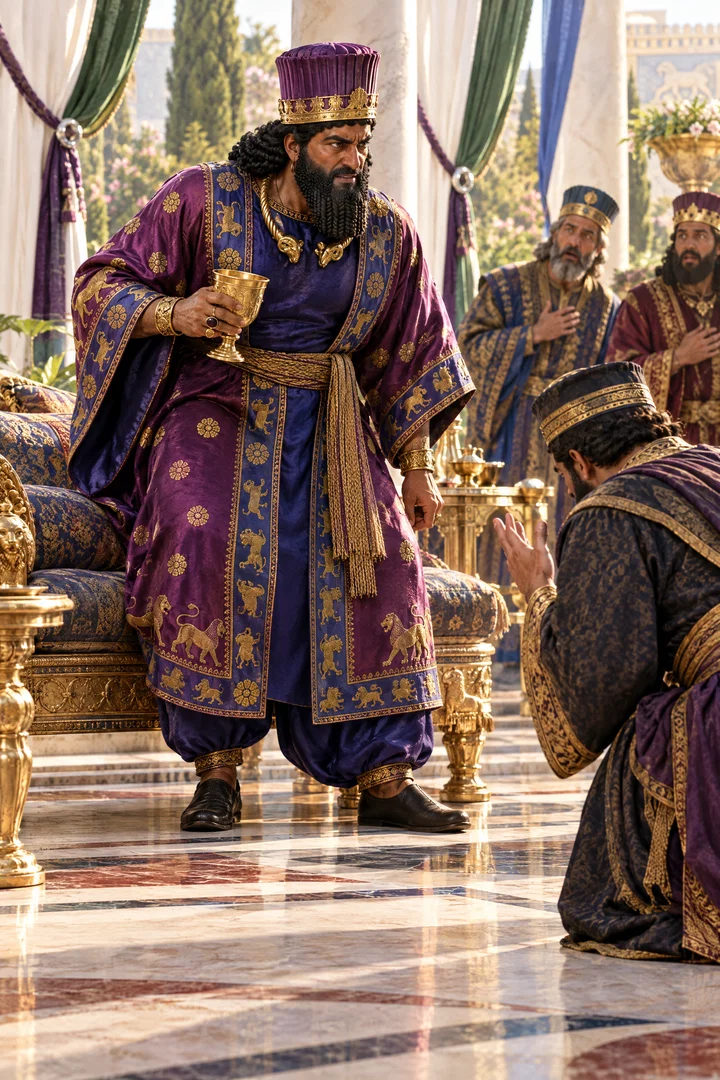
On the seventh day, when the heart of the king was merry with wine, he commanded Mehuman, Biztha, Harbona, Bigtha, and Abagtha, Zethar, and Carcas, the seven chamberlains that served in the presence of Ahasuerus the king,
Translations
American King James Version, King James Version, KJV Cambridge Paragraph Bible, Webster Bible
On the seventh day, when the heart of the king was merry with wine, he commanded Mehuman, Biztha, Harbona, Bigtha, and Abagtha, Zethar, and Carcas, the seven chamberlains that served in the presence of Ahasuerus the king,
Revised Version, American Standard Version
On the seventh day, when the heart of the king was merry with wine, he commanded Mehuman, Biztha, Harbona, Bigtha, and Abagtha, Zethar, and Carcas, the seven chamberlains that ministered in the presence of Ahasuerus the king,
On the seventh day, as the heart of the king is glad with wine, he hath said to Mehuman, Biztha, Harbona, Bigtha, and Abagtha, Zethar, and Carcas, the seven eunuchs who are ministering in the presence of the king Ahasuerus,
On the seventh day, when the king's heart was merry with wine, he commanded Mehuman, Biztha, Harbona, Bigtha, and Abagtha, Zethar, and Carcas, the seven chamberlains that served in the presence of king Ahasuerus,
On the seventh day, when merry was the heart of the king with wine, he commanded Mehuman, Biztha, Harbona, Bigtha, and Abagtha, Zethar and Carcas, the seven eunuchs who were waiting before King Ahasuerus,—
Berean Standard Bible, Majority Standard Bible
On the seventh day, when the king’s heart was merry with wine, he ordered the seven eunuchs who served him— Mehuman, Biztha, Harbona, Bigtha, Abagtha, Zethar, and Carkas—
On the seventh day, when the heart of the king was merry with wine, he commanded Mehuman, Biztha, Harbona, Bigtha, and Abagtha, Zethar, and Carcass, the seven eunuchs who served in the presence of Ahasuerus the king,
On the seventh day, when the heart of the king was glad with wine, he gave orders to Mehuman, Biztha, Harbona, Bigtha, and Abagtha, Zethar, and Carcas, the seven unsexed servants who were waiting before Ahasuerus the king,
Vpon the seuenth daye when the King was merie with wine, he commanded Mehuman, Biztha, Harbona, Bigtha, and Abagtha, Zethar, and Carcas, the seuen eunuches, (that serued in the presence of King Ahashuerosh)
Douay-Rheims (Challoner revision)
Now on the seventh day, when the king was merry, and after very much drinking was well warmed with wine, he commanded Mauman, and Bazatha, and Harbona, and Bagatha, and Abgatha, and Zethar, and Charcas, the seven eunuchs that served in his presence,
Pictures
Cross-references
- Proverbs 21:1
The king’s heart is in the hand of the LORD, as the rivers of water: he turneth it whithersoever he will.
God directs earthly rulers’ hearts to accomplish his purposes.
Commentary
Each commentary is drawn from primary sources: the writings of Ellen G. White and Adventist pioneers and periodicals. Each commentary is separate. Its own words are not a quotation; follow the references to read the source passages.
Ellen G. White
3 sources
On the seventh day of the feast, when merry with wine, the king commanded Mehuman, Biztha, Harbona, Bigtha, and Abagtha, Zethar, and Carcas, the seven chamberlains that served in his presence, to bring Queen Vashti before him and the assembled people and princes wearing her royal crown so they could see her beauty.Ms 39, 1910, par. 1–5 His drinking had impaired his judgment at that time and left him unprepared to act wisely.Ms 39, 1910, par. 1–5Ms 29, 1911, par. 26–29 The command exposed Vashti to the gaze of drunken men.Ms 29, 1911, par. 26–29
The wine-fueled indulgence belonged to an occasion that did not glorify God.Ms 39, 1910, par. 16–17 Vashti's refusal was an act of pure conscience, and she expected the king to approve it once he regained his judgment.Ms 29, 1911, par. 26–29 God restrained events and used the decisions made under the influence of wine to bring Esther to the Medo-Persian throne and accomplish good for Israel.Ms 39, 1910, par. 16–17
Sources
Pioneers and periodicals
8 sources
The verse stands in the opening of the book of Esther, which records a striking period in the history of the Jews under the great Persian king Xerxes, called Ahasuerus in the Bible, amid a six-month display described as the first world's fair on record.ST Jun 16, 1909 Among the seven chamberlains that served in the presence of King Ahasuerus it names Abagtha, a Persian name perhaps meaning given by fortune.ST Oct 7, 1897 The king's command came on the seventh day of the feast, after eating and drinking with his guests until his heart was merry and he was well drunk with wine.ST Jan 31, 1906ST Sep 20, 1899ST Sep 6, 1910 The command was a drunken demand for Vashti, beautifully arrayed, to come and display her beauty before the king and his company, a crowd of drunken men.ST Jan 31, 1906ST Sep 20, 1899ST Sep 6, 1910
Vashti's refusal was noble and virtuous, an act no true woman would have submitted to, showing that she prized her purity and womanliness.ST Jan 31, 1906ST Sep 20, 1899 Her virtuous refusal led to her deposition.ST Sep 20, 1899 The experience of God's people in those opening days parallels the experience of God's people just before the coming of the Lord.RH Oct 19, 1905 The wine-merry banquet moment when a beautifully arrayed woman is sent for parallels Herod Antipas eating and drinking with his guests until his heart is merry with wine just before Salome is sent in to dance.ST Sep 6, 1910
In contrast to Herodias's daughter, who was sent to dance before intoxicated men at a feast, Vashti serves as an example of proper conduct.ST Mar 2, 1904 The passage is historic truth given as an example to guide conduct through life, and with the life of Esther it teaches wives the evil consequences of disregarding Paul's teaching about the wife's place, a lesson to be studied with profit when female supremacy is preached.RH Mar 11, 1873
Sources