Ezekiel 43:3
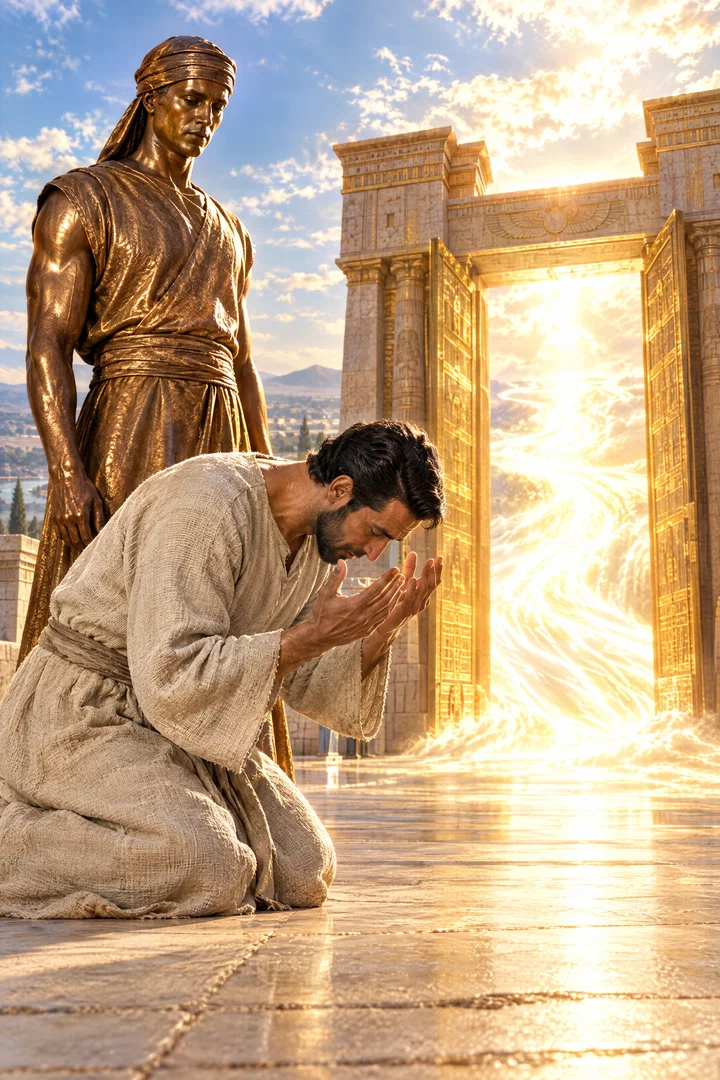
And it was according to the appearance of the vision which I saw, even according to the vision that I saw when I came to destroy the city: and the visions were like the vision that I saw by the river Chebar; and I fell upon my face.
Translations
And it was according to the appearance of the vision which I saw, even according to the vision that I saw when I came to destroy the city: and the visions were like the vision that I saw by the river Chebar; and I fell on my face.
King James Version, KJV Cambridge Paragraph Bible
And it was according to the appearance of the vision which I saw, even according to the vision that I saw when I came to destroy the city: and the visions were like the vision that I saw by the river Chebar; and I fell upon my face.
And it was according to the appearance of the vision which I saw, even according to the vision that I saw when I came to destroy the city: and the visions were like the vision that I saw by the river Kebar; and I fell upon my face.
And it was according to the appearance of the vision which I saw, even according to the vision that I saw when I came to destroy the city; and the visions were like the vision that I saw by the river Chebar: and I fell upon my face.
And it was according to the appearance of the vision which I saw, even according to the vision that I saw when I came to destroy the city; and the visions were like the vision that I saw by the river Chebar; and I fell upon my face.
And according to the appearance [is] the appearance that I saw, as the appearance that I saw in my coming in to destroy the city, and the appearances [are] as the appearance that I saw at the river Chebar, and I fall on my face.
And the appearance of the vision that I saw was according to the vision that I had seen when I came to destroy the city; and the visions were like the vision that I saw by the river Chebar: and I fell upon my face.
And it was like the appearance of the vision which I had seen like the vision which I saw—when I came in to destroy the city, also the visions were like the vision which I saw by the river Chebar,—so I fell upon my face.
Berean Standard Bible, Majority Standard Bible
The vision I saw was like the vision I had seen when He came to destroy the city and like the visions I had seen by the River Kebar. I fell facedown,
It was like the appearance of the vision which I saw, even according to the vision that I saw when I came to destroy the city; and the visions were like the vision that I saw by the river Chebar; and I fell on my face.
And the vision which I saw was like the vision I had seen when he came for the destruction of the town: and like the vision which I saw by the river Chebar; and I went down on my face.
And the vision which I saw was like the vision, euen as the vision that I sawe when I came to destroy the citie: and the visions were like the vision that I sawe by the riuer Chebar: and I fell vpon my face.
Douay-Rheims (Challoner revision)
And I saw the vision according to the appearance which I had seen when he came to destroy the city: and the appearance was according to the vision which I had seen by the river Chobar: and I fell upon my face.
Pictures
Cross-references
- Ezekiel 43:9-11
Now let them put away their whoredom, and the carcases of their kings, far from me, and I will dwell in the midst of them for ever.
The sanctuary vision is offered with repentance and obedience as conditions.
- Ezekiel 40:1-4
In the five and twentieth year of our captivity, in the beginning of the year, in the tenth day of the month, in the fourteenth year after that the city was smitten, in the selfsame day the hand of the LORD was upon me, and brought me thither.
The measuring man introduces the same city-temple vision.
- Ezekiel 44
Then he brought me back the way of the gate of the outward sanctuary which looketh toward the east; and it was shut.
Describes the sanctuary and worship accompanying Israel’s restoration.
- Ezekiel 1:1
Now it came to pass in the thirtieth year, in the fourth month, in the fifth day of the month, as I was among the captives by the river of Chebar, that the heavens were opened, and I saw visions of God.
Both texts describe Ezekiel’s vision by the Chebar.
- Ezekiel 40:4
And the man said unto me, Son of man, behold with thine eyes, and hear with thine ears, and set thine heart upon all that I shall shew thee; for to the intent that I might shew them unto thee art thou brought hither: declare all that thou seest to the house of Israel.
The prophet is commanded to behold and declare what God shows him to Israel.
- Ezekiel 47:1-12
Afterward he brought me again unto the door of the house; and, behold, waters issued out from under the threshold of the house eastward: for the forefront of the house stood toward the east, and the waters came down from under from the right side of the house, at the south side of the altar.
Both describe the same glorious temple vision.
- Ezekiel 42
Then he brought me forth into the utter court, the way toward the north: and he brought me into the chamber that was over against the separate place, and which was before the building toward the north.
The temple vision and its sacrifices are part of the conditional prophecy that includes Ezekiel 43.
- Ezekiel 41
Afterward he brought me to the temple, and measured the posts, six cubits broad on the one side, and six cubits broad on the other side, which was the breadth of the tabernacle.
The temple vision and its sacrifices are part of the conditional prophecy that includes Ezekiel 43.
- Ezekiel 48
Now these are the names of the tribes. From the north end to the coast of the way of Hethlon, as one goeth to Hamath, Hazar-enan, the border of Damascus northward, to the coast of Hamath; for these are his sides east and west; a portion for Dan.
The temple vision and its sacrifices are part of the conditional prophecy that includes Ezekiel 43.
- Hebrews 12:18-24
For ye are not come unto the mount that might be touched, and that burned with fire, nor unto blackness, and darkness, and tempest,
proves present dispensation more glorious
Commentary
Each commentary is drawn from primary sources: the writings of Ellen G. White and Adventist pioneers and periodicals. Each commentary is separate. Its own words are not a quotation; follow the references to read the source passages.
Ellen G. White
1 source
The vision in this verse is the same kind of vision Ezekiel had seen before.Ms 62, 1886, par. 27–29 It is identified with the vision he saw when he came concerning the destruction of the city, that is Jerusalem.Ms 62, 1886, par. 27–29 It is also identified with the vision he saw by the river Chebar.Ms 62, 1886, par. 27–29 It belongs to the record in Ezekiel 40–43 in which every part of the house is measured and recorded.Ms 62, 1886, par. 27–29
In that record the returning glory of God is followed by a command to show the house to Israel and have them measure its pattern.Ms 62, 1886, par. 27–29 The measurements illustrate exactness, showing that God's standard reaches every detail.Ms 62, 1886, par. 27–29 People are therefore to measure their character and conduct by that divine standard.Ms 62, 1886, par. 27–29
Sources
Pioneers and periodicals
39 sources
Ezekiel recognizes the glory now filling the temple as the same divine appearance he saw when he came to announce the destruction of Jerusalem and as the visions by the river Chebar, and he falls upon his face before it as before.ST Jan 31, 1911ST Apr 8, 1889ST Nov 10, 1914 It belongs to the great sanctuary, temple, city and land vision of Ezekiel 40-48, shown to him among the captives in Babylon fourteen years after Jerusalem and its sanctuary were destroyed to set before captive Israel the pattern of another sanctuary and encourage them.ST Aug 12, 1875RH Jan 20, 1853RH Sep 11, 1856ST Apr 8, 1889RH May 25, 1876 The sanctuary, city, land and returning glory were offered on condition that Israel be ashamed of iniquities, examine the pattern, put away wickedness and return to God with all the heart, but Israel continued in apostasy and largely declined to return, so the glorious temple in that pattern was never built and only an inferior, feeble house rose under Zerubbabel and Ezra.ST Aug 12, 1875RH Jan 20, 1853RH Sep 11, 1856RH May 25, 1876ST Nov 24, 1909 That temple was intended for the past dispensation after the return from Babylon, not for the present, not for the thousand-year reign, and not as the New Jerusalem, for to rebuild it literally in the millennium would revive the animal offerings and Levitical priesthood and make void Christ's once-for-all offering and His unchangeable priesthood after the order of Melchisedec.ST Apr 8, 1889ST Oct 1, 1896RH Jan 19, 1860RH May 25, 1876RH Sep 4, 1856 What failed for earthly Jerusalem will be grandly realized for the true Israel of God in the holy city prepared in heaven to descend, standing in its spiritual meaning as typical of what God will do through Christ at the second coming and in the new heavens and new earth, while its cleansing of the sanctuary joins Leviticus 16 to unfold the cleansing foretold in Daniel 8:14.ST Oct 21, 1908ST Mar 3, 1909ST Oct 26, 1904ST Aug 2, 1910RH Feb 7, 1907
Vision Setting and Scope
The verse stands within the extended sanctuary, temple, city and land vision of Ezekiel 40-48, which is also reckoned as chapters 36-48 or 37-48 and sets forth the temple and its service, the division of the land, and the promises of restoration.ST Aug 12, 1875RH Jan 20, 1853ST Apr 8, 1889ST Oct 1, 1896RH Jan 19, 1860 That sanctuary vision was never built and is not yet to be built, and its offerings are not to be restored as literal animal sacrifices.ST Aug 12, 1875ST Apr 8, 1889ST Oct 1, 1896RH Jan 19, 1860RH May 25, 1876 It was offered to the house of Israel on condition of shame for iniquity and putting sin away, and it was intended for the past dispensation after the return from Babylon rather than for the present or the future.ST Aug 12, 1875RH Jan 20, 1853RH May 25, 1876
It was given while Ezekiel was among the captives in the Babylonian captivity, fourteen years after Jerusalem and its sanctuary and temple were destroyed.RH Jan 20, 1853RH Sep 11, 1856RH May 25, 1876 Its purpose was to show to captive Israel in captivity the pattern of another sanctuary, to show the restored city and temple Israel might have received, and to encourage the captive Jews.RH Jan 20, 1853RH Sep 11, 1856RH Feb 7, 1907RH Jan 21, 1862ST Aug 30, 1905 The city shown was what Jerusalem might have become if Israel had responded to the calls to leave Babylon and trusted the promises and returned when opportunity was given.RH Feb 7, 1907RH Jan 21, 1862ST Aug 30, 1905 The prophecy dates to 574 B.C.ST May 9, 1878
Like the tabernacle and the temple, the building shown consisted of two holy places, and its most holy place was the same size as that in Solomon's temple, to which building the word sanctuary is applied.RH Jan 20, 1853 The temple-city vision beginning in Ezekiel 40 is the counterpart to Zechariah 2, covering the same period and the same purpose of God toward Jerusalem.ST Aug 2, 1910 The measuring of the temple and city of God by the man with the appearance of brass holding a line of flax and a measuring reed answers to the man with the measuring line measuring the breadth and length of Jerusalem in Zechariah's vision.ST Aug 2, 1910 The closing chapters predict the building of a greater, more glorious and larger and new temple and city than Israel had yet known, if they would return to God, describing in great detail the sanctuary to be built and the wonderful glory of God to be manifested in connection with it.ST May 19, 1909 The process by which it would be built is not described.
Wording of the Verse
The appearance now shown at the temple is the same as the appearance of the vision seen when he came to announce and effect the destruction of Jerusalem.ST Jan 31, 1911ST Nov 10, 1914ST Apr 29, 1913ST Sep 9, 1889 It is likewise the same as the visions seen by the river Chebar, linking the vision of the restored sanctuary and its land to those earlier visions of judgment.ST Jan 31, 1911ST Apr 8, 1889ST Nov 10, 1914ST Sep 9, 1889 Faced with this divine vision he fell upon his face, as he had done in each of the earlier visions.ST Apr 8, 1889ST Nov 10, 1914ST Sep 9, 1889
The vision is of God's glorious presence, the Shechinah, returning to dwell visibly in the temple among restored Israel.ST Apr 8, 1889ST Oct 1, 1896 In that temple service faithfully performed would receive His blessing, with His glory manifested as approval and His life-giving power present to heal.ST Apr 8, 1889
Conditional Offer and Failure
The sanctuary, city, land, and glory shown in Ezekiel 40–48 were offered to the house of Israel in captivity on condition that they be ashamed of their iniquities, be confounded for their ways, examine the pattern of the house, put away wickedness, be cleansed from sin, and return to God with all the heart, as stated in Ezekiel 43:9-11 and Ezekiel 43:10-11.ST Aug 12, 1875RH Jan 20, 1853RH Sep 11, 1856RH May 25, 1876ST Nov 24, 1909 The building in that offer consisted, like the tabernacle and the temple, of two holy places, and its most holy place was the same size as that in Solomon's temple.RH Jan 20, 1853 It was a provisional sanctuary intended for the past dispensation after the return from Babylon, a greater and more glorious temple than Israel had yet known, with God's glory resting upon His children restored to their own land.RH May 25, 1876ST Mar 3, 1909ST Nov 24, 1909
If Israel had met the condition, God would have caused the building to be established and would have caused the twelve tribes to return.RH Jan 20, 1853 He would have restored them to their own land and to Palestine in glory, let His glory rest upon them and upon the city as never before, brought healing and life to the land and its waters, and wrought marvelous things for them in the Holy Land, making Israel the joy of the whole earth.ST Mar 3, 1909ST Sep 3, 1902ST Jan 31, 1911ST Apr 20, 1915 That restoration would have fulfilled the sanctuary plan and division of the land in Ezekiel 40–48 in far greater measure.ST Jan 31, 1911ST Sep 21, 1915
Israel did not meet the conditions but disregarded them, continued in apostasy, did not yield fully to God, and largely declined the offer to return under Cyrus, with only about forty thousand returning.RH May 25, 1876ST Nov 24, 1909ST Sep 3, 1902ST Sep 21, 1915ST Apr 20, 1915 Therefore the promised restoration was not then fulfilled and the glorious temple in Ezekiel's pattern was never built.ST Aug 12, 1875RH May 25, 1876ST Dec 1, 1914ST Sep 3, 1902ST Jan 31, 1911 What failed through unfaithfulness could not then bring the return to the mountains of Israel, the dwelling of His presence among them in overpowering glory, and the city named Jehovah Is There.ST Dec 1, 1914
What was built instead was only a weak, feeble, small-part realization, dwindling to the smaller temple of Zerubbabel and Ezra.ST Nov 24, 1909ST Apr 20, 1915 That inferior sanctuary was only a shadow of the greatness shown, with only the faintest shadow of the promised glory, prosperity, and healing.ST Dec 1, 1914ST Sep 20, 1910 Israel's weak faith built that inferior house, Herod later made it more magnificent, and the Desire of all nations honored that house with His presence and glory before His people rejected Him and crucified Him.ST Apr 15, 1903
Prophecy Denied and Affirmed
Had Israel yielded, the promises and figures in Ezekiel 36 onward and 40-48 would have been fulfilled literally and in detail in that day.ST Feb 22, 1910ST Dec 1, 1914ST Sep 20, 1910ST Aug 2, 1905 That fulfillment would have included the raising of their righteous dead, return to the mountains of Israel as in Ezekiel 37, destruction of the northern enemies of Ezekiel 38 and 39 with plagues, and subjection of the kings of the North and all enemies far and near.ST Dec 1, 1914ST Sep 20, 1910 It would have included a new temple more glorious than ever before, a new division of the land, and the coming of God's life and healing power upon Palestine and the earth, with marshes and deserts and salt lands and waters healed by the water of life.ST Feb 22, 1910ST Sep 20, 1910ST May 21, 1902 Wild beasts would have been made mild under righteousness and the smallest infant safe on the hole of the basilisk or adder, and the city would have been named Jehovah Is There.ST Dec 1, 1914ST May 21, 1902 That kingdom of the Messiah would thus have been established gradually on this earth in its present condition.ST May 21, 1902
The temple so offered belonged to the past dispensation after the return from Babylon, not to any period after the opening of the Christian dispensation.ST Apr 8, 1889RH Jan 19, 1860RH May 25, 1876 It is not for the present, not for the thousand-year reign of Christ, and not the New Jerusalem.ST Apr 8, 1889RH Jan 19, 1860RH May 25, 1876RH Sep 4, 1856 Its sanctuary with its Levite priests and its sacrificial system is not to be restored.ST Apr 8, 1889RH Jan 19, 1860 To make the vision a literal city to be built during the millennium carries on again the offerings and sacrifices of the first covenant that pointed to Christ the great sin-offering.RH Sep 4, 1856 Such a view revives ancient Jerusalem on this sin-cursed earth to take the place of the heavenly Jerusalem coming down from God out of heaven and the city which hath foundations whose builder and maker is God, and gives an undeveloped class a chance in a state less glorious than the present dispensation with its more excellent ministry and better covenant.RH Sep 4, 1856
Because the people of that time failed to meet the standard, what failed for old earthly Jerusalem will be grandly realized for the true Israel of God.ST Oct 26, 1904ST Aug 2, 1910RH Feb 7, 1907 God therefore prepared the holy city in heaven, and it will descend to earth.ST Aug 2, 1910RH Feb 7, 1907 The promises to true Israel will be fulfilled in later revelations, and the faithful will receive their future glory and immortal inheritance.ST Oct 26, 1904ST Aug 2, 1910 In its spiritual meaning, though not in detail or with local conditions, the vision stands faintly typical in great general promise of greater things God will do for His people through Christ.ST Oct 21, 1908ST Mar 3, 1909ST Sep 20, 1910 All those promises are faintly typical of what God will restore by His mighty power in the new heavens and new earth and in the greater glory of the second coming of Jesus Christ and events connected with it.ST Mar 3, 1909ST Sep 20, 1910
That later fulfillment will come without the local conditions of the prophet's day, with no burning of weapons and no cleansing of the land by human hands, because the fires of the last day will consume sin out of the world and melt the earth with fervent heat. What was not fulfilled then will be fulfilled more gloriously in the earth made new where the Spirit of absolute peace presides over all nature so that no harm would come to the feeblest.ST May 21, 1902 The grand temple Israel might have built at Jerusalem after exile would ultimately have become the house of prayer for all nations.ST Aug 2, 1910ST Sep 17, 1902 Israel would then have become the joy of the whole earth and a light to the world, with marvelous things wrought for them in the Holy Land.ST Aug 2, 1910
Doctrine and Related Visions
The offerings and temple services belonging to this vision were shadows pointing to Christ the great sin-offering, and they cannot be restored as literal animal sacrifices or renewed sacrifices without undermining and making void His once-for-all offering on the cross.ST Oct 1, 1896ST Nov 24, 1909ST Dec 1, 1914ST Aug 9, 1910ST Sep 20, 1910 The vision includes the offerings and sacrifices of the first covenant, so to make it a literal city to be built during the thousand-year reign carries those offerings on again and revives ancient Jerusalem on this sin-cursed earth to take the place of the heavenly Jerusalem coming down from God and the city with foundations whose builder and maker is God.RH Sep 4, 1856ST Dec 1, 1914ST Sep 20, 1910 Such a literal fulfillment would also give an undeveloped class a chance in a state less glorious than the present dispensation with its more excellent ministry and better covenant.RH Sep 4, 1856 Because Israel never complied with the conditions the sanctuary was never built, and the temple built by Zerubbabel and Ezra was only a shadow of it.ST Nov 24, 1909ST Dec 1, 1914ST Sep 20, 1910 That temple with its sacrifices will never now be built because Christ's death on the cross fulfilled all sacrifices, and all those promises are faintly typical of what God will restore by His mighty power in the new heavens and new earth.ST Sep 20, 1910
In that temple and its service the Levites serve as priests, but when Christ was crucified and ascended the law of the priesthood changed.ST Apr 8, 1889 Levi is no longer priest, and Christ became priest forever after the order of Melchisedec with an unchangeable priesthood that does not pass to another.ST Apr 8, 1889 That temple was not to be built in any period after the opening of the Christian dispensation, and no such temple is ever to be built.ST Apr 8, 1889
The chapter describes the process of cleansing the sanctuary.RH Nov 24, 1874 It is one of only two Old Testament passages that describe that process, the other being Leviticus 16.RH Nov 24, 1874 Both must be studied to understand the cleansing of the sanctuary foretold in Daniel 8:14.RH Nov 24, 1874
The latter part of Ezekiel presents promises of what God would do for His people if they returned to Him.ST Feb 27, 1907ST Nov 24, 1909ST Oct 1, 1896 The vision was given to call them to recognize their sin and return to God, and it formed part of God's promised restoration from Babylon, including a cleansed people, a renewed land, and the Lord dwelling among them, provided Israel turned from sin and accepted His goodness.ST Feb 27, 1907ST Oct 1, 1896 The glorious temple shown is the center of a restored Jerusalem where God would dwell, and God's presence there would bring healing and life to the land and its waters, with His glory manifested as approval and His life-giving power present to heal.ST Sep 3, 1902ST Oct 1, 1896 Because they did not repent and did not yield fully to God, the promised city, restored land, and sanctuary were not built as shown and the temple in Ezekiel's pattern was never built.ST Feb 27, 1907ST Sep 3, 1902
Sources