Ezra 2:67
Their camels, four hundred thirty and five; their asses, six thousand seven hundred and twenty.
Translations
American King James Version, King James Version, Webster Bible
Their camels, four hundred thirty and five; their asses, six thousand seven hundred and twenty.
KJV Cambridge Paragraph Bible, Revised Version, American Standard Version
their camels, four hundred thirty and five; their asses, six thousand seven hundred and twenty.
their camels, four hundred thirty and five, asses, six thousand seven hundred and twenty.
their camels four hundred and thirty-five; the asses six thousand seven hundred and twenty.
their camels, four hundred and thirty-five,—asses, six thousand seven hundred and twenty.
Berean Standard Bible, Majority Standard Bible
435 camels, and 6,720 donkeys.
their camels, four hundred thirty-five; their donkeys, six thousand seven hundred twenty.
Four hundred and thirty-five camels, six thousand, seven hundred and twenty asses.
Their camels foure hundreth, and fiue and thirtie: their asses, sixe thousand, seuen hundreth and twentie.
Douay-Rheims (Challoner revision)
Their camels four hundred thirty-five, their asses six thousand seven hundred and twenty.
Pictures
Commentary
Each commentary is drawn from primary sources: the writings of Ellen G. White and Adventist pioneers and periodicals. Each commentary is separate. Its own words are not a quotation; follow the references to read the source passages.
Ellen G. White
1 source
Ezra 2:67 stands within the record of the return from captivity to Canaan under the leadership of Zerubbabel and Joshua following the decree issued by Cyrus.RH Jan 23, 1908 Those who made that journey were only a small remnant of the Israelites scattered throughout the Medo-Persian realm.RH Jan 23, 1908 Many remained behind in the land of their captivity rather than returning to help restore the temple services.RH Jan 23, 1908
Sources
Pioneers and periodicals
7 sources
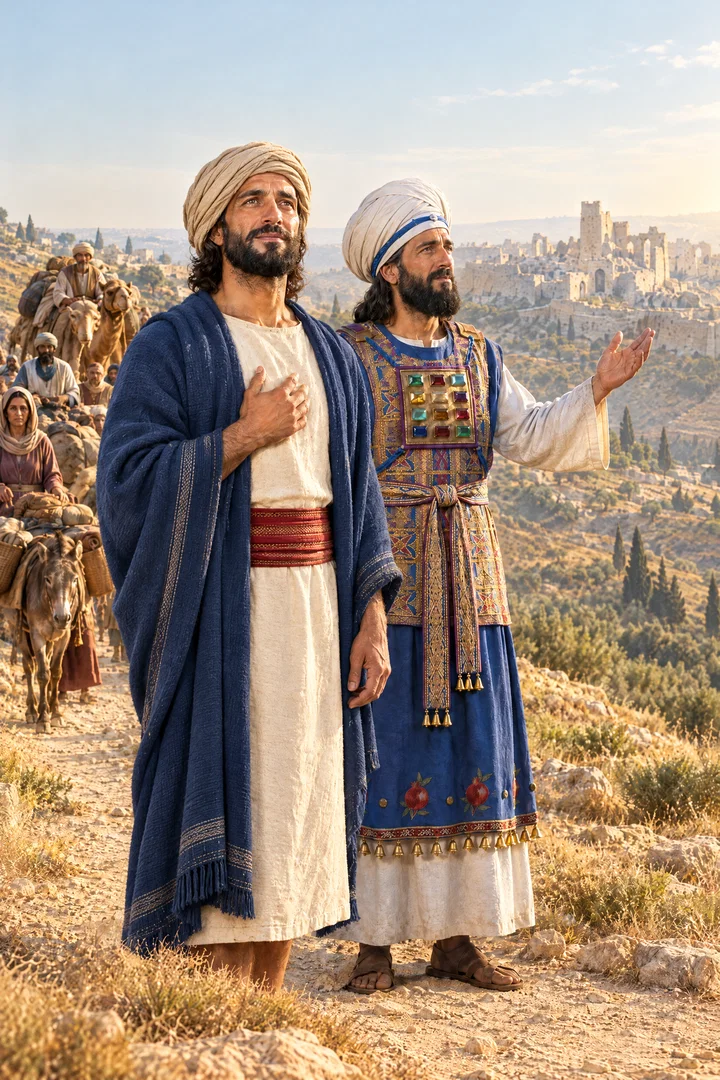
The tally lists 435 camels and 6,720 asses or donkeys among the animals and possessions of the returning exiles.ST Aug 23, 1899ST Nov 24, 1909ST May 3, 1910 The donkeys carried most of their baggage and provisions, while the camels were among the beasts used to transport the people's stores on the journey back to Jerusalem.ST May 3, 1910 The item belongs to the list of people and possessions brought by those who responded to Cyrus's decree or proclamation and returned from Babylon to Jerusalem and Canaan under Zerubbabel and Joshua to build the house of the Lord and help restore the temple services.RH Jan 23, 1908ST Apr 19, 1883ST Aug 9, 1899RH Feb 7, 1907 The whole congregation was counted as 42,360 persons, reckoned together with servants, singers, and freewill offerings of gold, silver, and priests' garments, followed by the settling of priests, Levites, people, singers, porters, and Nethinims in their cities, showing that the restoration of Israel had begun.ST Apr 19, 1883
The return was in the first year of Cyrus and is distinct from the Jews who still remained in Babylon and were invited to return, and distinct from the large number who afterward went up to Jerusalem with Ezra.ST Apr 19, 1883 About 50,000 returned under the proclamation made after Cyrus recognized God's call, taking in all of Judah and such of Israel as desired to return, and it was a sifting message asking for volunteers, as all God's invitations are.ST Aug 9, 1899 The returning group was a small remnant of the Israelites scattered throughout the Medo-Persian realm, while many stayed in the land of their captivity instead of returning and helping restore the temple services.RH Jan 23, 1908
The account of the return and rebuilding to which the tally belongs is of the same period as Haggai's message about rebuilding the temple, under the decree of Cyrus, and it does not date the temple's beginning to 457 B.C.ST Aug 23, 1899ST Nov 24, 1909
Sources